


Mudslinging is part and parcel of politics, but so much muck has been slung around in the Taipei mayoral race that it is hard to see the mountains surrounding the city. Unfortunately, some of the splatter has ended up on bystanders and may cause lasting damage.
National Taiwan University Hospital was dragged into the fray several months ago because independent Taipei mayoral candidate Ko Wen-je (柯文哲) has worked there for many years and held key positions. Hospital administrators have had to defend their institution, both in the media and at the Legislative Yuan, against allegations made by a Chinese Nationalist Party (KMT) lawmaker over the financing of a research fund associated with Ko.
However, on Thursday, much more damaging allegations were made by two KMT lawmakers, ones that do not just affect the hospital, but could affect the lives of thousands of Taiwanese. Legislators Liao Kuo-tung (廖國棟) and Su Ching-chuan (蘇清泉), both doctors before they became politicians, cast aspersions on the organ harvesting and transplant procedures at the hospital.
Liao went so far as to say that the hospital “‘murdered’ potential donors solely to be able to retrieve their organs and save someone else’s life.”
Su said it was not up to doctors to decide who lives or dies, because “doctors are not God.”
Both lawmakers mentioned the hospital’s use of extracorporeal membrane oxygenation machines, which are used to keep cardiac and respiratory functions going. They implied that the hospital, which in August celebrated its 500th heart transplant since its first such procedure in 1967, may have been less than ethical in its use of the machines on potential organ donors.
Organ harvesting remains a sensitive topic in Taiwan amid religious and traditional beliefs about keeping a body intact for the afterlife, and efforts to increase the number of people volunteering to donate their organs after death have made slow headway.
Taiwan Organ Registry and Sharing Center chairman Lee Po-chang (李伯璋) said on Sept. 29 that as of noon that day, there were 8,657 people on waiting lists for organ transplants, with the vast majority — 6,421 — waiting for a kidney, while there are just over 200 organ donors per year on average.
Government statistics show that as of July, the total number of people nationwide who have committed to donating their organs was 255,000, including 12,862 people who signed up this year.
A survey conducted by the center in March last year found that 67.3 percent of Taiwanese were willing to donate their organs after they die, but only 8.7 percent had signed an organ donor consent form and only 1 percent had their consent listed on their National Health Insurance cards. The survey also found that 66.6 percent of respondents did not know that after their consent is registered, it is legally binding.
However, according the Medical Care Act (醫療法), doctors still need the consent of a patient’s immediate family to remove an organ from a deceased patient. That is why Liao and Su’s comments are so damaging: because they raise the risk of creating unnecessary conflict between medical staff and relatives at what is already an emotionally supercharged time — deciding when to cease life support measures for a patient who is clinically dead.
Stoking fears that doctors might not do their best to save one patient to acquire organs for other patients does a grave disservice to the medical profession of which Liao and Su were once members, to those on organ transplant waiting lists and to the public in general.
Ko did serve as convener of the hospital’s organ procurement team and should be among those looked at if there are justifiable concerns about the way the hospital, or any other facility, has conducted its transplant operations. Yet it is hard to see Liao and Su’s ham-fisted accusations as anything but smears, coming as they did just 10 days before the nine-in-one elections.
Unfortunately, many more people than Ko could end up paying for such tactics.
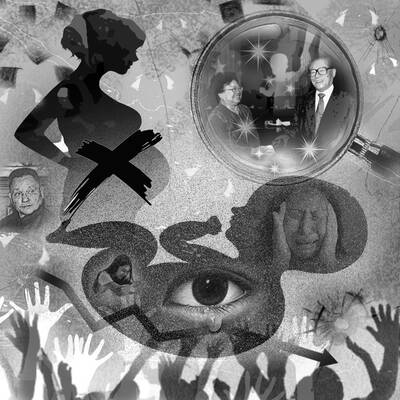
Jan. 1 marks a decade since China repealed its one-child policy. Just 10 days before, Peng Peiyun (彭珮雲), who long oversaw the often-brutal enforcement of China’s family-planning rules, died at the age of 96, having never been held accountable for her actions. Obituaries praised Peng for being “reform-minded,” even though, in practice, she only perpetuated an utterly inhumane policy, whose consequences have barely begun to materialize. It was Vice Premier Chen Muhua (陳慕華) who first proposed the one-child policy in 1979, with the endorsement of China’s then-top leaders, Chen Yun (陳雲) and Deng Xiaoping (鄧小平), as a means of avoiding the
As the Chinese People’s Liberation Army (PLA) races toward its 2027 modernization goals, most analysts fixate on ship counts, missile ranges and artificial intelligence. Those metrics matter — but they obscure a deeper vulnerability. The true future of the PLA, and by extension Taiwan’s security, might hinge less on hardware than on whether the Chinese Communist Party (CCP) can preserve ideological loyalty inside its own armed forces. Iran’s 1979 revolution demonstrated how even a technologically advanced military can collapse when the social environment surrounding it shifts. That lesson has renewed relevance as fresh unrest shakes Iran today — and it should

The last foreign delegation Nicolas Maduro met before he went to bed Friday night (January 2) was led by China’s top Latin America diplomat. “I had a pleasant meeting with Qiu Xiaoqi (邱小琪), Special Envoy of President Xi Jinping (習近平),” Venezuela’s soon-to-be ex-president tweeted on Telegram, “and we reaffirmed our commitment to the strategic relationship that is progressing and strengthening in various areas for building a multipolar world of development and peace.” Judging by how minutely the Central Intelligence Agency was monitoring Maduro’s every move on Friday, President Trump himself was certainly aware of Maduro’s felicitations to his Chinese guest. Just
On today’s page, Masahiro Matsumura, a professor of international politics and national security at St Andrew’s University in Osaka, questions the viability and advisability of the government’s proposed “T-Dome” missile defense system. Matsumura writes that Taiwan’s military budget would be better allocated elsewhere, and cautions against the temptation to allow politics to trump strategic sense. What he does not do is question whether Taiwan needs to increase its defense capabilities. “Given the accelerating pace of Beijing’s military buildup and political coercion ... [Taiwan] cannot afford inaction,” he writes. A rational, robust debate over the specifics, not the scale or the necessity,


 RSS
RSS