


Ever since President Ma Ying-jeou (馬英九) came to power, his policy implementation has been weak and the only thing he could possibly brag about has been cross-strait relations. However, despite all Taiwan’s compromises, warning signals are sounding regarding the cross-strait relationship.
The Chinese newspaper Global Times, which falls under the Chinese Communist Party’s (CCP) mouthpiece the People’s Daily, on Monday reported that Chinese students in Taiwan had been recruited by Taiwan’s security agencies to collect intelligence after returning to China.
China’s Taiwan Affairs Office (TAO) spokesperson Fan Liqing (范麗青) has stressed repeatedly, with increasing force, that Taiwan must immediately cease this activity, which shows that this is not a straightforward matter and cross-strait relations are changing.
This year, the Sunflower movement has prevented the cross-strait service trade agreement being railroaded through the legislature; in June, TAO Minister Zhang Zhijun (張志軍) was met by protests when visiting Taiwan; and in August, the Ma administration accused former Mainland Affairs Council (MAC) deputy minister Chang Hsien-yao (張顯耀) of leaking secrets and there were rumors that Chang, Taiwan’s top cross-strait negotiator, had been recruited as a spy by China, creating an awkward impasse in cross-strait relations.
China is worried that the “Umbrella revolution” in Hong Kong could result in Hong Kong joining Taiwan in calling for independence. This was why Chinese President Xi Jinping (習近平) on Sept. 26 said that “one country, two systems” would apply to Taiwan as well, replacing the so-called “1992 consensus.”
On Double Ten National Day, Ma “repaid the favor” by expressing support for the Hong Kong demonstrations and saying he hoped that China would “allow some people to enjoy democracy first.” The TAO immediately responded that “Taiwan should not be making irresponsible remarks about Hong Kong’s political reforms.”
Ma has been hoping for a meeting with Xi at the APEC summit, but Xi, clearly displeased with Ma, has poured cold water on the idea and does not want to break with precedent by allowing Ma to attend the summit.
Recruiting Chinese students as spies for Taiwan is nothing new. The Global Times has been carefully revealing basic information about the Taiwanese intelligence staff allegedly involved in these activities, implying that it is perhaps Taiwan’s intelligence agencies that have been infiltrated.
That China is revealing this case, while the hawks in Beijing are becoming increasingly vociferous rather than trying to resolve the issue through back-door channels, shows that fundamental issues of trust between the top leaders on the two sides of the Taiwan Strait are in question.
The day after the Global Times report, the Ma administration announced that senior civil servants would not be allowed to study in China, with immediate effect. In addition to this strong response to China’s accusations, the dampened enthusiasm for China among Taiwanese officials could also help prevent China from recruiting Taiwanese officials as spies.
The Ma administration has always slavishly followed China’s lead in the cross-strait relationship, but it is now less enthusiastic. This is good for Taiwan, because it will once again balance Taiwan’s relations with China and the rest of the world, instead of leaning lopsidedly toward China. However, in just a few months, cross-strait exchanges, which had seemed so warm, have been returned to square one: It has not been a “cold peace,” but rather a “cold war” relationship.
Cross-strait animosity has not diminished, nor has spying. Had the Sunflower movement not caused cross-strait relations to cool in March, Ma might have agreed to unfavorable conditions just to meet with Xi.
Cooling things down and maintaining an appropriate distance could stabilize Taiwan’s foreign relations.
On March 22, 2023, at the close of their meeting in Moscow, media microphones were allowed to record Chinese Communist Party (CCP) dictator Xi Jinping (習近平) telling Russia’s dictator Vladimir Putin, “Right now there are changes — the likes of which we haven’t seen for 100 years — and we are the ones driving these changes together.” Widely read as Xi’s oath to create a China-Russia-dominated world order, it can be considered a high point for the China-Russia-Iran-North Korea (CRINK) informal alliance, which also included the dictatorships of Venezuela and Cuba. China enables and assists Russia’s war against Ukraine and North Korea’s
After thousands of Taiwanese fans poured into the Tokyo Dome to cheer for Taiwan’s national team in the World Baseball Classic’s (WBC) Pool C games, an image of food and drink waste left at the stadium said to have been left by Taiwanese fans began spreading on social media. The image sparked wide debate, only later to be revealed as an artificially generated image. The image caption claimed that “Taiwanese left trash everywhere after watching the game in Tokyo Dome,” and said that one of the “three bad habits” of Taiwanese is littering. However, a reporter from a Japanese media outlet
Taiwanese pragmatism has long been praised when it comes to addressing Chinese attempts to erase Taiwan from the international stage. “Taipei” and the even more inaccurate and degrading “Chinese Taipei,” imposed titles required to participate in international events, are loathed by Taiwanese. That is why there was huge applause in Taiwan when Japanese public broadcaster NHK referred to the Taiwanese Olympic team as “Taiwan,” instead of “Chinese Taipei” during the opening ceremony of the Tokyo Olympics. What is standard protocol for most nations — calling a national team by the name their country is commonly known by — is impossible for
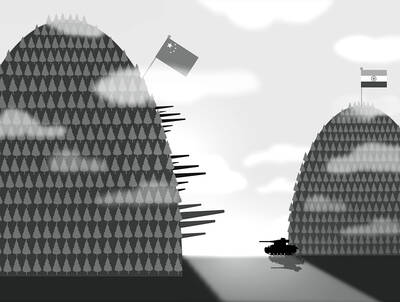
India is not China, and many of its residents fear it never will be. It is hard to imagine a future in which the subcontinent’s manufacturing dominates the world, its foreign investment shapes nations’ destinies, and the challenge of its economic system forces the West to reshape its own policies and principles. However, that is, apparently, what the US administration fears. Speaking in New Delhi last week, US Deputy Secretary of State Christopher Landau warned that “we will not make the same mistakes with India that we did with China 20 years ago.” Although he claimed the recently agreed framework


 RSS
RSS