


The nine-in-one elections on Nov. 29 are for local representatives. It stands to reason that regional issues, vision for local infrastructure and personal relations will be deciding factors in who gets elected. Nevertheless, polls suggest there are several contentious national-level issues that have proven particularly contentious with voters, but whether these drive election results remains to be seen.
There are several main reasons for these grievances.
First, there is the anger aimed at the government. The cost of living has risen across the board, property prices are out of control and salary levels in terms of purchasing power are on a par with 16 or 17 years ago. Meanwhile, GDP growth conceals the reality that the rich are getting richer, the poor are getting poorer and the middle class is being squeezed, while social mobility is falling. How can the 99 percent feel anything but aggrieved?
Second, that the government assembled by President Ma Ying-jeou (馬英九) is an overeducated, exclusive clique that cannot govern has been known for some time. However, they have the audacity to stand at the podium in the legislative chamber and, confronted with clear evidence of financial and food safety scandals, not investigate them. Then, when the matter is pursued by opposition legislators, they engage in a war of words, as if the food scandals were everyone’s fault and that responsibility should not be placed at the feet of the officials charged with supervising such matters.
Third, there is the anger over unscrupulous profiteers. The nation has been buffeted by waves of food safety scandals, from plasticizer additives to mislabeled cooking oils to the current tainted oil scandal. The potential damage to health is immense. The Ministry of Health and Welfare has said people can be reimbursed for any of the dubious products that have not been used. However, those who have already used the products are on their own.
Is this the best that the ministry can come up with to protect consumers’ rights? Meanwhile, the big shots in the organizations responsible can parcel off the blame, with the pretense that they are victims, too. This means that they actually get themselves some substantial compensation, while consumers have no recourse and cannot bring group compensation claims. Again: Is this the greatest fairness and justice the courts can extend?
Meanwhile, those behind the scandals are still out there, having their photographs taken with Ma or being seen cutting ribbons at inaugurations and openings with senior government officials. With the government and these unscrupulous businesspeople thick as thieves, how can voters feel anything but aggrieved?
Fourth, there are the grievances over the choice of electoral candidates. Chinese Nationalist Party (KMT) Taipei mayoral candidate Sean Lien (連勝文) and his father, former vice-president Lien Chan (連戰), are trying to convince people that the younger generation, if they work hard, can live in The Palace luxury apartments and drive expensive cars. They think people can walk into a chairmanship of a company as their first job. They do not seem to be adhering much to the idea that honesty is the best policy.
The electorate is more likely to be thinking: “Are you kidding?” It is not that Sean Lien is heir to a fortune that is a problem. That is not of his doing. The reason the electorate is spurning him is more because, for all his money, he cannot conceal his lack of skill.
If the electorate can only express their anger through the vote, then the next transition of power cannot be too far away.
Chang Kuo-tsai is a retired National Hsinchu University of Education associate professor and a former deputy secretary-general of the Taiwan Association of University Professors.
Translated by Paul Cooper
On March 22, 2023, at the close of their meeting in Moscow, media microphones were allowed to record Chinese Communist Party (CCP) dictator Xi Jinping (習近平) telling Russia’s dictator Vladimir Putin, “Right now there are changes — the likes of which we haven’t seen for 100 years — and we are the ones driving these changes together.” Widely read as Xi’s oath to create a China-Russia-dominated world order, it can be considered a high point for the China-Russia-Iran-North Korea (CRINK) informal alliance, which also included the dictatorships of Venezuela and Cuba. China enables and assists Russia’s war against Ukraine and North Korea’s
After thousands of Taiwanese fans poured into the Tokyo Dome to cheer for Taiwan’s national team in the World Baseball Classic’s (WBC) Pool C games, an image of food and drink waste left at the stadium said to have been left by Taiwanese fans began spreading on social media. The image sparked wide debate, only later to be revealed as an artificially generated image. The image caption claimed that “Taiwanese left trash everywhere after watching the game in Tokyo Dome,” and said that one of the “three bad habits” of Taiwanese is littering. However, a reporter from a Japanese media outlet
Taiwanese pragmatism has long been praised when it comes to addressing Chinese attempts to erase Taiwan from the international stage. “Taipei” and the even more inaccurate and degrading “Chinese Taipei,” imposed titles required to participate in international events, are loathed by Taiwanese. That is why there was huge applause in Taiwan when Japanese public broadcaster NHK referred to the Taiwanese Olympic team as “Taiwan,” instead of “Chinese Taipei” during the opening ceremony of the Tokyo Olympics. What is standard protocol for most nations — calling a national team by the name their country is commonly known by — is impossible for
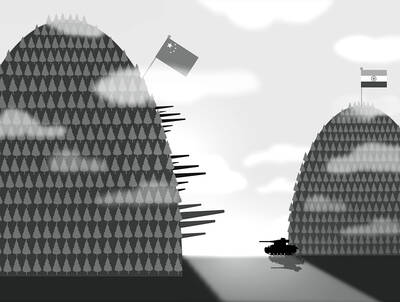
India is not China, and many of its residents fear it never will be. It is hard to imagine a future in which the subcontinent’s manufacturing dominates the world, its foreign investment shapes nations’ destinies, and the challenge of its economic system forces the West to reshape its own policies and principles. However, that is, apparently, what the US administration fears. Speaking in New Delhi last week, US Deputy Secretary of State Christopher Landau warned that “we will not make the same mistakes with India that we did with China 20 years ago.” Although he claimed the recently agreed framework


 RSS
RSS