


ASEAN’s historic failure last month to reach agreement on a unified approach to peaceful resolution of disputes in the South China Sea focused attention on an asymmetrical division among its members. The list of players in the unfolding and increasingly dangerous drama is familiar, but incomplete.
There are four ASEAN claimants (Vietnam, the Philippines, Malaysia and Brunei) and five ASEAN non-claimants (Thailand, Singapore, Laos, Myanmar and Indonesia). These nine countries support a collective position that would produce a fair, peaceful, and effective dispute mechanism.
There is China, which opposes both the process and the intended result, and there is the 10th ASEAN member, non-claimant Cambodia, which hosted the meeting and presently does China’s bidding.
Then there is the US, which asserts no claim of its own except the right of free navigation for all, takes no position on the parties’ respective claims, but wants a peaceful resolution and supports the ASEAN approach toward that end.
The impasse was widely seen as a triumph for China’s obstructionist policy and a diplomatic defeat for the US, but neither outcome need be longstanding if the US acts wisely, creatively and forthrightly in its ongoing quest for regional stability. The US’ much-touted “pivot” or “rebalancing” policy toward Asia clearly needs a partial re-set on the South China Sea issue.
Enter a sixth claimant, the hitherto relatively silent Taiwan; the US’ former and possibly future ally, asserts the same sweeping maritime claims as the US’ former and potentially future adversary, the People’s Republic of China. At first blush, this has been considered a complicating factor for US diplomacy and Taiwan policy-making.
All the other four claimants reject the expansive China/Taiwan positions as baseless under the UN Law of the Sea Convention (UNCLOS). Though Taipei’s claims coincide with China’s because of their shared pre-1949 history, it has not endorsed or emulated Beijing’s militant stance in enforcing them.
Even rhetorically, it has been less assertive regarding its claims than it has in its dispute with Japan over the Diaoyutai Islands (釣魚台群島) — known as the Senkaku Islands in Japan. Nor, however, has it been willing so far to line up with the multilateral approach proposed by ASEAN.
For its part, Washington, while supporting ASEAN multilateralism, has given Taiwan a pass on taking the same principled position so as to avoid annoying Beijing. That was unsound advice even before the summit fiasco and, given China’s increasing aggressiveness, it is time now for the US and Taiwan to line up their policies with ASEAN’s approach.
Both China and Taiwan are excluded from membership in ASEAN — China because of its geographical remoteness from the region and Taiwan because of its political remoteness from China, but Taiwan is uniquely situated to set a positive international example for its powerful protagonist across the Taiwan Strait. It has done so in the past in other areas.
During the SARS, HIV/AIDS, Asian flu and other pandemics, Taiwan’s candor and international cooperation were exemplary, while Beijing delayed, deceived and obfuscated.
Taiwan actively participates in the Proliferation Security Initiative, along with almost 100 other countries, while China boycotts it and instead fosters nuclear and missile proliferation.
When Japan was struck by natural and nuclear disasters last year, Taiwan contributed more aid than any other country, significantly outstripping China’s paltry donation.
Now Taiwan can show Beijing the way of responsible international behavior in the South China Sea disputes — and Washington should encourage it to do so, even at the price of annoying China. Taipei can start by doing what China academics have long urged Beijing to do: Discard the amorphous and incoherent “historical” over-reach and state the precise scope of its claims and their basis under specific provisions of UNCLOS.
As China expert Ken Lieberthal recently told a Washington conference, if all regional claimants were to declare the actual land features that support their respective maritime claims, many of the apparent conflicts would probably disappear.
Such a move by Taiwan will surely antagonize China, which will accuse it of selling out historical Chinese interests, but Beijing will do nothing more than fume, as long as Washington makes clear its own support for Taiwan’s enlightened position.
Unlike questions such as membership in international organizations or participation in the Olympics, China has already conceded that Taipei has a separate and distinct basis for asserting its South China Sea claims in its own name. Beijing did that last month when it urged Taiwan to fall in line with its posture and present a united cross-strait front on the issue. President Ma Ying-jeou (馬英九), recently reelected but now with record low popularity, can respond that Taiwan has considered China’s argument, respectfully disagrees, and finds the views of the Southeast Asian nations more persuasive and more conducive to regional stability and Taiwan is indisputably located in the South China Sea, while continental China’s land mass is a lot farther away.
If China threatens to react with more than words, such as by trying to seize Taiping Island (太平島)which Taiwan presently occupies, the US can take the opportunity, once and for all, to discard its risk-inviting policy of strategic ambiguity and declare its unequivocal commitment to Taiwan’s defense. That will also reassure countries in the region which, while wary of getting involved in a China-US conflict, also fear US abandonment of its commitment to Asian security.
Both Vietnam, a former US enemy and the Philippines, a longstanding ally, are edging toward inviting the US back to Cold War-era military facilities from which they were ejected in past decades. Today, they see Taiwan, given its long relationship with the US, as a test case for US resolve and credibility.
It is quite possible that Beijing, after some ritualistic protest, will decide that Taiwan — and the countries of the region — have it right and that China has more to gain by cooperating and avoiding unnecessary confrontation with the international community. Many on both sides of the Pacific would breathe a sigh of relief.
Joseph Bosco served as China country desk officer in the office of the secretary of defense from 2005-2006 and is now a non-resident senior associate at the Center for Strategic and International Studies.
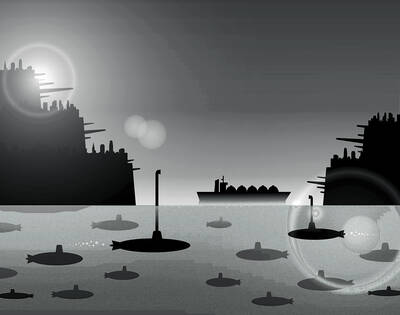
In the event of a war with China, Taiwan has some surprisingly tough defenses that could make it as difficult to tackle as a porcupine: A shoreline dotted with swamps, rocks and concrete barriers; conscription for all adult men; highways and airports that are built to double as hardened combat facilities. This porcupine has a soft underbelly, though, and the war in Iran is exposing it: energy. About 39,000 ships dock at Taiwan’s ports each year, more than the 30,000 that transit the Strait of Hormuz. About one-fifth of their inbound tonnage is coal, oil, refined fuels and liquefied natural gas (LNG),
On Monday, the day before Chinese Nationalist Party (KMT) Chairwoman Cheng Li-wun (鄭麗文) departed on her visit to China, the party released a promotional video titled “Only with peace can we ‘lie flat’” to highlight its desire to have peace across the Taiwan Strait. However, its use of the expression “lie flat” (tang ping, 躺平) drew sarcastic comments, with critics saying it sounded as if the party was “bowing down” to the Chinese Communist Party (CCP). Amid the controversy over the opposition parties blocking proposed defense budgets, Cheng departed for China after receiving an invitation from the CCP, with a meeting with
To counter the CCP’s escalating threats, Taiwan must build a national consensus and demonstrate the capability and the will to fight. The Chinese Communist Party (CCP) often leans on a seductive mantra to soften its threats, such as “Chinese do not kill Chinese.” The slogan is designed to frame territorial conquest (annexation) as a domestic family matter. A look at the historical ledger reveals a different truth. For the CCP, being labeled “family” has never been a guarantee of safety; it has been the primary prerequisite for state-sanctioned slaughter. From the forced starvation of 150,000 civilians at the Siege of Changchun
The two major opposition parties, the Chinese Nationalist Party (KMT) and the Taiwan People’s Party (TPP), jointly announced on Tuesday last week that former TPP lawmaker Chang Chi-kai (張啟楷) would be their joint candidate for Chiayi mayor, following polling conducted earlier this month. It is the first case of blue-white (KMT-TPP) cooperation in selecting a joint candidate under an agreement signed by their chairpersons last month. KMT and TPP supporters have blamed their 2024 presidential election loss on failing to decide on a joint candidate, which ended in a dramatic breakdown with participants pointing fingers, calling polls unfair, sobbing and walking


 RSS
RSS