


More than half of Taiwan’s voters are swing voters, so their support for a specific political party varies. They are open to letting economic gains and personal connections decide who they vote for and this makes it more probable that they would favor the Chinese Nationalist Party (KMT) over other political parties.
On the other hand, swing voters are typically attuned to images of incorruptibility.
During the dangwai (outside the party, ie, the KMT) movement of the mid-1970s and early 1980s, Chen Ding-nan (陳定南), who later became minister of justice, succeeded thanks to his incorruptibility and hard political work, which gained him the favor of nearly all swing voters.
During the presidential election of 2008, the anti-corruption image of the Democratic Progressive Party (DPP) had become a thing of the past and many swing voters cast their ballots in favor of President Ma Ying-jeou (馬英九) simply because they thought he was less corrupt than the other candidate, giving him a landslide victory.
Plenty of public discontent toward Ma surfaced during this year’s presidential election, but somehow he still won by pulling a veil over the public’s eyes. The main reason he was able to win was his image of incorruptibility.
Despite their apparent dislike for Ma, swing voters still chose him because they no longer trusted the DPP and did not believe the party would do a better job of running the nation.
However, people in the pan-green camp believe Ma is truly corrupt, while swing voters believe he is relatively clean. Remember that even though swing voters hold much disdain for ineptitude, they dislike corruption even more.
The financial power and political connections of the DPP are far from reaching those of the KMT. The DPP must therefore rely on an image of incorruptibility to win over swing voters and that image must outshine the KMT to be able to make up for the party’s lack of financial resources and political connections.
The recent corruption scandal surrounding former Executive Yuan secretary-general Lin Yi-shih (林益世) has made people in the pan-green camp think the tables have turned in their favor.
If the KMT’s clean image now collapses, they will be incapable of contending with the pan-green camp.
However, it would take a few more of these corruption scandals to completely crack the KMT’s image of incorruptibility. If all the DPP relies on is this one measly case, the KMT will return in full force in just a few months.
The Lin case is not enough to tarnish the pristine image of the KMT and there are three reasons for this.
First, the KMT has severed all ties with Lin and revoked his party membership, even though Lin said he would give up party membership on his own.
KMT Taipei City Councilor Lai Su-ju (賴素如), who served as Lin’s attorney and accompanied him during the prosecutors’ questioning, has also decided not to serve as his attorney any longer.
Second, despite being the son of an important politician, holding high office and immense political power, Lin has few supporters who can help him maintain his connections with the KMT.
Third, Lin is not high-profile enough and lacks the financial resources to build sufficient grassroots support.
If Lin had succeeded in doing that, there would have been many people willing to stand up for him and that would have made it difficult for the KMT to distance itself from him.
Chen Mao-hsiung is a retired National Sun Yat-sen University professor and chairman of the Society for the Promotion of Taiwanese Security.
Translated by Kyle Jeffcoat
A gap appears to be emerging between Washington’s foreign policy elites and the broader American public on how the United States should respond to China’s rise. From my vantage working at a think tank in Washington, DC, and through regular travel around the United States, I increasingly experience two distinct discussions. This divergence — between America’s elite hawkishness and public caution — may become one of the least appreciated and most consequential external factors influencing Taiwan’s security environment in the years ahead. Within the American policy community, the dominant view of China has grown unmistakably tough. Many members of Congress, as
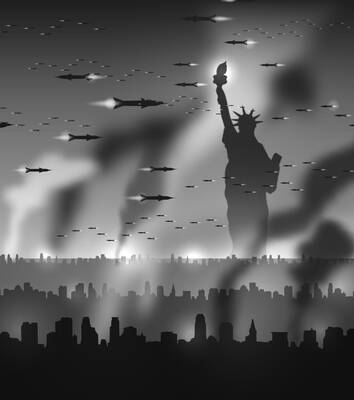
After declaring Iran’s military “gone,” US President Donald Trump appealed to the UK, France, Japan and South Korea — as well as China, Iran’s strategic partner — to send minesweepers and naval forces to reopen the Strait of Hormuz. When allies balked, the request turned into a warning: NATO would face “a very bad” future if it refused. The prevailing wisdom is that Trump faces a credibility problem: having spent years insulting allies, he finds they would not rally when he needs them. That is true, but superficial, as though a structural collapse could be caused by wounded feelings. Something
Former Taipei mayor and Taiwan People’s Party (TPP) founding chairman Ko Wen-je (柯文哲) was sentenced to 17 years in prison on Thursday, making headlines across major media. However, another case linked to the TPP — the indictment of Chinese immigrant Xu Chunying (徐春鶯) for alleged violations of the Anti-Infiltration Act (反滲透法) on Tuesday — has also stirred up heated discussions. Born in Shanghai, Xu became a resident of Taiwan through marriage in 1993. Currently the director of the Taiwan New Immigrant Development Association, she was elected to serve as legislator-at-large for the TPP in 2023, but was later charged with involvement
Out of 64 participating universities in this year’s Stars Program — through which schools directly recommend their top students to universities for admission — only 19 filled their admissions quotas. There were 922 vacancies, down more than 200 from last year; top universities had 37 unfilled places, 40 fewer than last year. The original purpose of the Stars Program was to expand admissions to a wider range of students. However, certain departments at elite universities that failed to meet their admissions quotas are not improving. Vacancies at top universities are linked to students’ program preferences on their applications, but inappropriate admission


 RSS
RSS