


Except for the theocracies the rest of the world takes delight in ridiculing, most modern governments build their legitimacy and credibility by proposing policies that we assume are the result of detailed analysis and clear-headed decision-making. Public relations specialists advise world leaders to adopt a calm, cool and composed image when they appear in public — especially in times of crisis.
So there is reason to worry when, facing growing public discontent with the state of the economy and a freefalling TAIEX — which again shed 10 percent last week — the only thing officials from the Chinese Nationalist Party (KMT) administration have come up with are calls for the population to have “faith” in the government and, on Friday, the promise that the Cabinet would enact “miracle cures” to revive the stock market.
Faith and miracles are language used by theocrats in flowing robes or the hapless who see no way out of a predicament and suddenly feel an urge to place their fate in the hands of a higher being.
Panic-inducing though the current economic woes might seem, the end of the world is not upon us. There are ways out — but religion, or belief in the fantastic, isn’t one of them. What is needed is professionalism and cool-headedness, as well as policies that are clear, measurable and grounded in reality.
At this critical moment, President Ma Ying-jeou’s (馬英九) economists and Cabinet members should know better than to use rhetoric that is prone to generate panic in investors. Ironically, by adopting language with religious undertones, panic is just what they could sow.
Economists tell us that the last thing a bourse wants in times of financial stress is market panic. Calm is in order, and financiers must maintain the impression — even if it is illusory — that they have things under control. Again, religious terminology and vague promises are not part of that arsenal.
Taiwanese investors are not fools. Despite comments by the Cabinet last week that investors alone are responsible for their investments and possible losses, the KMT government must bear in mind that many investors went on the stock market specifically because they believed the KMT’s promise that the nation’s economy would receive a “miraculous” boost if Ma was elected. Now that this promise has failed to materialize, investors who were burned will not make the same mistake again and their faith in the KMT’s power to bring about “miracles” will be far from the type that moves mountains.
The government should admit it overshot during the presidential campaign and that, while acknowledging that the state of the global economy is beyond its control, it is prepared to reassure investors and mitigate their pain. Promises of “miracle” cures serve no purpose, are insulting to our intelligence and could encourage fears that no one — except, perhaps, a long-bearded man sitting on a cloud somewhere, who couldn’t care less about stocks and bullish markets — is in charge.
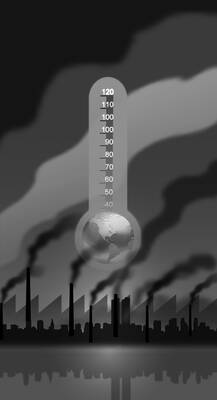
The closure of the Strait of Hormuz has sent the vast Asian chemicals industry into a tailspin. Deprived of the likes of Qatari natural gas and Saudi Arabian oil, the region’s fertilizer and plastics plants are slowing production or even shutting down. Everywhere except China, that is. In petrochemicals, China is unique. As well as a traditional industry that uses oil and gas as feedstock, it has parallel output that relies on its abundant domestic coal. Unsurprisingly, India and other regional powers want to copy and paste the Chinese method. This would not be easy — or climate friendly. The
KMT Chairwoman Cheng Li-wun’s (鄭麗文) recent visit to Beijing and her upcoming visit to Washington will serve as a high-level test of her diplomatic mettle. In Beijing, Cheng was received with symbolic gestures, a warm reception, and high-level access. In Washington, she will receive far less pomp and far sharper questions about the KMT’s vision for the future of Taiwan. Her challenge will be to persuade Washington that the KMT’s engagement with China can coexist with strong deterrence. Cheng’s April 7-12 visit to mainland China coincided with an intense period of conflict in Iran. Despite the strategic significance of Cheng’s trip,
History might remember 2026, not 2022, as the year artificial intelligence (AI) truly changed everything. ChatGPT’s launch was a product moment. What is happening now is an anthropological moment: AI is no longer merely answering questions. It is now taking initiative and learning from others to get things done, behaving less like software and more like a colleague. The economic consequence is the rise of the one-person company — a structure anticipated in the 2024 book The Choices Amid Great Changes, which I coauthored. The real target of AI is not labor. It is hierarchy. When AI sharply reduces the cost
US President Donald Trump recently repeated his claim that “Taiwan stole America’s chip industry,” reigniting public debate on the issue. As a former Taiwanese minister of economic affairs and an entrepreneur deeply involved in semiconductor supply chain development, I feel a responsibility to clarify this misunderstanding. From the perspective of global industrial evolution and the economic principle of comparative advantage, such a statement appears overly simplistic and risks obscuring the essence of the issue. The rise of Taiwan’s semiconductor industry was not built on “replacing America,” but rather emerged as a result of countries pursuing different development paths within the


 RSS
RSS