


Asia's rise as an economic and political player exemplifies what globalization is all about. By the decade's end, China's economy will be larger than Germany's. By 2040 three of the world's five largest economies -- China, India and Japan -- will be in Asia.
That is one side of the Asian picture. The other side is persistent poverty, lack of development, massive environmental degradation, a widespread rural-urban divide, demographic problems and troubled banking systems. The picture is further complicated by security risks such as nuclear arms proliferation, fundamentalism and weak or failing governance.
The sweeping changes under way in Asia are not just economic, but have also created new political realities that cannot be ignored. Asian countries now act with much greater self-assurance than in the past. Their military budgets are expanding, and there are regional rivalries. Thus, along with tremendous opportunities implied by globalization, political risks must also be addressed.
German and European policymakers must make clear what Europe has to offer Asia, and can do so at this month's EU/ASEAN and EU/China summits.
The "soft power" of Europe's political and social model is well known. As an Asian leader once told me, Europeans have what many Asian societies aspire to: democratic government, advanced infrastructure, civil rights, world-class companies, high educational and social standards and a rich cultural heritage. This gives us considerable standing.
It is crucial to ensure that our European model, with its emphasis on a fair deal for everyone, remains competitive.
Nevertheless, Germany stands to lose more than any other country from any protectionist-minded retreat from globalization. In the first six months of this year alone, the value of German exports nearly passed US$500 billion.
But free trade is a two-way street. Artificially low exchange rates, restrictions on capital flows and excessively large currency reserves all create global imbalances. Any strategic partnership between Europe and Asia must encourage global economic responsibility based on cooperation and transparency.
Europe and Asia must jointly commit to an agenda underscoring global resources and sustainability. Environmental, climate and energy issues concern everyone. China is already a top carbon dioxide emitter. Environmental degradation in Asia not only harms its population's health, but will become an impediment to growth.
Growth is important to us in Europe, and it is even more important to Asia's emerging economies. But, as European experience shows, it is often worth sacrificing short-term benefits for the sake of longer-term gain.
The history of European integration suggests that regional cooperation, give and take, the pursuit of shared goals and even in some areas the transfer of sovereignty are the best ways to overcome tensions and promote peaceful problem-solving. Certain elements of this European path may be relevant to Asia's own regional cooperation.
Indeed, Asian trade and commodity flows are increasingly interlinked. ASEAN members conduct almost 50 percent of their trade within Asia. Economic relations between major players such as China and Japan are increasingly close -- owing not only to booming trade, but also to direct investment and regional production networks.
Economic links pave the way for political rapprochement and closer ties. ASEAN, together with affiliated bodies such as the ASEAN Regional Forum and the East Asia Summit, is the driving force behind the intensification of Asian cooperation -- in which security is also a factor. ASEAN is working with its partners to tackle global issues such as security, energy and climate change, and its plans for a charter on enhanced cooperation are an encouraging first step toward creating a political architecture.
This year, the EU's contacts with ASEAN and its members have become much closer. The foreign ministers' meeting held during Germany's EU Council presidency produced the Nuremberg Declaration, which established a framework for closer EU-ASEAN partnership. Europe must become a stakeholder in Asia if both sides are to gain maximum benefit from cooperation and help shape the world of the future.
In Asia, people increasingly realize that sharing in global prosperity also means sharing responsibility for global peace and development. We see this in the higher profile that China has taken in defusing the North Korean nuclear crisis and in drafting the recent Security Council resolution on Darfur. With Japan's upcoming G8 presidency and the Beijing Olympic Games next year, Asia will be under a spotlight as never before.
In the light of developments such as in Myanmar, ASEAN must state clearly where it stands. This recalibration of global responsibility will have to be a step-by-step process fostering dialogue and stability. Here, too, it would be wrong to take an all-or-nothing approach. Europe must take Asian views on global governance seriously. By the same token, the new Asian players must take into account the progress achieved in this regard in the latter half of the 20th century.
The challenge for 21st century statecraft will be to devise joint solutions to common problems. This was what inspired the Heiligendamm Process launched at this year's G8 Summit, which for the first time brought G8 leaders together with leaders of the world's major emerging economies, including China, India, Brazil, Mexico and South Africa.
There is no inevitable contradiction between European values on the one hand and what are deemed Asian values on the other. Where interests conflict and opportunities coexist with tensions, a readiness and capacity for dialogue is the only way forward. We have mutually enriching Euro-Asian traditions that could serve as a basis for such a dialogue.
It is in this context that Europe's commitment to internal reform, human rights, international law and responsible governance should be seen. Global values are a cause that Europe intends to promote worldwide. Obviously that means meeting the standards that we expect of others.
In this progressive transformation of the international system, German and European foreign policy will play an active role. What is needed is not rhetoric but level-headed efforts to find practical and forward-looking solutions to key issues on which regional and international cooperation is urgently required.
Frank-Walter Steinmeier is the German foreign minister and vice chancellor.
Copyright: Project Syndicate/Internationale Politik
Minister of Labor Hung Sun-han (洪申翰) on April 9 said that the first group of Indian workers could arrive as early as this year as part of a memorandum of understanding (MOU) between the Taipei Economic and Cultural Center in India and the India Taipei Association. Signed in February 2024, the MOU stipulates that Taipei would decide the number of migrant workers and which industries would employ them, while New Delhi would manage recruitment and training. Employment would be governed by the laws of both countries. Months after its signing, the two sides agreed that 1,000 migrant workers from India would
In recent weeks, Taiwan has witnessed a surge of public anxiety over the possible introduction of Indian migrant workers. What began as a policy signal from the Ministry of Labor quickly escalated into a broader controversy. Petitions gathered thousands of signatures within days, political figures issued strong warnings, and social media became saturated with concerns about public safety and social stability. At first glance, this appears to be a straightforward policy question: Should Taiwan introduce Indian migrant workers or not? However, this framing is misleading. The current debate is not fundamentally about India. It is about Taiwan’s labor system, its
On March 31, the South Korean Ministry of Foreign Affairs released declassified diplomatic records from 1995 that drew wide domestic media attention. One revelation stood out: North Korea had once raised the possibility of diplomatic relations with Taiwan. In a meeting with visiting Chinese officials in May 1995, as then-Chinese president Jiang Zemin (江澤民) prepared for a visit to South Korea, North Korean officials objected to Beijing’s growing ties with Seoul and raised Taiwan directly. According to the newly released records, North Korean officials asked why Pyongyang should refrain from developing relations with Taiwan while China and South Korea were expanding high-level
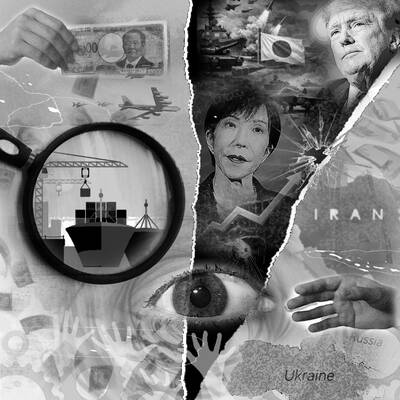
Japan’s imminent easing of arms export rules has sparked strong interest from Warsaw to Manila, Reuters reporting found, as US President Donald Trump wavers on security commitments to allies, and the wars in Iran and Ukraine strain US weapons supplies. Japanese Prime Minister Sanae Takaichi’s ruling party approved the changes this week as she tries to invigorate the pacifist country’s military industrial base. Her government would formally adopt the new rules as soon as this month, three Japanese government officials told Reuters. Despite largely isolating itself from global arms markets since World War II, Japan spends enough on its own


 RSS
RSS