


Many letters to the editor in this newspaper have correctly pointed out some important aspects of English education in this country, and how it needs improvement. I hope the nation's educators are listening. However, it has been my experience, and it's my view, that young Taiwanese have made giant strides in the last 10 years or so in learning English. Rather than always criticizing the current state of English learning, why not offer some positive words of encouragement for a change?
On a daily basis I see high school students, college students and graduate students from all over Taiwan who speak English very well and can comfortably communicate with foreigners in English. Let's give them some credit. Let's congratulate the younger generation for learning English and making it part of their daily lives.
Compared to Japan, where people speak the most atrocious English on the planet -- just kidding -- Taiwan is doing a very good job of absorbing English, and things will only get better as time goes on.
I give the Taiwanese high marks for their English skills, and while there is still much improvement that needs to be made, of course, I think they have been doing a very good job of learning English and incorporating it into their daily lives. Look at the bright side. Things are much better now than they were 10 years ago. English is more or less the unofficial second language of Taiwan right now. This is a huge accomplishment. And things will only get better.
Dan Bloom
Chiayi
KMT Chairwoman Cheng Li-wun’s (鄭麗文) recent visit to Beijing and her upcoming visit to Washington will serve as a high-level test of her diplomatic mettle. In Beijing, Cheng was received with symbolic gestures, a warm reception, and high-level access. In Washington, she will receive far less pomp and far sharper questions about the KMT’s vision for the future of Taiwan. Her challenge will be to persuade Washington that the KMT’s engagement with China can coexist with strong deterrence. Cheng’s April 7-12 visit to mainland China coincided with an intense period of conflict in Iran. Despite the strategic significance of Cheng’s trip,
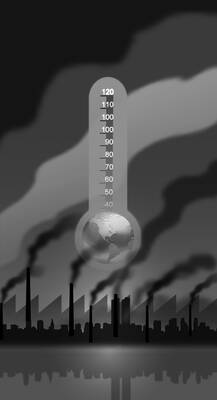
The closure of the Strait of Hormuz has sent the vast Asian chemicals industry into a tailspin. Deprived of the likes of Qatari natural gas and Saudi Arabian oil, the region’s fertilizer and plastics plants are slowing production or even shutting down. Everywhere except China, that is. In petrochemicals, China is unique. As well as a traditional industry that uses oil and gas as feedstock, it has parallel output that relies on its abundant domestic coal. Unsurprisingly, India and other regional powers want to copy and paste the Chinese method. This would not be easy — or climate friendly. The
US President Donald Trump recently repeated his claim that “Taiwan stole America’s chip industry,” reigniting public debate on the issue. As a former Taiwanese minister of economic affairs and an entrepreneur deeply involved in semiconductor supply chain development, I feel a responsibility to clarify this misunderstanding. From the perspective of global industrial evolution and the economic principle of comparative advantage, such a statement appears overly simplistic and risks obscuring the essence of the issue. The rise of Taiwan’s semiconductor industry was not built on “replacing America,” but rather emerged as a result of countries pursuing different development paths within the
The Presidential Office on Saturday reiterated that Taiwan is a sovereign, independent nation after US President Donald Trump said that Taiwan should not “go independent.” “We’re not looking to have somebody say: ‘Let’s go independence because the United States is backing us,’” Trump said in an interview with Fox News aired on Friday. President William Lai (賴清德) on Monday said that the Republic of China (ROC) — Taiwan’s official name — and the People’s Republic of China (PRC) are not subordinate to each other. Speaking at an event marking the 40th anniversary of the establishment of the Democratic Progressive Party (DPP), Lai said


 RSS
RSS