


One year to the day before the Olympic Games are to open in Beijing, the international media are realizing that the Chinese authorities' promise to respect press freedom was more like one of the knockoff products that China is infamous for than an honest commitment to respecting the rights of journalists.
On Monday, foreign reporters were roughed up during a protest rally and detained in a parking lot across from the Beijing Olympic organizing committee's office. The manner in which the Beijing authorities responded to the demonstrators' claims -- that media freedoms are a sham -- could not have better underscored the point the demonstrators were trying to make.
As journalists in China face growing repression from the authorities, the circumstances can only help expose a regime that, despite its claims, never intended to loosen its grip on information.
By suppressing the media, Beijing may be sowing the seeds of its own demise, because at no other point in its peacetime history has China been the focus of so much outside scrutiny. Short of a draconian crackdown on domestic and foreign media -- meaning static on our TV screens throughout the Olympics -- the authoritarian regime that hides behind the veneer of all the gaudy toys, multicolored banners and titillating slogans will surface.
Or, as Brad Adams of Human Rights Watch has said: "The government seems afraid that its own citizens will embarrass it by speaking out about political and social problems, but China's leaders apparently don't realize authoritarian crackdowns are even more embarrassing."
Some in Beijing, having long enjoyed control over the country's information, don't realize the potential embarrassment they face. But while the government can whitewash domestic media content with relative ease, it is now realizing that the rules governing foreign reporters are a little different.
Enter Taiwan. Despite great efforts by President Chen Shui-bian's (
As long as China doesn't directly threaten their interests, people will have little time for what goes on within its borders, let alone what its neighbors have to say. Sadly, when it comes to awakening from its moral torpor, the global community is still very much local.
But the Games could change all that. For a brief moment, what transpires in Beijing, such as the blunders authorities will make, will appear on hundreds of millions of TV screens around the world. For a few weeks, what Chinese citizens endure every day will be made global.
True, viewers will focus on the athletes and the sanitized travel shows about the Central Kingdom's Great Wall, exotic food and ancient customs. But remember the Atlanta Games in 1996: One act by a deranged individual was all it took to shift the attention of millions of viewers.
Human rights advocates and many others with legitimate grievances will be among the principal characters on the world stage and their voices will be heard. The more faux pas Beijing commits as it clamps down on truth seekers -- and make no mistake, it will clamp down -- and the more embarrassment it suffers as it is caught in its own web of lies, the better the international community will know Beijing's true, repressive self. Only this time around, the world will be there to witness it.
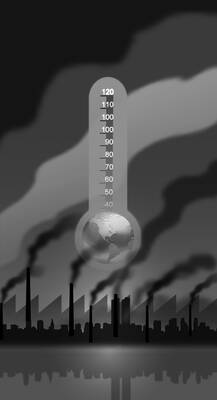
The closure of the Strait of Hormuz has sent the vast Asian chemicals industry into a tailspin. Deprived of the likes of Qatari natural gas and Saudi Arabian oil, the region’s fertilizer and plastics plants are slowing production or even shutting down. Everywhere except China, that is. In petrochemicals, China is unique. As well as a traditional industry that uses oil and gas as feedstock, it has parallel output that relies on its abundant domestic coal. Unsurprisingly, India and other regional powers want to copy and paste the Chinese method. This would not be easy — or climate friendly. The
KMT Chairwoman Cheng Li-wun’s (鄭麗文) recent visit to Beijing and her upcoming visit to Washington will serve as a high-level test of her diplomatic mettle. In Beijing, Cheng was received with symbolic gestures, a warm reception, and high-level access. In Washington, she will receive far less pomp and far sharper questions about the KMT’s vision for the future of Taiwan. Her challenge will be to persuade Washington that the KMT’s engagement with China can coexist with strong deterrence. Cheng’s April 7-12 visit to mainland China coincided with an intense period of conflict in Iran. Despite the strategic significance of Cheng’s trip,
History might remember 2026, not 2022, as the year artificial intelligence (AI) truly changed everything. ChatGPT’s launch was a product moment. What is happening now is an anthropological moment: AI is no longer merely answering questions. It is now taking initiative and learning from others to get things done, behaving less like software and more like a colleague. The economic consequence is the rise of the one-person company — a structure anticipated in the 2024 book The Choices Amid Great Changes, which I coauthored. The real target of AI is not labor. It is hierarchy. When AI sharply reduces the cost
US President Donald Trump recently repeated his claim that “Taiwan stole America’s chip industry,” reigniting public debate on the issue. As a former Taiwanese minister of economic affairs and an entrepreneur deeply involved in semiconductor supply chain development, I feel a responsibility to clarify this misunderstanding. From the perspective of global industrial evolution and the economic principle of comparative advantage, such a statement appears overly simplistic and risks obscuring the essence of the issue. The rise of Taiwan’s semiconductor industry was not built on “replacing America,” but rather emerged as a result of countries pursuing different development paths within the


 RSS
RSS