


The Maokong Cable Car system opened last Wednesday. What should have been a good thing has become a mess. The current and former mayor of Taipei were left hanging in mid-air on opening day. On the ground, long lines of people formed, traffic was a mess and street vendors jacked up their prices.
The mayor has reportedly decided that a set of management rules are needed -- and will be issued in October. City residents can appreciate the pressures on public officials, but having seen such chaos and inefficiency, I can only shake my head. Government institutions must make an effort to improve their project implementation and management skills.
Many construction projects in Taiwan focus only on the construction itself. The quality of construction is important. But as we see with the Maokong project, simply finishing a project doesn't ensure smooth operations.
It seems the focus on the cable car project was only on the hardware, while factors affecting the use of the facilities were ignored.
What impact would weather and high temperatures have? What would be the impact of traffic? Would traffic controls be needed? What about street vendors? Would they need to be controlled?
Questions such as these should have been dealt with beforehand. But such details are frequently overlooked, which results in expensive construction projects becoming the target of criticism, and this is a pity.
This is directly related to government agencies ignorance of management. Manageability is ignored at high social cost. In light of this, it is not strange that the inefficiency of government agencies is one of the main reasons that Taiwan frequently ranks so low in international competitiveness rankings.
The chaos surrounding the opening of the Maokong Cable Car system once again tells us that construction planning must include detailed and exhaustive management planning. If this is delayed until after the facility opens, chaos will be a given.
If Taiwan wants to overcome bottlenecks created by government inefficiency, we must strengthen management training and administrative ability within the civil service. If we don't, any talk about developing the tourism industry or improving competitiveness will remain ink on paper.
Ko Cheng-en is a professor in the College of Management at National Taiwan University.
Translated by Perry Svensson
A gap appears to be emerging between Washington’s foreign policy elites and the broader American public on how the United States should respond to China’s rise. From my vantage working at a think tank in Washington, DC, and through regular travel around the United States, I increasingly experience two distinct discussions. This divergence — between America’s elite hawkishness and public caution — may become one of the least appreciated and most consequential external factors influencing Taiwan’s security environment in the years ahead. Within the American policy community, the dominant view of China has grown unmistakably tough. Many members of Congress, as
The Hong Kong government on Monday gazetted sweeping amendments to the implementation rules of Article 43 of its National Security Law. There was no legislative debate, no public consultation and no transition period. By the time the ink dried on the gazette, the new powers were already in force. This move effectively bypassed Hong Kong’s Legislative Council. The rules were enacted by the Hong Kong chief executive, in conjunction with the Committee for Safeguarding National Security — a body shielded from judicial review and accountable only to Beijing. What is presented as “procedural refinement” is, in substance, a shift away from
The shifting geopolitical tectonic plates of this year have placed Beijing in a profound strategic dilemma. As Chinese President Xi Jinping (習近平) prepares for a high-stakes summit with US President Donald Trump, the traditional power dynamics of the China-Japan-US triangle have been destabilized by the diplomatic success of Japanese Prime Minister Sanae Takaichi in Washington. For the Chinese leadership, the anxiety is two-fold: There is a visceral fear of being encircled by a hardened security alliance, and a secondary risk of being left in a vulnerable position by a transactional deal between Washington and Tokyo that might inadvertently empower Japan
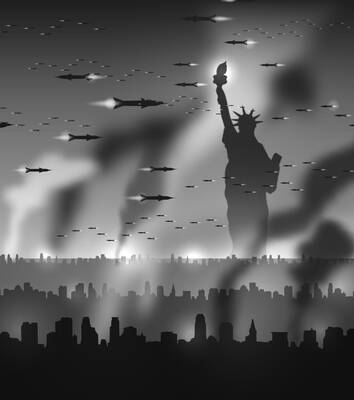
After declaring Iran’s military “gone,” US President Donald Trump appealed to the UK, France, Japan and South Korea — as well as China, Iran’s strategic partner — to send minesweepers and naval forces to reopen the Strait of Hormuz. When allies balked, the request turned into a warning: NATO would face “a very bad” future if it refused. The prevailing wisdom is that Trump faces a credibility problem: having spent years insulting allies, he finds they would not rally when he needs them. That is true, but superficial, as though a structural collapse could be caused by wounded feelings. Something


 RSS
RSS