


Is that a real Coach Handbag? Is that medicine I need for my blood pressure real? I hope so.
If I write a song or a book, will I be properly compensated for it? Will my children be able work in jobs that reward them for their creativity and hard work?
Unfortunately, some people believe that protecting intellectual property rights (IPR) only means that they have to pay for a product they would prefer to get for free or for next to nothing.
Most consider intellectual property as extending to music, movies, or books. But they also cover handbags, designer clothing and more scarily, medicines.
Of course it's true: We should pay for what we use. But it is important to understand that protecting intellectual property is really about protecting all of us.
Patents, copyrights and trademarks are there for two reasons. The first is to let the consumer know what he or she is buying, whether it is a designer handbag, a piece of expensive electronic equipment, or life-saving medicine.
The second reason is to protect the legitimate rights of the producer of products.
Yes, the author should be paid for his work, the inventor for her discovery and the designer for his creativity.
That, in turn, helps to foster innovation. And innovation is what drives our economies, raises our standard of living and improves our health care.
If you don't believe me, look at the statistics: The World Economic Forum reported that the 20 countries perceived to have the strongest intellectual property protection were among the world's top 27 countries in terms of economic growth opportunities.
In contrast, the countries with the worst intellectual property protection were at the bottom of the pile among the bottom 36 countries. It makes sense.
Most of the growth of the global economy in the last century -- a 20-fold increase -- was due to innovation. Now that 70 percent of global output is generated by services, innovation has become even more important.
Both the US and Taiwan have a strong interest in protecting and fostering our innovators.
For Taiwan, in particular, the future is clear with respect to economic development. The nation's high-tech industries, scientists and engineers -- of which you are justifiably proud -- will lead to economic growth and development. Encouraging and protecting their discoveries and innovations are key to a prosperous future.
Copyright protections for Taiwan's musicians, writers and artists -- whether they be world famous or local favorites -- are important to keep them creating and contributing to Taiwan's rich culture.
And yes, when we take medicine, whether it be for a headache, high blood pressure, or even the flu, we all deserve to know what exactly we are buying.
Taiwan is taking steps to improve its intellectual property protection. The Taiwan Intellectual Property Office under the Ministry of Economic Affairs, along with many others in government, industry and education, are working hard on this important issue. Not only are they improving protections for all of us, they are helping to build a prosperous future for the nation.
Best wishes to everyone on World Intellectual Property Day.
Stephen Young is the director of the American Institute in Taiwan.
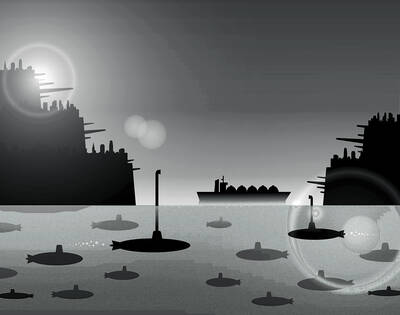
In the event of a war with China, Taiwan has some surprisingly tough defenses that could make it as difficult to tackle as a porcupine: A shoreline dotted with swamps, rocks and concrete barriers; conscription for all adult men; highways and airports that are built to double as hardened combat facilities. This porcupine has a soft underbelly, though, and the war in Iran is exposing it: energy. About 39,000 ships dock at Taiwan’s ports each year, more than the 30,000 that transit the Strait of Hormuz. About one-fifth of their inbound tonnage is coal, oil, refined fuels and liquefied natural gas (LNG),
On Monday, the day before Chinese Nationalist Party (KMT) Chairwoman Cheng Li-wun (鄭麗文) departed on her visit to China, the party released a promotional video titled “Only with peace can we ‘lie flat’” to highlight its desire to have peace across the Taiwan Strait. However, its use of the expression “lie flat” (tang ping, 躺平) drew sarcastic comments, with critics saying it sounded as if the party was “bowing down” to the Chinese Communist Party (CCP). Amid the controversy over the opposition parties blocking proposed defense budgets, Cheng departed for China after receiving an invitation from the CCP, with a meeting with
Chinese Nationalist Party (KMT) Chairwoman Cheng Li-wun (鄭麗文) is leading a delegation to China through Sunday. She is expected to meet with Chinese President Xi Jinping (習近平) in Beijing tomorrow. That date coincides with the anniversary of the signing of the Taiwan Relations Act (TRA), which marked a cornerstone of Taiwan-US relations. Staging their meeting on this date makes it clear that the Chinese Communist Party (CCP) intends to challenge the US and demonstrate its “authority” over Taiwan. Since the US severed official diplomatic relations with Taiwan in 1979, it has relied on the TRA as a legal basis for all
To counter the CCP’s escalating threats, Taiwan must build a national consensus and demonstrate the capability and the will to fight. The Chinese Communist Party (CCP) often leans on a seductive mantra to soften its threats, such as “Chinese do not kill Chinese.” The slogan is designed to frame territorial conquest (annexation) as a domestic family matter. A look at the historical ledger reveals a different truth. For the CCP, being labeled “family” has never been a guarantee of safety; it has been the primary prerequisite for state-sanctioned slaughter. From the forced starvation of 150,000 civilians at the Siege of Changchun


 RSS
RSS