


Since taking office, President William Lai (賴清德) has been an active proponent of the Healthy Taiwan initiative. As a member of the Healthy Taiwan Promotion Committee, I have also contributed recommendations on various pharmaceutical policies.
After the committee concluded its seventh meeting on Saturday last week, Lai announced that the government is considering a three-year suspension on the Drug Expenditure Target (DET) system’s routine drug price surveys, highlighting the need to further support drug supply resilience. While I am supportive of this policy direction, I must also stress the importance of maintaining our original objective of improving the quality of healthcare in Taiwan.
The first bottom-line issue to tackle is the floor price for drugs under the National Health Insurance (NHI) Drug Reimbursement Benefits and Payment Standards (全民健康保險藥物給付項目及支付標準). These floor prices set the minimum reimbursement level that the NHI would pay for a particular drug, but they have not kept up with rising production costs. In 2019, a proposal to raise floor prices was ultimately abandoned. For drugs that are only receiveing NHI reimbursement at these minimum floor prices, when hospitals further undercut prices to edge out competitors, it makes it difficult for drug manufacturers to earn sustainable profits. To address this, a claw-back mechanism should be established to recover hospital savings from price reductions and reinvest them to support manufacturers of essential medicines. This would shore up drug supply resilience and help prevent future shortages.
Second is the issue of maintaining market fairness and competition. For drugs already listed under the NHI, a separate review should be conducted outside the existing system. This review should identify post-patent drugs whose NHI reimbursement prices remain higher than those in other countries and reset them to more reasonable payment levels. For generic drugs, domestic manufacturers are already inspected by the Food and Drug Administration to ensure quality, but similar oversight should be applied to imported generics. These measures would help ensure compliance with Pharmaceutical Inspection Co-operation Scheme’s Good Manufacturing Practice standards while preserving fairness and competitiveness in the pharmaceutical market.
The NHI has been operating for more than 30 years, and drug expenditures account for nearly 30 percent of total expenditures, with annual drug costs exceeding NT$200 billion (US$6.3 billion). For this reason, the DET system was introduced in 2013 as a measure to curb excessive growth in NHI drug spending. More than 10 years have passed since then — babies born at the time of its introduction are already finishing elementary school. While the system has saved considerable costs for NHI, repeated price reductions have driven some drugs out of the Taiwanese market and contributed to market concentration in the pharmaceutical sector, as seen in 2024 with the shortage of saline solution.
It is time to review the advantages and disadvantages of this pilot system and design a long-term framework that balances cost control, supply resilience, market competition and quality of care.
Huang Jin-shun is a Presidential Office national policy advisor and an honorary president of the Federation of Taiwan Pharmacists’ Associations.
Translated by Gilda Knox Streader

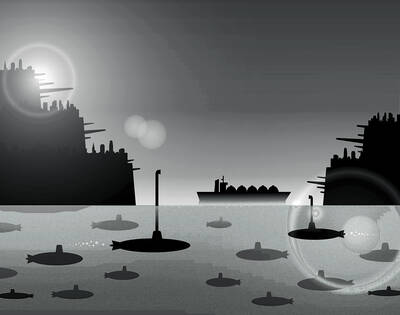
In the event of a war with China, Taiwan has some surprisingly tough defenses that could make it as difficult to tackle as a porcupine: A shoreline dotted with swamps, rocks and concrete barriers; conscription for all adult men; highways and airports that are built to double as hardened combat facilities. This porcupine has a soft underbelly, though, and the war in Iran is exposing it: energy. About 39,000 ships dock at Taiwan’s ports each year, more than the 30,000 that transit the Strait of Hormuz. About one-fifth of their inbound tonnage is coal, oil, refined fuels and liquefied natural gas (LNG),
On Monday, the day before Chinese Nationalist Party (KMT) Chairwoman Cheng Li-wun (鄭麗文) departed on her visit to China, the party released a promotional video titled “Only with peace can we ‘lie flat’” to highlight its desire to have peace across the Taiwan Strait. However, its use of the expression “lie flat” (tang ping, 躺平) drew sarcastic comments, with critics saying it sounded as if the party was “bowing down” to the Chinese Communist Party (CCP). Amid the controversy over the opposition parties blocking proposed defense budgets, Cheng departed for China after receiving an invitation from the CCP, with a meeting with
Chinese Nationalist Party (KMT) Chairwoman Cheng Li-wun (鄭麗文) is leading a delegation to China through Sunday. She is expected to meet with Chinese President Xi Jinping (習近平) in Beijing tomorrow. That date coincides with the anniversary of the signing of the Taiwan Relations Act (TRA), which marked a cornerstone of Taiwan-US relations. Staging their meeting on this date makes it clear that the Chinese Communist Party (CCP) intends to challenge the US and demonstrate its “authority” over Taiwan. Since the US severed official diplomatic relations with Taiwan in 1979, it has relied on the TRA as a legal basis for all
To counter the CCP’s escalating threats, Taiwan must build a national consensus and demonstrate the capability and the will to fight. The Chinese Communist Party (CCP) often leans on a seductive mantra to soften its threats, such as “Chinese do not kill Chinese.” The slogan is designed to frame territorial conquest (annexation) as a domestic family matter. A look at the historical ledger reveals a different truth. For the CCP, being labeled “family” has never been a guarantee of safety; it has been the primary prerequisite for state-sanctioned slaughter. From the forced starvation of 150,000 civilians at the Siege of Changchun


 RSS
RSS