


Critics of European monetary integration often point out that, in the absence of political union, monetary union is doomed to fail. I agree with the critics' conclusion, but not with their premise, for the success of the single currency so far has been due precisely to the political commitments of the union's member countries.
In other words, it is not true that the EU does not constitute a political union. European economic integration -- in all its aspects -- reflects the desire to integrate Europe politically, which, at least in my view, implies that European economic and monetary integration is irreversible.
This has been true from the outset of the European integration process in 1952, when six countries established the European Coal and Steel Community (ECSC). The aim of the ECSC was explicitly political: to remove control of the two most important raw materials for the production of heavy weaponry from states that had just fought the bloodiest war in history.
This drive for peace remained, quietly, the key motivation behind further steps toward Europe's economic integration, which was regarded as the vehicle for achieving political integration.
In 1951, French prime minister Rene Pleven proposed establishing a European Defense Community (EDC) alongside the ECSC. He failed, but the idea did not vanish.
Later that year, Robert Schumann -- the French foreign minister at the time and a founding father of European integration -- explicitly identified the ECSC with the drive for peace. He described it as a means for creating a "fusion of interests ? that will be the leavening from which may grow a wider and deeper community between countries long opposed to one another by bloody conflicts."
These words were echoed on the eve of the introduction of the single currency. In particular, Germany under chancellor Helmut Kohl often linked monetary integration with the objective of political union. Kohl once referred to the single currency's success as a matter of "war and peace."
For this reason, I do not agree with those who argue that Germany's support for European monetary integration was the price it paid for Europe's acceptance of German reunification. On the contrary, the historical record shows that Germany made the case for a parallel drive to monetary and political integration well before the fall of the Iron Curtain.
Of course, there are other motives behind support for economic integration. The EU's leaders are convinced that achieving the so-called four freedoms -- ie, freedom of movement of goods, services, capital and people -- will optimize the well-being of Europe's population. They also aspire to increase the continent's strategic power.
But peace was the principal driving force in the minds of people like Schumann and Jean Monnet at the beginning of the European integration process, as it was for Helmut Schmidt and Valery Giscard d'Estaing when they laid the foundations of the single currency and today's European Central Bank.
For half a century, the process of European integration proceeded -- sometimes with setbacks, sometimes with giant steps forward -- joining formerly separate markets by creating increasingly close trade relations.
Over time, this stimulated ever-greater economic convergence. Of course, Europe's economies have not become "look-alikes," nor has GDP per capita been fully equalized. But the differences between Europe's economies were never so dramatic as to form an insurmountable barrier to embarking upon the most ambitious project of all: adopting a common currency.
Understanding this history is vital, because EU once again stands at a threshold: should it keep its promise to start membership talks with Turkey? In the wake of the defeat of the EU's Constitutional Treaty's in France and the Netherlands this spring, many say that Europe's decade-old promise cannot and should not be kept.
What strikes me as dangerous is that the issue of peace -- the motor that has driven European integration from the start -- rarely comes up in the debate about what to do in the wake of these events.
On the contrary, responsible statesmen and party leaders have come out openly against Turkish membership. I would have hoped that these people had learned from Schumann and Monnet what really matters for Europe and its future; sadly, this does not seem to be the case.
Of course, I do not fear some sort of military clash between Turkey and the EU. After all, Turkey has been and remains a loyal member of NATO. But an increasingly virulent and violent clash of cultures is emerging in Europe -- particularly in France, Germany, Spain, and the Netherlands -- between Islam and the humanitarian, Christian and Jewish traditions.
For me, Europe's integration of Muslim Turkey into its political union is the same sort of question of peace that Schumann and Monnet successfully confronted. Today, Europe needs peace between cultures as much as it once needed peace between nations, and it is for this reason that we must welcome Turkey into our midst.
Wim Duisenberg was the founding chairman of the European Central Bank.
Copyright: Project Syndicate
KMT Chairwoman Cheng Li-wun’s (鄭麗文) recent visit to Beijing and her upcoming visit to Washington will serve as a high-level test of her diplomatic mettle. In Beijing, Cheng was received with symbolic gestures, a warm reception, and high-level access. In Washington, she will receive far less pomp and far sharper questions about the KMT’s vision for the future of Taiwan. Her challenge will be to persuade Washington that the KMT’s engagement with China can coexist with strong deterrence. Cheng’s April 7-12 visit to mainland China coincided with an intense period of conflict in Iran. Despite the strategic significance of Cheng’s trip,
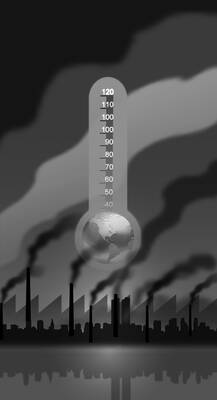
The closure of the Strait of Hormuz has sent the vast Asian chemicals industry into a tailspin. Deprived of the likes of Qatari natural gas and Saudi Arabian oil, the region’s fertilizer and plastics plants are slowing production or even shutting down. Everywhere except China, that is. In petrochemicals, China is unique. As well as a traditional industry that uses oil and gas as feedstock, it has parallel output that relies on its abundant domestic coal. Unsurprisingly, India and other regional powers want to copy and paste the Chinese method. This would not be easy — or climate friendly. The
Indonesian President Prabowo Subianto says he knows how to fix the problems facing Indonesia. Yet his economic mismanagement and authoritarian tendencies are steering the nation toward a familiar mix of currency instability and political chaos. The world’s fourth-most populous nation risks reversing the hard-won democratic and business reforms that came after the Asian Financial Crisis in 1997. At that time, the rupiah collapsed and the political upheaval that followed forced former president Haji Mohamed Suharto from power. Prabowo’s administration is ignoring similar warning signs. That disconnect was apparent in a national address on Wednesday, when Prabowo projected the swagger that has
“Of course you can choose not to be Taiwanese, just do not stay here,” chairwoman of Taipei 101 operator Taipei Financial Center Corp Janet Chia (賈永婕) said in an online interview with local entertainer Tai Chih-yuan (邰智源), triggering intense discussion on social media, with politicians across party lines weighing in. In the interview, which was aired on May 14, Chia and Tai’s discussion over a meal in Taipei 101 covered Chia’s career change from entertainer to chairwoman and US climber Alex Honnold’s free solo climb up the Taipei 101 building. During the interview, Chia said, “Being on this land, we


 RSS
RSS