


The consolidation of democracy in Taiwan has suffered because the blue camp could not accept their defeat in the March 20 presidential election, and could not resist the opportunity offered by the assassination attempt on the president and the vice president on March 19 to launch a protest movement with the slogan "no truth, no president." The movement has arranged repeated street protests and created disorder, which has made it difficult to consolidate Taiwan's democracy.
The presidential election highlighted the fact that Taiwan's democratization process is fraught with problems. In the final analysis, however, the most fundamental problem is the national identity crisis, and the biggest systemic and structural problem is the confusion within the system of constitutional government and difficulties in its operation.
Regarding constitutional reform, Su Tseng-chang (蘇貞昌), Presidential Office secretary-general, a few days back visited the author Po Yang (柏楊) to discuss the matter. The visit was the first stop on Su's quest to gather opinions regarding constitutional reform from every level and sector of society, including each opposition party.
Having said that constitutional reform is not the exclusive preserve of one party, he will invite representatives of each opposition party, judicial circles, academia and every level of society to discuss the issue together in order to solicit a wide range of opinions.
During the presidential election campaign, President Chen Shui-bian (
Domestic and international pressure caused Chen to retreat from his pre-election promotion of writing a new constitution. Instead, since the election he has promoted reform to amend the current constitution, thereby creating a "new" constitution that is in step with the times and that fits today's Taiwan without changing its national title, flag, anthem or territory -- which would continue to include the Chinese mainland, Outer Mongolia and Tibet). He has clearly sent himself on a "mission impossible."
However, we believe Chen to have the sincerity, strength of purpose and ability to make this "mission impossible" possible. If anyone is able to do so, it is Chen, and no one else. We are all waiting in anticipation.
Constitutional reform is the biggest political project a nation can undertake. Chen has to work hard, the Democratic Progressive Party (DPP) has to work hard and so do the people. The success of Su's quest for opinions will therefore depend on Chen and the DPP as well as the Chinese Nationalist Party (KMT) and all the people of Taiwan. This is difficult, and we can understand and recognize that difficulty.
However, although the four opposition parties all agreed on it during the presidential election campaign, they now seem to have forgotten everything about halving the number of legislative seats and the single-member district, double-ballot system, which are both more easily accomplished if implemented together. Even Chen and the DPP have backtracked and reneged on policies, which certainly is both disappointing and unacceptable.
In response to external demands for the fulfillment of the promise to halve the number of legislative seats, a senior member of the DPP has said that if the number of seats is halved without an accompanying implementation of electoral reform in the form of the single-member district system, the DPP may forever remain a minority party in the legislature.
He said that with the current 225-seat legislature (168 seats representing electoral districts), each legislator is elected by between 100,000 to 150,000 voters. If the number of seats is reduced to 113, there will only be a mere 74 seats representing electoral districts. In other words, each legislator will represent 200,000 to 300,000 voters. In Hualien county, Keelung City and Hsinchu City, which now are allocated two or three seats, the DPP currently holds at least one seat. If there is only one seat left to compete for, it would make it difficult for the DPP to win.
This person said that if the Taitung, Kinmen and Lienchiang County seats and the six seats reserved for representatives of the Aboriginal peoples are included, the DPP would immediately stand to lose 12 seats in these areas, where they have always been weak. If the DPP wants to win a majority of the seats representing electoral districts, the party would have to win 37 of the remaining 62 seats.
In other words, the DPP would have to win over 60 percent of the vote in the remaining parts of Taiwan to be able to secure a legislative majority. This person said that Chen was made aware of this DPP estimate some time last month. People with a mind for details will notice that Chen only rarely mentions the issue these days.
The DPP is in trouble but can hardly talk about it. If they make this estimate public, they may well be criticized for backtracking on their campaign promises, and the blue camp will probably insist on separating the two issues and pass only a bill halving the number of legislative seats while not agreeing to a single-member district, double-ballot system.
These concerns are specious. First, if the above calculation is wrong, the reasoning of course fails. Furthermore, the opposition parties have already agreed that the two measures shall be simultaneously implemented to achieve the goal of electoral reform. The DPP must of course continue to insist on linking the implementation of the two measures.
What is most surprising and depressing is that although the DPP has made a thorough estimate of the situation following a halving of the number of legislative seats, that estimate is seriously mistaken. The DPP is misleading itself and destroying its dominance.
First, even before there has been an election, the party has conceded defeat in six districts and the loss of the six Aboriginal peoples' seats. In other words, the system cannot be changed because they are afraid of losing. How short-sighted and preposterous! Good systems are meant to be launched and implemented. Under a good system parties shall work hard to win their votes. Where is the logic in conceding defeat even before an election has been held?
Second, the calculation is preposterous. After a halving of the number of legislative seats, Kinmen, Matsu, Penghu, Hualien and Taitung will still all have one seat each. Given the democratic principle of one man, one vote, the result is far from being settled. In most districts, an average of 200,000 votes are required for election, but in Kinmen, Matsu, and Penghu, and even Hualien and Taitung, several tens of thousand, or even a few thousand votes, are sufficient to win election, so these votes are an exception to the principle that every vote has equal value.
Therefore, Kinmen, Matsu and Penghu together may only be allowed to elect one legislator, and the Hualien and Taitung districts, and even the Hsinchu County and City districts may also be merged into one district. Following the same reasoning, the number of seats reserved for Aboriginal peoples should also be halved.
There are historical reasons why today's electoral districts do not adhere to the principle of one man, one vote, each of equal value. But times have changed, and there is no longer any reason to maintain old, undemocratic ways. That which needs changing must be changed. Chen and the DPP must not go on hatching and calculating -- or miscalculating -- plots, so that these two electoral reforms continue to be delayed or even abandoned as a result of faulty logic.
The democratic principle of "one man, one vote" is an ideal that must be pursued and implemented. The DPP was formed based on democratic ideals. So if reform is not promoted, and the DPP backtracks on its promise, the Taiwanese people will not forgive them. And further down the road of history, they will remember and bring the DPP to account.
Chiou Chwei-liang is a visiting professor at Tamkang University.
Translated by Perry Svensson
Minister of Labor Hung Sun-han (洪申翰) on April 9 said that the first group of Indian workers could arrive as early as this year as part of a memorandum of understanding (MOU) between the Taipei Economic and Cultural Center in India and the India Taipei Association. Signed in February 2024, the MOU stipulates that Taipei would decide the number of migrant workers and which industries would employ them, while New Delhi would manage recruitment and training. Employment would be governed by the laws of both countries. Months after its signing, the two sides agreed that 1,000 migrant workers from India would
In recent weeks, Taiwan has witnessed a surge of public anxiety over the possible introduction of Indian migrant workers. What began as a policy signal from the Ministry of Labor quickly escalated into a broader controversy. Petitions gathered thousands of signatures within days, political figures issued strong warnings, and social media became saturated with concerns about public safety and social stability. At first glance, this appears to be a straightforward policy question: Should Taiwan introduce Indian migrant workers or not? However, this framing is misleading. The current debate is not fundamentally about India. It is about Taiwan’s labor system, its
On March 31, the South Korean Ministry of Foreign Affairs released declassified diplomatic records from 1995 that drew wide domestic media attention. One revelation stood out: North Korea had once raised the possibility of diplomatic relations with Taiwan. In a meeting with visiting Chinese officials in May 1995, as then-Chinese president Jiang Zemin (江澤民) prepared for a visit to South Korea, North Korean officials objected to Beijing’s growing ties with Seoul and raised Taiwan directly. According to the newly released records, North Korean officials asked why Pyongyang should refrain from developing relations with Taiwan while China and South Korea were expanding high-level
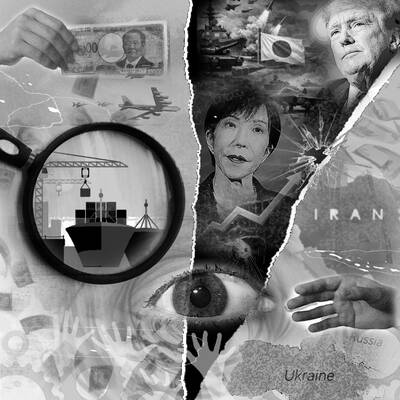
Japan’s imminent easing of arms export rules has sparked strong interest from Warsaw to Manila, Reuters reporting found, as US President Donald Trump wavers on security commitments to allies, and the wars in Iran and Ukraine strain US weapons supplies. Japanese Prime Minister Sanae Takaichi’s ruling party approved the changes this week as she tries to invigorate the pacifist country’s military industrial base. Her government would formally adopt the new rules as soon as this month, three Japanese government officials told Reuters. Despite largely isolating itself from global arms markets since World War II, Japan spends enough on its own


 RSS
RSS