


Part of the Bodhisatta's vows that are so central to Mahayana Buddhism, the form of Buddhism that is most widespread in Taiwan, say, "For as long as space endures and for as long as living beings remain, until then may I, too, abide to dispel the misery of the world." According to government statistics 4,863,000 Taiwanese identify themselves as Buddhist, making it the largest faith in Taiwan. The tenets of this faith are clearly opposed to the death penalty. Their personal opposition is far less clear or vocal. To be serious about Buddhism is to be serious about ending the death penalty.
One high profile example of this opposition is the Dalai Lama, who is popular and respected in Taiwan. Buddhist followers should also note his position on the death penalty. His Holiness issued a statement several years ago saying: "My overriding belief is that it is always possible for criminals to improve and that by its very finality the death penalty contradicts this. Therefore, I support those organizations and individuals who are trying to bring an end to the use of the death penalty ... I wholeheartedly support an appeal to those countries who at present employ the death penalty to observe an unconditional moratorium. At the same time we should give more support to education and encourage a greater sense of universal responsibility. We need to explain the importance of the practice of love and compassion for our own survival and to try to minimize those conditions which foster murderous tendencies, such as the proliferation of weapons in our societies. These are things even private individuals can work towards."
The Dalai Lama's predecessor abolished the death penalty in Tibet as being clearly against Buddhist ideals. In doing so he was following the teaching of the Buddhist sage Nagarjuna who advised King Udayi, "O King, through compassion you should always generate an attitude of help even for all those embodied beings who have committed appalling sins. Especially generate compassion for those murderers, whose sins are horrible; those of fallen nature are receptacles of compassion from those whose nature is great. Once you have analyzed the angry murderers and recognized them well, you should banish them without killing or tormenting them."
This advice is directed to a king who had the direct power to execute condemned criminals.
Most Buddhist practitioners in Taiwan are obviously not kings and do not have any direct involvement in the death penalty. This can often lead individual Buddhists to accept what is a very flimsy excuse for not actively opposing the death penalty -- "I am not a judge, nor a prosecutor, nor a criminal, nor an executioner, nor a legislator, nor the president. I don't have anything to do with the death penalty. Thus I am not responsible for the death penalty and I can still claim to be a `true and good' Buddhist."
That excuse overlooks the fact that responsibility can be active or passive. Buddhist ethics are clear on the idea that individuals are morally responsible for their acts. Buddhist ethics are also clear on the idea that acquiescence is an "act" that carries moral or karmic results. This comes out in the Dalai Lama's statement where he says he hopes to "encourage a greater sense of universal responsibility." Note the idea here: that responsibility for the elimination of the death penalty is universal. It is not the exclusive purview of any one group in a society. As the Dalai Lama points out, "These are things even private individuals can work toward." And they are things that every Buddhist ought to work toward.
Brian Kennedy is an attorney who writes and teaches on criminal justice and human rights issues.
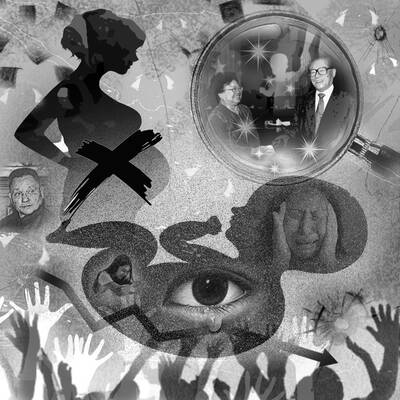
Jan. 1 marks a decade since China repealed its one-child policy. Just 10 days before, Peng Peiyun (彭珮雲), who long oversaw the often-brutal enforcement of China’s family-planning rules, died at the age of 96, having never been held accountable for her actions. Obituaries praised Peng for being “reform-minded,” even though, in practice, she only perpetuated an utterly inhumane policy, whose consequences have barely begun to materialize. It was Vice Premier Chen Muhua (陳慕華) who first proposed the one-child policy in 1979, with the endorsement of China’s then-top leaders, Chen Yun (陳雲) and Deng Xiaoping (鄧小平), as a means of avoiding the

The last foreign delegation Nicolas Maduro met before he went to bed Friday night (January 2) was led by China’s top Latin America diplomat. “I had a pleasant meeting with Qiu Xiaoqi (邱小琪), Special Envoy of President Xi Jinping (習近平),” Venezuela’s soon-to-be ex-president tweeted on Telegram, “and we reaffirmed our commitment to the strategic relationship that is progressing and strengthening in various areas for building a multipolar world of development and peace.” Judging by how minutely the Central Intelligence Agency was monitoring Maduro’s every move on Friday, President Trump himself was certainly aware of Maduro’s felicitations to his Chinese guest. Just
As the Chinese People’s Liberation Army (PLA) races toward its 2027 modernization goals, most analysts fixate on ship counts, missile ranges and artificial intelligence. Those metrics matter — but they obscure a deeper vulnerability. The true future of the PLA, and by extension Taiwan’s security, might hinge less on hardware than on whether the Chinese Communist Party (CCP) can preserve ideological loyalty inside its own armed forces. Iran’s 1979 revolution demonstrated how even a technologically advanced military can collapse when the social environment surrounding it shifts. That lesson has renewed relevance as fresh unrest shakes Iran today — and it should
On today’s page, Masahiro Matsumura, a professor of international politics and national security at St Andrew’s University in Osaka, questions the viability and advisability of the government’s proposed “T-Dome” missile defense system. Matsumura writes that Taiwan’s military budget would be better allocated elsewhere, and cautions against the temptation to allow politics to trump strategic sense. What he does not do is question whether Taiwan needs to increase its defense capabilities. “Given the accelerating pace of Beijing’s military buildup and political coercion ... [Taiwan] cannot afford inaction,” he writes. A rational, robust debate over the specifics, not the scale or the necessity,


 RSS
RSS