


The Taiwan issue is something that China wants to talk about during Premier Wen Jiabao's (
Trade issues have always taken center stage during past US visits by Chinese premiers. Wen can hardly avoid them. After all, finance and economics are within Wen's responsibilities as premier.
US-China trade frictions may not reach the level of becoming a trade war. However, serious friction has occurred between the two countries recently over steel taxes, textiles quotas, taxes on color TV sets, the US' trade deficit with China and the exchange rate between the dollar and the yuan.
In the year before the US presidential election, the Bush administration will remember the path taken by former president George Bush. Trade and economic issues will become a priority in President George W. Bush's re-election bid.
The US' trade deficit has been growing every year. Its trade deficit with China has reached US$120 billion. This is an amount no government can ignore.
The US economy is currently showing signs of recovery, but the trade problems and job losses facing the manufacturing factor have been far more serious than the government expected. Under election pressure, the Bush administration has no choice but to apply pressure and take a stance on trade issues with China.
The US imposed tariffs on imported steel in order to protect the domestic steel industry and tackle unemployment among steel laborers. Bush eventually dropped the tariffs rather than ignite a trade war with China and the EU. However, the US still plans to limit Chinese textile imports and to impose anti-dumping taxes on low-priced television sets made in China.
Wen will suggest to the US that the two sides establish a mechanism for regular trade negotiations so that trade disputes may be resolved peacefully through talks. Wen will also suggest the establishment of a control mechanism that regularly reviews the two sides' exports and imports in terms of product type and quantity.
China will also sign a shipping agreement with the US and allow joint-venture shipping agencies to operate on the Chinese mainland. The US, meanwhile, will alter the inequitable treatment accorded to Chinese shipping enterprises in the US. In addition, Wen also plans to import massive amounts of US products, including airplanes, in the hope of easing US pressure.
In terms of the Chinese yuan issue, the US has reiterated its demand that the exchange rate should be liberalized. China's stance, however, is already quite clear. It wants to offer gradual capital investments before reviewing the exchange rate. Predictably, each side will be singing its own tune.
However, the US could come under criticism and violate WTO principles if it adopts a protectionist tactic by pressuring China with the threat of trade penalties. The exchange rate is a balancing point between the two sides' trade power. We suggest that the US negotiate with China and adopt a moderate, gradual method that allows China to adopt a liberalization policy on the exchange rate and adjust the two sides' trade balance issues via the market forces of the exchange rate.
The US wants to open the China market. It also wants to use the power of that market to accelerate China's democratization. The Bush administration has not been able to consider effective interaction between economic issues and security issues, or to support and promote democratization via a consistent economic policy. Now it's a little late, but better late than never. Wen's visit will be a good starting point.
On March 22, 2023, at the close of their meeting in Moscow, media microphones were allowed to record Chinese Communist Party (CCP) dictator Xi Jinping (習近平) telling Russia’s dictator Vladimir Putin, “Right now there are changes — the likes of which we haven’t seen for 100 years — and we are the ones driving these changes together.” Widely read as Xi’s oath to create a China-Russia-dominated world order, it can be considered a high point for the China-Russia-Iran-North Korea (CRINK) informal alliance, which also included the dictatorships of Venezuela and Cuba. China enables and assists Russia’s war against Ukraine and North Korea’s
After thousands of Taiwanese fans poured into the Tokyo Dome to cheer for Taiwan’s national team in the World Baseball Classic’s (WBC) Pool C games, an image of food and drink waste left at the stadium said to have been left by Taiwanese fans began spreading on social media. The image sparked wide debate, only later to be revealed as an artificially generated image. The image caption claimed that “Taiwanese left trash everywhere after watching the game in Tokyo Dome,” and said that one of the “three bad habits” of Taiwanese is littering. However, a reporter from a Japanese media outlet
Taiwanese pragmatism has long been praised when it comes to addressing Chinese attempts to erase Taiwan from the international stage. “Taipei” and the even more inaccurate and degrading “Chinese Taipei,” imposed titles required to participate in international events, are loathed by Taiwanese. That is why there was huge applause in Taiwan when Japanese public broadcaster NHK referred to the Taiwanese Olympic team as “Taiwan,” instead of “Chinese Taipei” during the opening ceremony of the Tokyo Olympics. What is standard protocol for most nations — calling a national team by the name their country is commonly known by — is impossible for
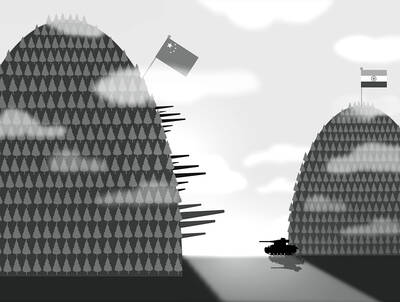
India is not China, and many of its residents fear it never will be. It is hard to imagine a future in which the subcontinent’s manufacturing dominates the world, its foreign investment shapes nations’ destinies, and the challenge of its economic system forces the West to reshape its own policies and principles. However, that is, apparently, what the US administration fears. Speaking in New Delhi last week, US Deputy Secretary of State Christopher Landau warned that “we will not make the same mistakes with India that we did with China 20 years ago.” Although he claimed the recently agreed framework


 RSS
RSS