


President Chen Shui-bian's (陳水扁) diplomatic tour reached a climax this week with unexpected encounters with US Secretary of State Colin Powell and Scottish movie star Sean Connery at Panama's centennial celebrations.
Powell and Connery are the superstars of the US political arena and the global film arena respectively. Even though Chen met them only briefly, the meetings are nevertheless noteworthy given Taiwan's difficult international situation and the obstacles to establishing formal US-Taiwan diplomatic ties.
Powell's familiarity with Chen was only natural, but it was surprising that Connery, who became famous for playing the British spy James Bond in movies, told Chen he was his idol. Apparently, virtuous people are never lonely and everyone wants to be their friend. Even though Taiwan has been isolated diplomatically, its economic and domestic performance has wowed the international community. We believe Connery's respect for Chen came from his heart. Connery would never have made a similar remark to Chinese President Hu Jintao (胡錦濤). How could the president of China -- a country that oppresses its people, violates their human rights and browbeats Taiwan at every turn -- become an idol of internationally renowned people?
It was no wonder that Therese Shaheen, chairwoman of the American Institute in Taiwan, praised the people of Taiwan as "superstars" when she met Chen earlier. Shaheen said that Iraq, though rich in natural resources, had destroyed itself. By contrast, Taiwan has only people but nevertheless created a highly developed economy.
Without wanting to sound smug about Shaheen's praise, we hope that the enlightening remarks from this sincere friend of Taiwan will cause the nation's political camps to rethink their entrenched positions. While the international community watches Taiwan's success, the opposition parties are toadying up to China and spout rancid remarks about Chen's diplomatic tour. They cannot bring themselves to accept the success of his visit, and they are dying to see Chen, the nation's head of state, insulted by the international community. Sometimes we suspect Taiwan has politicians of two nationalities -- Taiwanese and Chinese. These Chinese politicos fume whenever they see their head of state receiving courteous treatment. Chinese Nationalist Party (KMT) Chairman Lien Chan (連戰) heaped abuse on the Chen administration during his visit to the UK and the US last month. During Chen's trip, Lien continued to attack him. Lien is acting like China's representative in Taiwan. Not to be outdone in displaying loyalty to China, People First Party Chairman James Soong (宋楚瑜) not only ridiculed Chen for not getting a 21-gun salute during his visit to the US, but also criticized him for being unqualified to receive an international human rights award.
Now we know why Chen received unprecedented hospitality during his stopover in New York, and why China has kept silent about the matter. It's because China already has two loyal watchdogs -- Lien and Soong. China need do nothing to attack Chen as long as Lien and Soong remain active in Taiwan's political arena.
A gap appears to be emerging between Washington’s foreign policy elites and the broader American public on how the United States should respond to China’s rise. From my vantage working at a think tank in Washington, DC, and through regular travel around the United States, I increasingly experience two distinct discussions. This divergence — between America’s elite hawkishness and public caution — may become one of the least appreciated and most consequential external factors influencing Taiwan’s security environment in the years ahead. Within the American policy community, the dominant view of China has grown unmistakably tough. Many members of Congress, as
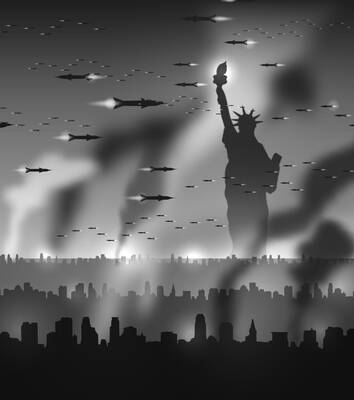
After declaring Iran’s military “gone,” US President Donald Trump appealed to the UK, France, Japan and South Korea — as well as China, Iran’s strategic partner — to send minesweepers and naval forces to reopen the Strait of Hormuz. When allies balked, the request turned into a warning: NATO would face “a very bad” future if it refused. The prevailing wisdom is that Trump faces a credibility problem: having spent years insulting allies, he finds they would not rally when he needs them. That is true, but superficial, as though a structural collapse could be caused by wounded feelings. Something
Former Taipei mayor and Taiwan People’s Party (TPP) founding chairman Ko Wen-je (柯文哲) was sentenced to 17 years in prison on Thursday, making headlines across major media. However, another case linked to the TPP — the indictment of Chinese immigrant Xu Chunying (徐春鶯) for alleged violations of the Anti-Infiltration Act (反滲透法) on Tuesday — has also stirred up heated discussions. Born in Shanghai, Xu became a resident of Taiwan through marriage in 1993. Currently the director of the Taiwan New Immigrant Development Association, she was elected to serve as legislator-at-large for the TPP in 2023, but was later charged with involvement
Out of 64 participating universities in this year’s Stars Program — through which schools directly recommend their top students to universities for admission — only 19 filled their admissions quotas. There were 922 vacancies, down more than 200 from last year; top universities had 37 unfilled places, 40 fewer than last year. The original purpose of the Stars Program was to expand admissions to a wider range of students. However, certain departments at elite universities that failed to meet their admissions quotas are not improving. Vacancies at top universities are linked to students’ program preferences on their applications, but inappropriate admission


 RSS
RSS