


The coastal region of Fukui has Japan’s biggest share of dual-income households, the highest ratio of working women and the lowest unemployment rate. What it doesn’t have is enough babies.
The provincial government this month is starting the Fukui Marriage-Hunting Cafe, a Web site for singles, to help stem the falling birthrate as it begins to damage the economy. As an added incentive, couples who agree to marry will get cash or gifts, said Akemi Iwakabe, deputy director of Fukui’s Children and Families division.
“Many of our single residents were telling us that they wanted to get married, but couldn’t because they weren’t meeting anyone,” she said.
Japan’s first online dating service organized by a prefectural government follows national measures to extend parental leave that have so far failed to convince women to have more children. The fertility rate has dropped to 1.34 children per woman, shrinking the pool of workers and consumers and increasing the burden on younger employees to pay for an aging population.
“It’s difficult to breathe life back into an economy without children, without young people,” said Naoki Iizuka, an economist at Mizuho Securities Co in Tokyo. “When an area like this keeps aging, the public finances of that government won’t last.”
Fukui, 316km northwest of Tokyo, is known for its spectacle frames, synthetic fiber and nuclear power plants that generate a quarter of Japan’s atomic energy. It also produces about twice the number of business owners as a proportion to the number of residents compared with the national average.
The OECD estimates the number of working-age Japanese will drop to 81 million this year, compared with the 1995 peak of 87 million. The average number of children that Japanese women have compares with Canada’s 1.6 and France’s 2, according to the World Bank. The 2.1 rate in the US is considered the minimum for a developed nation to maintain a constant population.
Japan’s leaders must take more aggressive measures to help young people raise families, or the baby shortage will accelerate, Iizuka said. About 23 percent of the country’s population is over 65, the highest ratio among the 62 countries tracked by Bloomberg.
Key to boosting the birthrate is getting couples to marry. Three-fourths of the decline in Japan’s fertility rate between 1975 and 2005 can be explained by more women delaying or foregoing marriage, says Miho Iwasawa, a researcher at the National Institute of Population and Social Security Research in Tokyo. Only 2 percent of children are born out of wedlock in Japan, according to the Labor Ministry.
Census data show that 32 percent of women between 30 to 34 years old were unwed in 2005, more than twice the number 15 years earlier.
The Democratic Party of Japan came to power last year promising to lighten the burden of child-rearing. Families started receiving monthly allowances of ¥13,000 (US$150) a child this fiscal year and can now send their children to public high school for free. Japanese Prime Minister Naoto Kan appointed Koichiro Gemba to a Cabinet-level post to counter the declining birthrate. Kan had also pushed his staff to leave work at 6pm for weekday dates.
Even so, national and local governments need to reach the unmarried, whose rising proportion in the country is the biggest factor behind the shortage of children, said Shigeki Matsuda, a sociologist at Dai-Ichi Life Research Institute in Tokyo.
Japan isn’t the only country experimenting with publicly run matchmaking.
Singapore’s Social Development Network works to “facilitate marriages and nurture a culture where singles view marriage as a top life goal.” Its “LoveByte” Web site dispenses dating advice, allows people to search for other registered singles and advertises privately run speed-dating events.
Japan’s previous local government efforts to pair youth haven’t raised marriage rates, Dai-Ichi’s Matsuda said.
“The root problem is this: They don’t have financial stability,” he said. “That’s a problem with their employment opportunities that can’t be resolved by dating support.”
Fukui’s service will also compete with a host of private online dating services such as Tokyo-based O-Net Inc, which organizes events for its 38,000 members such as wine-tasting tours and “elegance” seminars for women.
Organized dating activities called konkatsu, or marriage-hunting, including 8am singles breakfasts, trash-picking by Shinjuku station in Tokyo, and Sunday morning book clubs, are also becoming popular.
Fukui had the lowest jobless rate in the first quarter among Japan’s 47 prefectures, at 3.3 percent, according to the statistics bureau. About 53 percent of Fukui’s women held jobs in 2007, versus a national average of 48.8 percent. The prefecture also had the highest ratio of dual-income households at 39.6 percent, against Japan’s average of 26.6 percent, census data from 2005 show.
The hope is that members from the Fukui Marriage-Hunting Cafe will pair off and help turn around the prefecture’s fertility rate, which dropped to 1.54 in 2008, from 1.93 in 1985.
“Our goal is to first help people meet each other and then support them as they get married and raise children,” Iwakabe said. “It’s all part of a larger plan to aid parents in the process of child-rearing.”
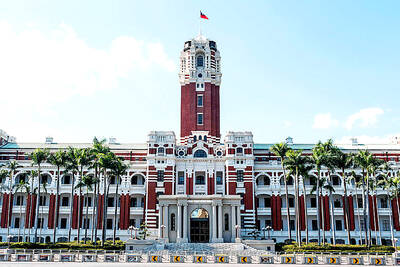
SECURITY: Taipei presses the US for arms supplies, saying the arms sales are not only a reflection of the US security commitment to Taiwan but also serve as a mutual deterrent against regional threats Taiwan is committed to preserving the cross-strait “status quo” and contributing to regional peace and stability, the Presidential Office said yesterday. “It is an undeniable fact that the Republic of China is a sovereign and independent democratic nation,” Presidential Office spokeswoman Karen Kuo (郭雅慧) reiterated, adding that Beijing has no right to claim sovereignty over Taiwan. The statements came after US President Donald Trump warned against Taiwanese independence. Trump wrapped up a state visit to Beijing on Friday, during which Chinese President Xi Jinping (習近平) had pressed him not to support Taiwan. Taiwan depends heavily on US security backing to deter China from carrying
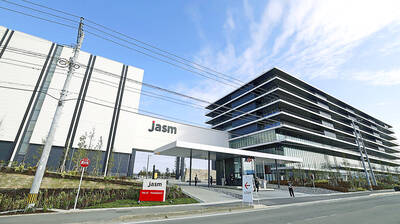
The subsidiary of Taiwan Semiconductor Manufacturing Co (TSMC, 台積電) in Kumamoto, Japan, turned a profit in the first quarter of this year, marking the first time the first fab of the unit has become profitable since mass production started at the end of 2024. According to the contract chipmaker’s financial statement released on Friday, Japan Advanced Semiconductor Manufacturing Inc (JASM), a joint venture running the fab in Kumamoto, posted NT$951 million (US$30.19 million) in profit in the January-to-March period, compared with a loss of NT$1.39 billion in the previous quarter, and a loss of NT$3.25 billion in the first quarter of

RESOLUTE BACKING: Two Republican senators are planning to introduce legislation that would impose immediate sanctions on China if it attempts to invade Taiwan US House of Representatives Speaker Mike Johnson on Sunday reaffirmed US congressional support for Taiwan, saying the US and “all freedom-loving people” have a stake in preventing China from seizing Taiwan by force. Johnson made the remarks in an interview with Fox News Sunday on US President Donald Trump’s summit with Chinese President Xi Jinping (習近平) last week. In an interview that aired on Friday on Fox News, just as Trump wrapped up a high-stakes visit to China, he said he has yet to green-light a new US$14 billion arms package to Taiwan and that it “depends on China.” “It’s a very good

US President Donald Trump yesterday said he would speak to President William Lai (賴清德) as his administration considers whether to move ahead with a US$14 billion weapons sale to Taiwan — a potential arms deal that has drawn criticism from China. “Well, I’ll speak to him. I speak to everybody,” Trump told reporters yesterday when asked if he had any plans to call his counterpart, although he did not offer a time frame for when such a conversation could take place. Trump previously said he would speak to the person “that’s running Taiwan,” without specifying who he meant. “We have that situation very


 RSS
RSS