


Indian Prime Minister Narendra Modi’s government surprised investors by saying that it would sell part of its stake in state-run behemoth Life Insurance Corp (LIC) of India to meet its record asset-sale target.
Investors likened the proposal to Saudi Aramco, which in December last year raised about US$25 billion in the world’s biggest-ever initial public offering (IPO), and overtook Microsoft Corp and Apple Inc as the most valuable listed company.
India aims to sell the stake in the year starting April 1, Indian Department of Investment and Public Asset Management Secretary Tuhin Kanta Pandey said in an interview.
The “LIC IPO is akin to the Saudi Aramco listing for our capital markets,” said Vijay Bhushan, president of the Association of National Exchanges Members of India. “It will be IPO of the decade.”
Now comes the hard part. LIC, whose total assets of 31 trillion rupees (US$433.57 billion) exceed that of all Indian mutual funds combined, was set up under a special act in 1956. The government would have to amend the law, a process that could delay the sale beyond March next year and keep it from meeting its record divestment target of 2.1 trillion rupees.
LIC’s sheer size also makes it hard for the government to sell a big chunk of its holding. Nervousness was palpable on Saturday as shares of private insurers — SBI Life Insurance, General Insurance Corp of India, HDFC Life Insurance Co and ICICI Prudential Life Insurance Co — slumped 6 to 14 percent in a special trading session after the proposal was announced.
“It will become India’s biggest company by market value the day of the listing, given it is the largest company by assets under management,” said Kajal Gandhi, an analyst at ICICI Securities Ltd in Mumbai. “Even a 10 percent dilution will be difficult for the market to absorb it in one go.”
The sale could fetch the government 850 billion rupees to 900 billion rupees if the IPO is done this year, Credit Suisse analysts led by Neelkanth Mishra wrote in a note.
Insurance stocks have been star performers in recent years. SBI Life was among four insurers whose IPOs raised more than US$1 billion in 2017, data compiled by Bloomberg showed.
LIC has in the past been used as an investor of last resort to support the markets by buying shares of state-run companies.
It owns double-digit stakes in several publicly traded firms, including Bharat Heavy Electricals Ltd and Larsen & Toubro Ltd, that are collectively worth more than US$80 billion, data compiled by Bloomberg showed.
Last year, the insurer bailed out IDBI Bank by buying a 51 percent stake in it.
The proposal is already facing opposition from the insurer’s staff, the Press Trust of India reported, citing the spokesman of an employees’ union, who said that the sale is “against national interest.”
However, taking LIC public would help instill “discipline” and help unlock value, Indian Minister of Finance and Corporate Affairs Nirmala Sitharaman said in her budget speech, without providing details or a timeline for the sale.
“It is good for India and the market as well, because once this listing happens there will be greater transparency as far as LIC’s affairs are concerned,” said Joseph Thomas, head of research at Emkay Wealth Management. “Insurance and LIC have been synonymous in our common parlance.”

Starlux Airlines Co (星宇航空) today unveiled a long-haul network expansion plan at a shareholders’ meeting in Taipei, including direct flights to Barcelona, Spain, and Zurich, Switzerland, as well as a service connecting Taipei, Sydney and New Zealand. Starlux is to become the first Taiwanese carrier to offer non-stop services to the two European cities, while the inaugural oceanic route is expected to expand transit opportunities within the Australia-New Zealand market, Starlux said. Flight services to Chicago, Dallas, Washington and New York are under evaluation, the airline added. Prior to the shareholders’ meeting, the airline earlier this year announced that it would be
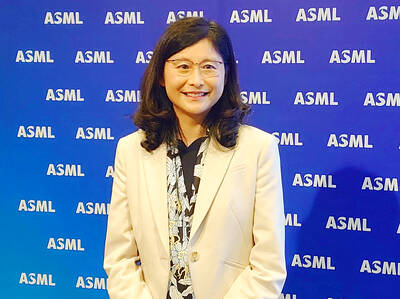
Netherlands-based semiconductor equipment supplier ASML Holding NV yesterday said that it is planning to hire an additional 1,000 people in Taiwan this year in response to growing demand from clients. ASML had previously planned to recruit 600 people this year, but that the plan has been adjusted upward, ASML vice president and ASML Taiwan general manager Grace Wang (汪佳慧) told reporters. ASML has a workforce of more than 4,500 in Taiwan, accounting for about 10 percent of its global total, Wang said. This year’s recruitment campaign would focus on adding people in the customer support, manufacturing and supply chain domains to assist ASML
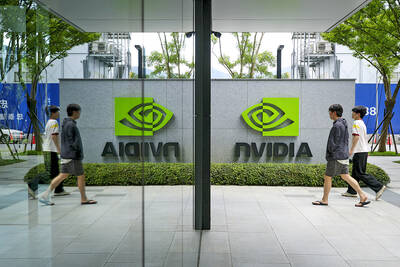
UNDER MICROSCOPE: Taiwan detained three people who allegedly conspired to buy servers in Taiwan and export them using fraudulent documentation, prosecutors said Nvidia Corp chief executive officer Jensen Huang (黃仁勳) on Saturday urged Super Micro Computer Inc to tighten up on compliance after Taiwan detained three people this week for allegedly making fraudulent declarations about artificial intelligence (AI) servers made by its US partner. The development marked the nation’s first crackdown on semiconductor smuggling, which grew after the US slapped restrictions on exports of high-end chips such as Nvidia AI accelerators to China. Nvidia is “rigorous” in explaining regulations to all of its partners, Huang told reporters after arriving in Taipei. “Ultimately Super Micro has to run their own company,” he said in response to

Nvidia Corp yesterday announced that CEO Jensen Huang (黃仁勳) would attend an employee meeting in Taipei tomorrow to celebrate the launch of the company’s Taiwan headquarters project. Huang would attend a gathering at the site of Nvidia’s planned headquarters in Beitou Shilin Technology Park (北投士林科技園區), the company said in a statement. After arriving in Taiwan on Saturday last week, Huang told reporters that he plans to meet with Quanta Computer Inc (廣達) chairman Barry Lam (林百里) and Taiwan Semiconductor Manufacturing Co (TSMC, 台積電) chairman C.C. Wei (魏哲家), and would attend the groundbreaking ceremony for Nvidia’s Taiwan headquarters tomorrow. Nvidia has not yet applied


 RSS
RSS