


Boeing Co is considering temporarily halting production of the 737 MAX as regulatory clearance for the grounded jet’s return looks increasingly likely to slip beyond next month, a person familiar with the matter said.
While the company’s board is also studying another slowdown in output for its best-selling jet, executives are convinced that a temporary pause would be less disruptive, said the person, who asked not to be identified, as the discussions are confidential.
The Wall Street Journal earlier reported that the production plans have become more urgent, as the US Federal Aviation Administration (FAA) signaled it would not certify the revamped MAX this year.
A decision could come as soon as yesterday as Boeing’s directors reviewed the manufacturing plans for the 737 program, the company’s biggest source of cash, as part of a regularly scheduled board meeting.
During the session, the board traditionally sets the company’s dividend for the coming year and decides on its share repurchases, which have been suspended while Boeing deals with the crisis prompted by the unprecedented grounding.
“We continue to work closely with the FAA and global regulators towards certification and the safe return to service of the MAX,” Boeing said in an e-mail. “We will continue to assess production decisions based on the timing and conditions of return to service, which will be based on regulatory approvals and may vary by jurisdiction.”
The Chicago-based plane maker has drafted contingency plans for a variety of scenarios as the MAX’s global grounding stretches to more than nine months following two fatal crashes that killed 346 people.
Boeing slashed 737 production by 19 percent in the weeks following the March tragedy.
Meanwhile, inventory costs have ballooned to record levels as the company’s factory in Renton, Washington, continued to churn out 42 of the jets a month.
As the company is not allowed to deliver the aircraft while the flying ban remains in place, Boeing has placed more than 380 newly built planes in storage, according to a tally by 737 production blogger Chris Edwards.
The build-up would continue if production were slowed rather than halted.
“They are doing the sensible thing by halting or putting a pause on the production line,” said Shukor Yusof, founder of aviation consulting firm Endau Analytics. “Cash burn has been bad.”
Boeing’s board met after a bruising week for the aerospace giant.
In a sign of growing rancor between the company and the US regulator, FAA Administrator Steve Dickson in a meeting on Thursday chastised Boeing chief executive officer Dennis Muilenburg for pursuing an unrealistic schedule for the MAX’s return to service.
The FAA said it was worried by a perception that Boeing was pressuring regulators to take action.
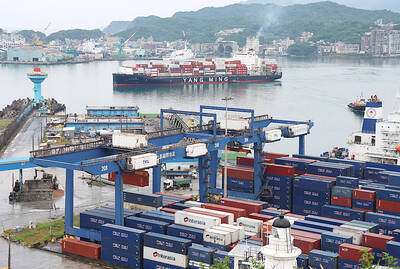
Taiwan’s exports soared 56 percent year-on-year to an all-time high of US$64.05 billion last month, propelled by surging global demand for artificial intelligence (AI), high-performance computing and cloud service infrastructure, the Ministry of Finance said yesterday. Department of Statistics Director-General Beatrice Tsai (蔡美娜) called the figure an unexpected upside surprise, citing a wave of technology orders from overseas customers alongside the usual year-end shopping season for technology products. Growth is likely to remain strong this month, she said, projecting a 40 percent to 45 percent expansion on an annual basis. The outperformance could prompt the Directorate-General of Budget, Accounting and

The demise of the coal industry left the US’ Appalachian region in tatters, with lost jobs, spoiled water and countless kilometers of abandoned underground mines. Now entrepreneurs are eyeing the rural region with ambitious visions to rebuild its economy by converting old mines into solar power systems and data centers that could help fuel the increasing power demands of the artificial intelligence (AI) boom. One such project is underway by a non-profit team calling itself Energy DELTA (Discovery, Education, Learning and Technology Accelerator) Lab, which is looking to develop energy sources on about 26,305 hectares of old coal land in

Netflix on Friday faced fierce criticism over its blockbuster deal to acquire Warner Bros Discovery. The streaming giant is already viewed as a pariah in some Hollywood circles, largely due to its reluctance to release content in theaters and its disruption of traditional industry practices. As Netflix emerged as the likely winning bidder for Warner Bros — the studio behind Casablanca, the Harry Potter movies and Friends — Hollywood’s elite launched an aggressive campaign against the acquisition. Titanic director James Cameron called the buyout a “disaster,” while a group of prominent producers are lobbying US Congress to oppose the deal,

Two Chinese chipmakers are attracting strong retail investor demand, buoyed by industry peer Moore Threads Technology Co’s (摩爾線程) stellar debut. The retail portion of MetaX Integrated Circuits (Shanghai) Co’s (上海沐曦) upcoming initial public offering (IPO) was 2,986 times oversubscribed on Friday, according to a filing. Meanwhile, Beijing Onmicro Electronics Co (北京昂瑞微), which makes radio frequency chips, was 2,899 times oversubscribed on Friday, its filing showed. The bids coincided with Moore Threads’ trading debut, which surged 425 percent on Friday after raising 8 billion yuan (US$1.13 billion) on bets that the company could emerge as a viable local competitor to Nvidia


 RSS
RSS