


Solar wafer maker Sino-American Silicon Products Inc’s (SAS, 中美晶) board of directors last week approved a plan to buy a plant and ancillary equipment from sapphire substrate maker Crystalwise Technology Inc (兆遠電子) for NT$903 million (US$29.8 million) to meet the firm’s operation and production needs.
The plant is at the Jhunan Science Park (竹南科學園區) in Miaoli County, SAS said in a regulatory filing on Thursday.
SAS, which has a 41.94 percent stake in Crystalwise, has its own plants in Jhunan and Yilan County.
The new manufacturing site is a factory-office complex with seven floors above ground and two below, the Chinese-language Liberty Times (the Taipei Times’ sister newspaper) reported on Friday, citing SAS chief financial officer Jason Chien (簡明輝).
It has also installed cleanroom equipment, the Liberty Times reported.
Companies in the solar industry continue to face headwinds and SAS is no exception. As the company is seeking to transform, it is researching semiconductor materials and might make additional investments in the new plant, the Chinese-language Commercial Times reported on Friday.
Separately, the board also approved a plan to merge with Sunrise PV World Co (旭鑫能源), a wholly owned subsidiary of SAS that focuses on power generation, as SAS aims to integrate group resources and optimize its management efficiency.
The deal would have no impact on shareholders in terms of net worth per share and earnings per share, SAS said, adding that it expects to close the deal on Jan. 31.
SAS’ net profit plunged 54.15 percent to NT$1.16 billion in the first three quarters of this year, compared with NT$2.53 billion in the same period last year. Earnings per share fell to NT$2 from NT$4.35.
Revenue slid 13.84 percent year-on-year to NT$5.01 billion last month. That led to a 4.67 percent annual drop in sales in the first 11 months of this year to NT$60.22 billion, company data showed.

Taiwan’s exports soared 56 percent year-on-year to an all-time high of US$64.05 billion last month, propelled by surging global demand for artificial intelligence (AI), high-performance computing and cloud service infrastructure, the Ministry of Finance said yesterday. Department of Statistics Director-General Beatrice Tsai (蔡美娜) called the figure an unexpected upside surprise, citing a wave of technology orders from overseas customers alongside the usual year-end shopping season for technology products. Growth is likely to remain strong this month, she said, projecting a 40 percent to 45 percent expansion on an annual basis. The outperformance could prompt the Directorate-General of Budget, Accounting and
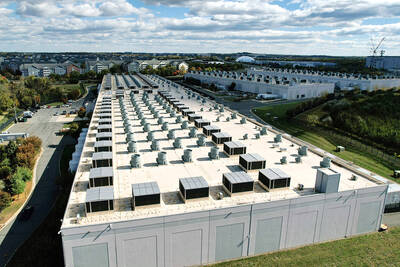
The demise of the coal industry left the US’ Appalachian region in tatters, with lost jobs, spoiled water and countless kilometers of abandoned underground mines. Now entrepreneurs are eyeing the rural region with ambitious visions to rebuild its economy by converting old mines into solar power systems and data centers that could help fuel the increasing power demands of the artificial intelligence (AI) boom. One such project is underway by a non-profit team calling itself Energy DELTA (Discovery, Education, Learning and Technology Accelerator) Lab, which is looking to develop energy sources on about 26,305 hectares of old coal land in

Netflix on Friday faced fierce criticism over its blockbuster deal to acquire Warner Bros Discovery. The streaming giant is already viewed as a pariah in some Hollywood circles, largely due to its reluctance to release content in theaters and its disruption of traditional industry practices. As Netflix emerged as the likely winning bidder for Warner Bros — the studio behind Casablanca, the Harry Potter movies and Friends — Hollywood’s elite launched an aggressive campaign against the acquisition. Titanic director James Cameron called the buyout a “disaster,” while a group of prominent producers are lobbying US Congress to oppose the deal,
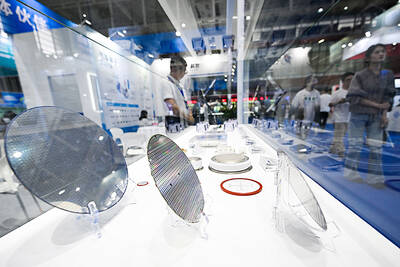
Two Chinese chipmakers are attracting strong retail investor demand, buoyed by industry peer Moore Threads Technology Co’s (摩爾線程) stellar debut. The retail portion of MetaX Integrated Circuits (Shanghai) Co’s (上海沐曦) upcoming initial public offering (IPO) was 2,986 times oversubscribed on Friday, according to a filing. Meanwhile, Beijing Onmicro Electronics Co (北京昂瑞微), which makes radio frequency chips, was 2,899 times oversubscribed on Friday, its filing showed. The bids coincided with Moore Threads’ trading debut, which surged 425 percent on Friday after raising 8 billion yuan (US$1.13 billion) on bets that the company could emerge as a viable local competitor to Nvidia


 RSS
RSS