


Europe is arming itself for a more lawless world of trade — and the bloc’s sights are on the US.
European Commissioner for Trade Phil Hogan on Thursday sought an upgrade to EU legislation on enforcing international commercial rules. His proposal would allow the EU to impose sanctions against countries that illegally restrict commerce and simultaneously block the WTO’s dispute-settlement process.
The timing of the initiative in Brussels is no coincidence. On Wednesday, the WTO’s much-prized appellate body ceased to be able to handle new cases because a US veto of any appointments to the panel left it without the minimum three members required for verdicts.
The body is the WTO’s supreme authority, issuing binding decisions that give winning parties in disputes the right to apply trade penalties such as higher tariffs against law-breaking countries.
Since before US President Donald Trump’s administration, the US has accused the appeals panel of overstepping its mandate and has demanded changes to the body’s practices.
The EU is asserting itself more in a bid to prevent Trump’s “America first” agenda and protectionism from undermining the rules-based global order to which Europe is committed.
Over the past three years, Trump has angered Europe by hitting its steel and aluminum with tariffs based on national-security grounds, dangled the threat of similar levies on foreign vehicles and drawn up plans to target French goods with levies as retaliation over a digital tax in France.
Trump has also sought to restrict European trade with Iran after pulling out of an international agreement to control the country’s nuclear activities and backed out of a landmark UN accord to fight climate change.
The US steel and aluminum duties, initiated last year, prompted the EU to complain to the Geneva, Switzerland-based WTO.
The bloc also scrambled to put its own trade defenses in place for steel to prevent the US levies from diverting global shipments to the European market and flooding it.
The amended EU legislation that Hogan put forward comes less than two weeks after he took office as part of a new leadership team at the European Commission.
The proposal, which requires the support of EU governments and the European Parliament in a process that would last into next year, has political momentum.
The proposal from Hogan — an amendment to 2014 European legislation — would effectively serve as a third line of defense for the EU, as it seeks to uphold the WTO system.
The extra tool would come into play in a scenario in which the WTO appellate body is still sidelined and the bloc wins a case against a country that does not accept the initial ruling, and has not signed up to the stopgap arrangement for handling appeals.
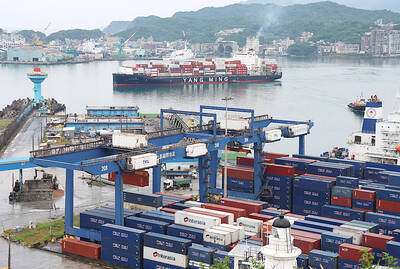
Taiwan’s exports soared 56 percent year-on-year to an all-time high of US$64.05 billion last month, propelled by surging global demand for artificial intelligence (AI), high-performance computing and cloud service infrastructure, the Ministry of Finance said yesterday. Department of Statistics Director-General Beatrice Tsai (蔡美娜) called the figure an unexpected upside surprise, citing a wave of technology orders from overseas customers alongside the usual year-end shopping season for technology products. Growth is likely to remain strong this month, she said, projecting a 40 percent to 45 percent expansion on an annual basis. The outperformance could prompt the Directorate-General of Budget, Accounting and

The demise of the coal industry left the US’ Appalachian region in tatters, with lost jobs, spoiled water and countless kilometers of abandoned underground mines. Now entrepreneurs are eyeing the rural region with ambitious visions to rebuild its economy by converting old mines into solar power systems and data centers that could help fuel the increasing power demands of the artificial intelligence (AI) boom. One such project is underway by a non-profit team calling itself Energy DELTA (Discovery, Education, Learning and Technology Accelerator) Lab, which is looking to develop energy sources on about 26,305 hectares of old coal land in
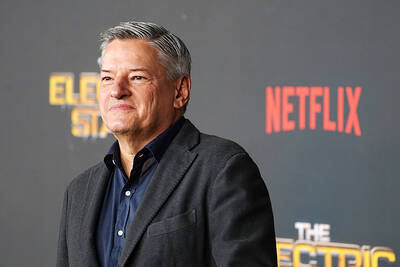
Netflix on Friday faced fierce criticism over its blockbuster deal to acquire Warner Bros Discovery. The streaming giant is already viewed as a pariah in some Hollywood circles, largely due to its reluctance to release content in theaters and its disruption of traditional industry practices. As Netflix emerged as the likely winning bidder for Warner Bros — the studio behind Casablanca, the Harry Potter movies and Friends — Hollywood’s elite launched an aggressive campaign against the acquisition. Titanic director James Cameron called the buyout a “disaster,” while a group of prominent producers are lobbying US Congress to oppose the deal,

Two Chinese chipmakers are attracting strong retail investor demand, buoyed by industry peer Moore Threads Technology Co’s (摩爾線程) stellar debut. The retail portion of MetaX Integrated Circuits (Shanghai) Co’s (上海沐曦) upcoming initial public offering (IPO) was 2,986 times oversubscribed on Friday, according to a filing. Meanwhile, Beijing Onmicro Electronics Co (北京昂瑞微), which makes radio frequency chips, was 2,899 times oversubscribed on Friday, its filing showed. The bids coincided with Moore Threads’ trading debut, which surged 425 percent on Friday after raising 8 billion yuan (US$1.13 billion) on bets that the company could emerge as a viable local competitor to Nvidia


 RSS
RSS