


Huawei Technologies Co (華為) and ZTE Corp (中興) “cannot be trusted,” US Attorney General William Barr said in a letter released on Thursday, labeling the Chinese firms a security threat as he backed a proposal to bar rural wireless carriers from tapping an US$8.5 billion government fund to purchase equipment or services from the companies.
The US Federal Communications Commission (FCC) is to vote on Friday next week on a proposal requiring the carriers to remove and replace equipment from the companies.
Barr said in a letter to the commission that “their own track record, as well as the practices of the Chinese government, demonstrate that Huawei and ZTE cannot be trusted.”
“We should not signal that Huawei and ZTE are anything other than a threat to our collective security, for that is exactly what they, through their actions, have shown themselves to be,” he said.
Huawei and ZTE did not immediately comment.
Barr said that US federal prosecutors have charged Huawei with breaches of the US embargo on Iran, bank fraud, obstruction of justice and trade secret theft.
ZTE in 2017 pleaded guilty to illegally sending approximately US$32 million of US goods to Iran.
FCC Chairman Ajit Pai said that the commission “cannot ignore the risk that the Chinese government will seek to exploit network vulnerabilities in order to engage in espionage, insert malware and viruses, and otherwise compromise our critical communications networks.”
The move is the latest action aimed at barring US companies from purchasing Huawei and ZTE equipment.
Huawei last week said that “in 30 years of business, Huawei has never had a major security-related incident in the 170 countries where we operate.”
The US government added Huawei to its economic blacklist in May, saying the Chinese company was involved in activities contrary to US national security.
Washington has pressed other nations not to grant Huawei access to 5G networks and alleged Huawei’s equipment could be used by Beijing for spying, which the Chinese company has repeatedly denied.
Several European nations have not agreed to bar Huawei, despite US pressure.
US President Donald Trump in May signed a long-awaited executive order declaring a national emergency and barring US companies from using telecommunications equipment made by companies posing a national security risk.
The order directed the US Department of Commerce to draw up an enforcement plan by the middle of last month.
The department has yet to publish a plan.

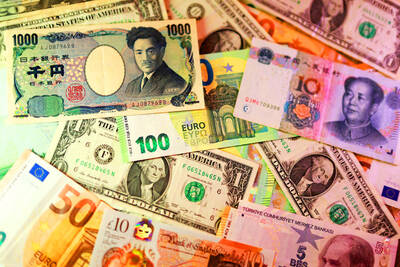
Taiwan’s foreign exchange reserves fell below the US$600 billion mark at the end of last month, with the central bank reporting a total of US$596.89 billion — a decline of US$8.6 billion from February — ending a three-month streak of increases. The central bank attributed the drop to a combination of factors such as outflows by foreign institutional investors, currency fluctuations and its own market interventions. “The large-scale outflows disrupted the balance of supply and demand in the foreign exchange market, prompting the central bank to intervene repeatedly by selling US dollars to stabilize the local currency,” Department of Foreign

Intel Corp is joining Elon Musk’s long-shot effort to develop semiconductors for Tesla Inc, Space Exploration Technologies Corp and xAI, marking a surprising twist in the chipmaker’s comeback bid. Intel would help the Terafab project “refactor” the technology in a chip factory, the company said on Tuesday in a post on X, Musk’s social media platform. That is a stage in the development process that typically helps make chips more powerful or reliable. The chipmaker’s shares jumped 4.2 percent to US$52.91 in New York trading on Tuesday. The Terafab project is a grand plan by Musk to eventually manufacture his own chips for
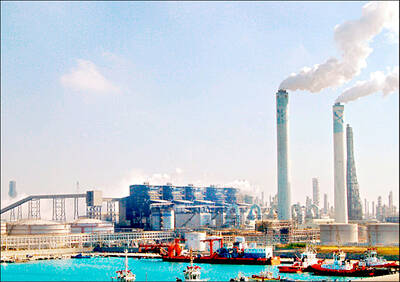
Taiwan Power Co (Taipower, 台電) yesterday said it plans to resume operations at two coal-fired power generators for three months to boost security of electricity supply as liquefied natural gas (LNG) supply risks are running high due to the Middle East conflict. The two coal-fired power generators are at Mailiao Power Plant in Yunlin County’s Mailiao Township (麥寮). The plant, operated by Formosa Plastics Group (台塑集團), supplied electricity to Taipower’s power grid until the end of last year. Taipower’s decision came about one month after Minister of Economic Affairs Kung Ming-hsin (龔明鑫) on March 10 said that the nation had no imminent

Some robotaxi passengers were left stranded in the middle of fast-moving traffic in a major Chinese city after their driverless vehicles stopped running, according to police and media reports on Wednesday. A preliminary investigation indicates more than 100 robotaxis came to a halt because of a “system malfunction,” police in the city of Wuhan said in a statement, without elaborating. No injuries were reported. One passenger told Chinese media that their robotaxi stopped after turning a corner. An instruction on a screen read: “Driving system malfunction. Staff are expected to arrive in 5 minutes.” After no one showed up, the passenger pushed


 RSS
RSS