


Swiss banking titan UBS Group AG has been fined US$51 million by Hong Kong authorities for overcharging global customers for almost a decade, saying it had failed to “act in its clients’ best interests.”
The Hong Kong Securities and Futures Commission (SFC) said the company manipulated the price of trades for bonds and structured products from 2008 to 2015, and also applied excessive fees for some clients from 2008 to 2017.
“Although each overcharge represented a fraction of each trade, UBS’ misconduct involved deception and a pervasive abuse of trust resulting in significant additional revenue for UBS to which it was not entitled,” SFC chief executive Ashley Alder said in a statement.
Officials said that UBS was found to have falsified account statements by misreporting the spread amounts for the trades.
“The SFC considers that UBS not only failed to observe the fundamental and overarching duty to act in its clients’ best interests, but also abused the trust of unsuspecting clients by failing to disclose conflicts of interest and overcharging them in opaque trades,” it said in the statement released on Monday.
The overcharge practices affected about 5,000 Hong Kong-managed client accounts in about 28,700 transactions, it added.
UBS was fined HK$400 million (US$51 million) and the SFC said the bank would repay the full value of the overcharged amount together with interest, which would amount to about HK$200 million.
The bank was among a number of lenders that were told in March to pay a combined HK$787 to settle cases linked to their work on initial public offerings in the territory.
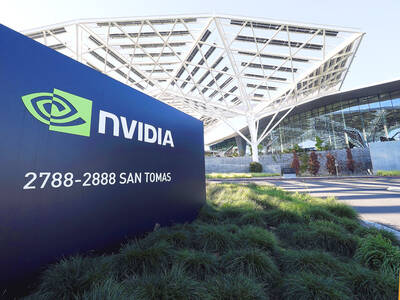
CHIP RACE: Three years of overbroad export controls drove foreign competitors to pursue their own AI chips, and ‘cost US taxpayers billions of dollars,’ Nvidia said China has figured out the US strategy for allowing it to buy Nvidia Corp’s H200s and is rejecting the artificial intelligence (AI) chip in favor of domestically developed semiconductors, White House AI adviser David Sacks said, citing news reports. US President Donald Trump on Monday said that he would allow shipments of Nvidia’s H200 chips to China, part of an administration effort backed by Sacks to challenge Chinese tech champions such as Huawei Technologies Co (華為) by bringing US competition to their home market. On Friday, Sacks signaled that he was uncertain about whether that approach would work. “They’re rejecting our chips,” Sacks
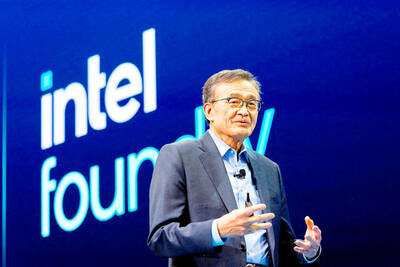
NATIONAL SECURITY: Intel’s testing of ACM tools despite US government control ‘highlights egregious gaps in US technology protection policies,’ a former official said Chipmaker Intel Corp has tested chipmaking tools this year from a toolmaker with deep roots in China and two overseas units that were targeted by US sanctions, according to two sources with direct knowledge of the matter. Intel, which fended off calls for its CEO’s resignation from US President Donald Trump in August over his alleged ties to China, got the tools from ACM Research Inc, a Fremont, California-based producer of chipmaking equipment. Two of ACM’s units, based in Shanghai and South Korea, were among a number of firms barred last year from receiving US technology over claims they have
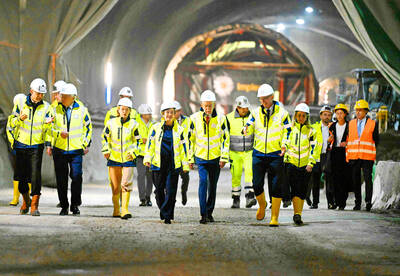
It is challenging to build infrastructure in much of Europe. Constrained budgets and polarized politics tend to undermine long-term projects, forcing officials to react to emergencies rather than plan for the future. Not in Austria. Today, the country is to officially open its Koralmbahn tunnel, the 5.9 billion euro (US$6.9 billion) centerpiece of a groundbreaking new railway that will eventually run from Poland’s Baltic coast to the Adriatic Sea, transforming travel within Austria and positioning the Alpine nation at the forefront of logistics in Europe. “It is Austria’s biggest socio-economic experiment in over a century,” said Eric Kirschner, an economist at Graz-based Joanneum
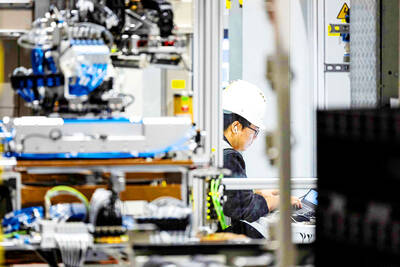
France is developing domestic production of electric vehicle (EV) batteries with an eye on industrial independence, but Asian experts are proving key in launching operations. In the Verkor factory outside the northern city of Dunkirk, which was inaugurated on Thursday, foreign specialists, notably from South Korea and Malaysia, are training the local staff. Verkor is the third battery gigafactory to open in northern France in a region that has become known as “Battery Valley.” At the Automotive Energy Supply Corp (AESC) factory near the city of Douai, where production has been under way for several months, Chinese engineers and technicians supervise French recruits. “They


 RSS
RSS