


Chinese firms have been snapping up US soybeans this week.
The companies, which received a fresh 1.8 million-tonne quota from Beijing to import US beans free of retaliatory tariffs, have been seeking soy every day so far.
That is likely because they want to rush through orders in case trade talks between Washington and Beijing fail and imports are halted, said Darin Friedrichs, a senior analyst at INTL FCStone’s Asia commodities division.
“The Chinese soybean purchases are a necessity and may be a sign that the crushers want to get these grades in quickly because things could change on talks,” Friedrichs said.
The wariness of commodity traders is perhaps understandable given the whipsawing in relations between US President Donald Trump and Chinese President Xi Jinping (習近平) over the past year.
Chinese firms were issued tariff waivers in July as Beijing offered Washington an olive branch, only to see shipments stopped about a month later after talks fell apart.
Top negotiators from the two countries are expected to meet in Washington on Thursday.
November soybean futures on Friday rose 0.3 percent to US$9.16 a bushel in Chicago. Prices gained 3.7 percent this week.
The purchases might also be because it makes financial sense. Margins on crushing US soybeans in China are higher than those of rival Brazil thanks to the lower prices of US soy when retaliatory tariffs are removed.
Chinese state-owned and private firms bought at least six cargoes of US soy, equivalent to about 363,000 tons, said people familiar with the purchases, asking not to be identified because the information is private.
That is on top of 12 to 15 cargoes purchased earlier this week.
NICKEL CRUNCH
The nickel market is being roiled by Indonesia’s impending ban on ore exports, with traders rushing to withdraw as much metal as possible.
Inventories tracked by the London Metal Exchange (LME) posted a record decline for a second straight day on Friday, adding fuel to a rally that has put prices on course for their biggest annual gain since 2006.
Stockpiles of the metal — a key ingredient in alloys like stainless steel — are at the lowest level since 2012.
It is the latest sign that supply shockwaves are reverberating through the global market ahead of Indonesia’s ban, due to start in January.
Prices climbed 0.9 percent to US$17,790 a ton in London, adding to a 66 percent gain this year. For the week, inventories have fallen by about 22,000 tonnes, far surpassing a previous record set in 2015.
The decline in inventories has come amid intense bidding for short-dated contracts on the LME that has caused nickel’s forward curve to invert, with spot contracts trading near the biggest premium to three-month futures since 2007.
That condition, known as a backwardation, is seen in the industry as a hallmark feature of a supply shortage.
Most other industrial metals have dropped this year because of mounting concerns over demand as factory activity across Asia, Europe and the US enters a sharp contraction.
Other metals were mixed.
Spot gold settled at US$1,504 an ounce, up 0.7 percent for the week.
Copper declined 0.3 percent to settle at US$5,643 a ton in London, after falling as much as 1 percent, as investors digested a mixed US jobs report for last month.
Zinc and lead traded higher, while aluminum and tin were little changed.

AI TALENT: No financial details were released about the deal, in which top Groq executives, including its CEO, would join Nvidia to help advance the technology Nvidia Corp has agreed to a licensing deal with artificial intelligence (AI) start-up Groq, furthering its investments in companies connected to the AI boom and gaining the right to add a new type of technology to its products. The world’s largest publicly traded company has paid for the right to use Groq’s technology and is to integrate its chip design into future products. Some of the start-up’s executives are leaving to join Nvidia to help with that effort, the companies said. Groq would continue as an independent company with a new chief executive, it said on Wednesday in a post on its Web
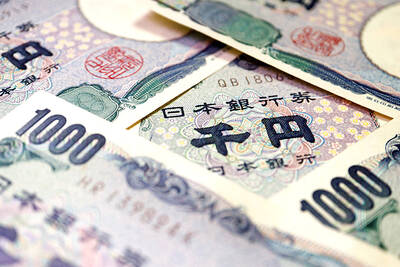
RESPONSE: The Japanese Ministry of Finance might have to intervene in the currency markets should the yen keep weakening toward the 160 level against the US dollar Japan’s chief currency official yesterday sent a warning on recent foreign exchange moves, after the yen weakened against the US dollar following Friday last week’s Bank of Japan (BOJ) decision. “We’re seeing one-directional, sudden moves especially after last week’s monetary policy meeting, so I’m deeply concerned,” Japanese Vice Finance Minister for International Affairs Atsushi Mimura told reporters. “We’d like to take appropriate responses against excessive moves.” The central bank on Friday raised its benchmark interest rate to the highest in 30 years, but Bank of Japan Governor Kazuo Ueda chose to keep his options open rather than bolster the yen,

Even as the US is embarked on a bitter rivalry with China over the deployment of artificial intelligence (AI), Chinese technology is quietly making inroads into the US market. Despite considerable geopolitical tensions, Chinese open-source AI models are winning over a growing number of programmers and companies in the US. These are different from the closed generative AI models that have become household names — ChatGPT-maker OpenAI or Google’s Gemini — whose inner workings are fiercely protected. In contrast, “open” models offered by many Chinese rivals, from Alibaba (阿里巴巴) to DeepSeek (深度求索), allow programmers to customize parts of the software to suit their
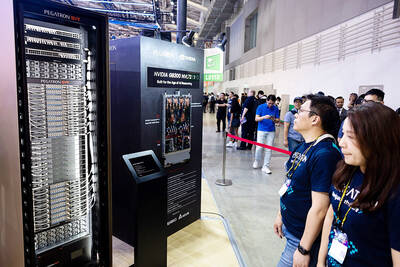
Global server shipments are expected to surge to 15 million units next year, from 4 million units this year, with artificial intelligence (AI) servers accounting for about 30 percent, driven by massive capital spending by major cloud service providers, the Market Intelligence and Consulting Institute (MIC) said on Thursday last week. Major cloud service providers — including Google’s parent company Alphabet Inc, Microsoft Corp, Amazon.com Inc and Meta Platforms Inc — are projected to budget US$450 million for capital expenditure next year, up from US$400 million this year, MIC ICT [information and communications technology] Industry Research Center director Edward Lin


 RSS
RSS