


Global server shipments are expected to surge to 15 million units next year, from 4 million units this year, with artificial intelligence (AI) servers accounting for about 30 percent, driven by massive capital spending by major cloud service providers, the Market Intelligence and Consulting Institute (MIC) said on Thursday last week.
Major cloud service providers — including Google’s parent company Alphabet Inc, Microsoft Corp, Amazon.com Inc and Meta Platforms Inc — are projected to budget US$450 million for capital expenditure next year, up from US$400 million this year, MIC ICT [information and communications technology] Industry Research Center director Edward Lin (林柏齊) told a news conference in Taipei.
Cloud operators Oracle Corp and CoreWeave Inc are also expected to ramp up purchases of AI and general-purpose servers for their data centers, Lin said.
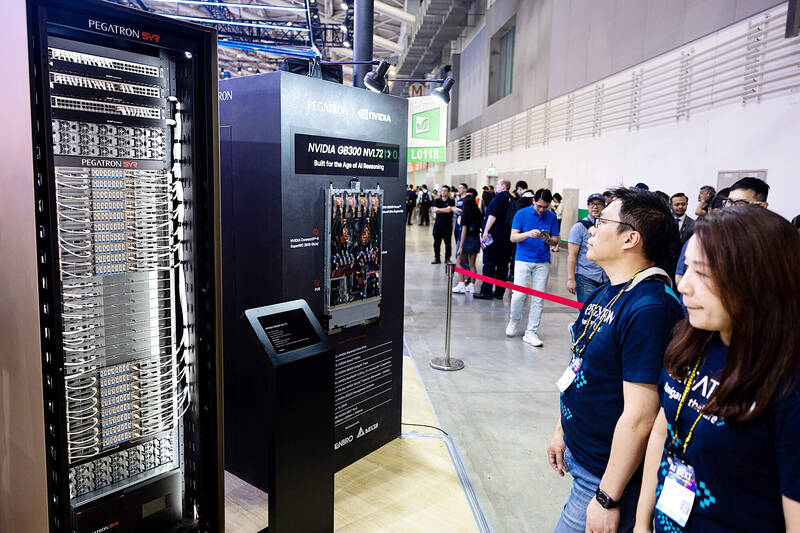
Photo: Annabelle Chih, Bloomberg
The institute projected servers powered by Nvidia Corp’s graphics processing units to account for about 80 percent of total AI servers next year, with application-specific integrated circuit-based servers making up the remaining 20 percent.
Nvidia is expected to launch its next-generation AI platform, Vera Rubin, in the fourth quarter of next year, and the company would also begin standardizing its heat-dissipation specifications, and the move could weigh on the profit margins of Taiwanese cooling solution providers, MIC ICT Industry Research Center deputy director Chris Wei (魏傳虔) said.
Market trends also indicate that Nvidia plans to require suppliers to provide higher-level system products, including complete compute trays, while continuing to verify server racks, cooling distribution units and cold plates based on its recommended vendor list, Wei said.
Based on this trend, leading cooling solution providers that boast of production capacity and cost efficiency, such as Delta Electronics Inc (台達電) and Lite-On Technology Corp (光寶), would likely to have a better chance of participating in the supply chain of Nvidia’s Vera Rubin platform, he said.
As Nvidia is also pushing the adoption of liquid cooling over air cooling, Taiwanese makers capable of offering both air and liquid-cooling solutions are expected to benefit from the transition, he added.
Meanwhile, for server and related component makers, “those who can integrate power, cooling, server racks and infrastructure are expected to secure more critical positions in the next wave of data center expansion, while those only sell components risk being commoditized,” Wei said.
Whether Nvidia’s new platform could boost sales for Taiwanese manufacturers would depend on whether they are included in the US company’s ecosystem and can provide higher levels of system integration, he added.
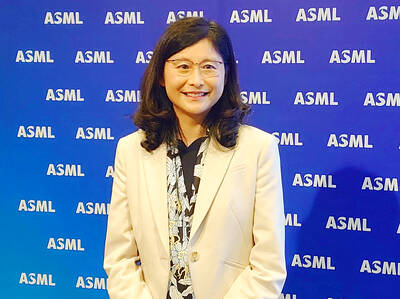
Netherlands-based semiconductor equipment supplier ASML Holding NV yesterday said that it is planning to hire an additional 1,000 people in Taiwan this year in response to growing demand from clients. ASML had previously planned to recruit 600 people this year, but that the plan has been adjusted upward, ASML vice president and ASML Taiwan general manager Grace Wang (汪佳慧) told reporters. ASML has a workforce of more than 4,500 in Taiwan, accounting for about 10 percent of its global total, Wang said. This year’s recruitment campaign would focus on adding people in the customer support, manufacturing and supply chain domains to assist ASML
UNDER MICROSCOPE: Taiwan detained three people who allegedly conspired to buy servers in Taiwan and export them using fraudulent documentation, prosecutors said Nvidia Corp chief executive officer Jensen Huang (黃仁勳) on Saturday urged Super Micro Computer Inc to tighten up on compliance after Taiwan detained three people this week for allegedly making fraudulent declarations about artificial intelligence (AI) servers made by its US partner. The development marked the nation’s first crackdown on semiconductor smuggling, which grew after the US slapped restrictions on exports of high-end chips such as Nvidia AI accelerators to China. Nvidia is “rigorous” in explaining regulations to all of its partners, Huang told reporters after arriving in Taipei. “Ultimately Super Micro has to run their own company,” he said in response to

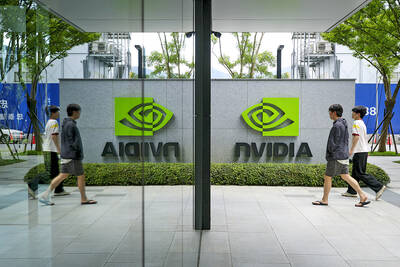
Nvidia Corp yesterday announced that CEO Jensen Huang (黃仁勳) would attend an employee meeting in Taipei tomorrow to celebrate the launch of the company’s Taiwan headquarters project. Huang would attend a gathering at the site of Nvidia’s planned headquarters in Beitou Shilin Technology Park (北投士林科技園區), the company said in a statement. After arriving in Taiwan on Saturday last week, Huang told reporters that he plans to meet with Quanta Computer Inc (廣達) chairman Barry Lam (林百里) and Taiwan Semiconductor Manufacturing Co (TSMC, 台積電) chairman C.C. Wei (魏哲家), and would attend the groundbreaking ceremony for Nvidia’s Taiwan headquarters tomorrow. Nvidia has not yet applied
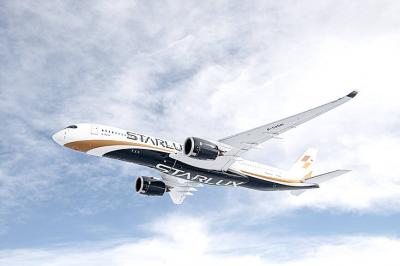
Starlux Airlines Co (星宇航空) today unveiled a long-haul network expansion plan at a shareholders’ meeting in Taipei, including direct flights to Barcelona, Spain, and Zurich, Switzerland, as well as a service connecting Taipei, Sydney and New Zealand. Starlux is to become the first Taiwanese carrier to offer non-stop services to the two European cities, while the inaugural oceanic route is expected to expand transit opportunities within the Australia-New Zealand market, Starlux said. Flight services to Chicago, Dallas, Washington and New York are under evaluation, the airline added. Prior to the shareholders’ meeting, the airline earlier this year announced that it would be


 RSS
RSS