


In Italy’s storied gold-making hubs, jewelers are reworking their designs to trim gold content as they race to blunt the effect of record prices and appeal to shoppers watching their budgets.
Gold prices hit a record high on Thursday, surging near US$5,600 an ounce, more than double a year ago as geopolitical concerns and jitters over trade pushed investors toward the safe-haven asset.
The rally is putting undue pressure on small artisans as they face mounting demands from customers, including international brands, to produce cheaper items, from signature pieces to wedding rings, according to interviews with four independent jewelers in Italy’s main jewelry-making hubs.
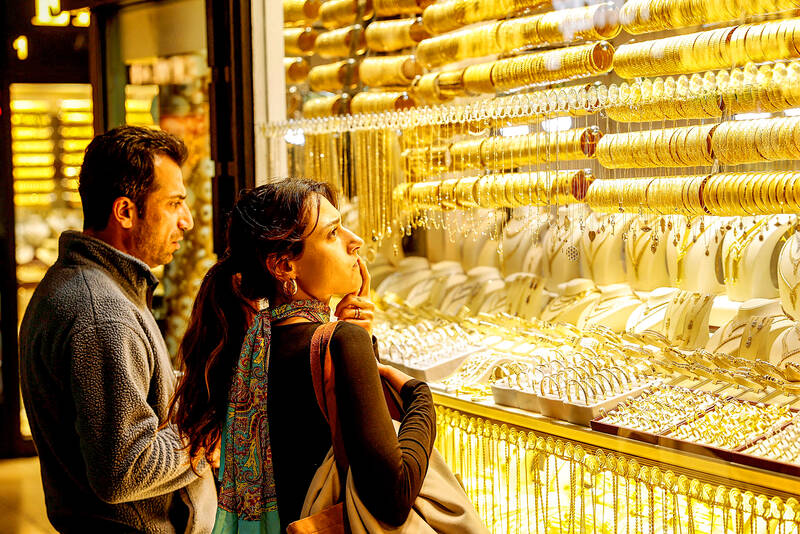
Photo: Reuters
“The main question that I’ve heard in the last months is if I can produce something lighter while having the same appearance,” said Massimo Lucchetta, owner of Lucchetta 1953, an independent jeweler which makes items for department stores in Bassano del Grappa, near Italy’s premier gold-crafting hub of Vicenza in the country’s northeast.
Vicenza, known as one of Italy’s three “cities of gold” alongside Arezzo in Tuscany and the Golden Valley of Valenza in Piedmont, hosts twice a year the Vicenzaoro fair, a global event for jewelry and watchmaking.
In Arezzo, several jewelry makers have stepped up the use of machinery that keeps a piece’s shape while cutting its metal content, said Giordana Giordini, owner of independent jewelry brand Giordini.
That could, for instance, keep the size of a pendant unchanged, but cut its weight in half.
“The person is still buying the same idea of what it is,” Giordini said from her workshop in Arezzo.
Her company supplies wholesalers and some retail stores, with nine out of 10 of its products shipped to international markets.
Italy in 2024 accounted for 11.2 percent of the US$130 billion global jewelry market, according to a recent study by bank Mediobanca.
More than 6,800 companies operate in the gold, silver and jewelry industry in Italy, employing almost 34,000 people, the study said.
Cecile Cabanis, finance chief at luxury behemoth LVMH, on Tuesday said that the price of gold had a negative effect on the performance of its watches and jewelry business, which includes high-end brands such as Bulgari and Tiffany.
That comes even though the French conglomerate, which has its flagship gold manufacturing site in Valenza, has implemented hedging measures, including the use of financial derivatives and negotiating the forecast price of future precious metals deliveries, according to its yearly report.
However, the pressure on smaller workshops is more acute. They are unable to hedge, due to the expense and the risks of trading in financial derivatives.
Sharp day-to-day swings in the price of gold and silver have a direct effect on retail prices as raw material costs are directly passed on to customers, Giordini said.
A gold necklace that cost 300 euros (US$358) a few months ago might now be priced at 500 euros, she said.
Giordini said that fluctuations in the price of gold can affect the costs facing businesses like hers by tens of thousands of euros, as they pay for raw materials upfront.
Valenza jeweler Alessia Crivelli, who is also the vice president of trade group Confindustria Federorafi, said that another option for producers is to recover and reuse scrap metals from their own production lines.
However, using recycled or resold gold is close to impossible because it can be difficult to certify its origin.
While high-end customers might view gold jewelry as an investment and remain willing to absorb higher prices, the need to also serve the less affluent consumers is driving the focus on reducing weight, another producer from Valenza said.
“If brands need a certain price positioning, they ask us in development to pay more attention to the final weight,” the producer said, asking not to be named because of customer confidentiality concerns.
Wedding rings, where weight constitutes a significant share of the cost, are becoming a focal point in price sensitivity for couples.
“If before they spent around 600 euros, today they may have to spend more than 2,000,” the producer said.
However, demand for gold jewelry is expected to endure as consumers continue to look at the metal as a store of value.
“In the end, they pay for gold because they want it to be gold,” the producer said.
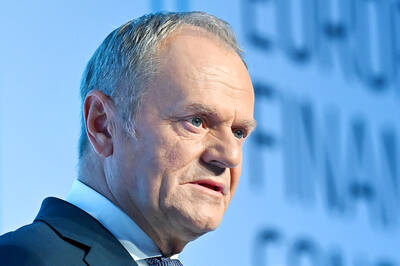
Poland is betting on a flood of investments and technology transfers from Taiwanese companies to reengineer its US$1 trillion economy. Polish Prime Minister Donald Tusk said yesterday that Poland will no longer be “just an assembly hub” as it pursues further investments from the likes of Foxconn Technology Group (富士康). The firm, whose full name is Hon Hai Precision Industry Co (鴻海精密), last month agreed to build electric vehicles (EVs) in the European Union nation and now could be a partner in a semiconductor venture, he said. The government’s aim is to boost manufacturing and the country’s high-tech chops in an era
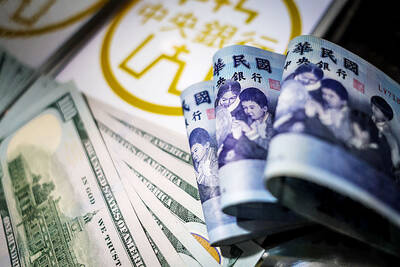
Taiwan remained the sixth-largest net creditor nation in the world last year, despite a fall of more than 10 percent in its net international investment position (NIIP) over the year, the central bank said yesterday. The NIIP is the difference between a country’s external financial assets and its external financial liabilities. Taiwan’s external financial assets hit US$3.27 trillion at the end of last year, up US$275.75 billion or 9.2 percent from a year earlier, the central bank said in its annual NIIP report. The growth largely reflected an increase in holdings of overseas marketable securities by residents in Taiwan, as well as a

RESTRICTION BREACH: ASML said that it denies ‘unfounded rumors regarding non-compliance with export controls concerning China,’ and enforces controls strictly US Secretary of Commerce Howard Lutnick in a series of recent meetings outlined concerns to Dutch chip-equipment giant ASML Holding NV’s senior leaders that one of its top-of-the-line machines might have made its way into China, in violation of US-led export restrictions. In the meetings, Lutnick expressed concern to ASML executives over the company’s extreme ultraviolet lithography (EUV) machines, people familiar with the talks said. EUV systems are used by firms such as Taiwan Semiconductor Manufacturing Co (台積電) to manufacture processors for the likes of Nvidia Corp and Apple Inc. ASML has never been allowed to ship them to China because of curbs
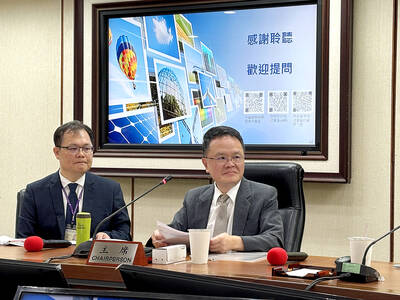
BAD FAITH LITIGATION? The two companies, owned by a California-based private equity firm, could be seeking licensing fees or a settlement payout with the suit Taiwan Intellectual Property Office (TIPO) Director-General Liao Cheng-wei (廖承威) said yesterday he suspected that two firms suing contract chipmaker Taiwan Semiconductor Manufacturing Co (TSMC, 台積電) for patent infringement are “patent trolls.” A patent troll refers to a company that buys patents not for manufacturing products, but to sue other companies for compensation, accusing them of using its patents. Patent trolls, formally called Non-Practicing Entities or Patent Assertion Entities, were responsible for more than 50 percent of lawsuits in the US last year, costing targeted businesses tens of billions of US dollars a year, according to the US-based LegalCharity Web site. Asked whether


 RSS
RSS