


Facial recognition technology has begun making its way into Taiwan’s banking sector, with more automated teller machines (ATMs) being equipped with facial recognition software. Taishin International Bank (台新銀行) yesterday announced that it would expand the application into online banking services.
Taishin, which has installed ATMs with facial recognition software at four of its local branches and three convenience stores, said it adopted the technology for wealth management services last month.
The bank installed a facial recognition-equipped camera at its branch in Taipei’s Neihu District (內湖), which can identify its VIP members when they walk into the branch, it said in a statement.
Only clients who agree to create a facial ID and allow the bank to take photographs of their face would be recognized by the machine, Taishin said, adding that the system would not detect new clients or passers-by.
Upon recognizing a VIP client, the system would automatically notify the bank’s financial consultants, who would greet the clients and offer services, it said.
“The application has proceeded smoothly and our clients have given positive feedback to the new service,” Taishin said.
The bank is to tap the technology for online banking service from the third quarter of this year to make its services more convenient, it said.
Clients using Apple Inc’s iPhone X smartphone can log into the bank’s Web site using the device’s facial recognition feature, the lender said.
The bank said it would provide an update to extend the service to all of its clients.
CTBC Bank (中國信託銀行) and E.Sun International Bank (玉山銀行) at the end of last year also begun installing facial recognition software at some of their ATMs.
While Taishin and E.Sun’s ATMs allow clients to make withdrawals without bank cards, CTBC’s software can detect whether a user is engaged in suspicious activity or is being manipulated by scammers.
However, given that facial recognition software can sometimes fail to differentiate identical twins, the banks still require customers to key in their personal identification number or account password before they can withdraw or transfer money.

GROWING OWINGS: While Luxembourg and China swapped the top three spots, the US continued to be the largest exposure for Taiwan for the 41st consecutive quarter The US remained the largest debtor nation to Taiwan’s banking sector for the 41st consecutive quarter at the end of September, after local banks’ exposure to the US market rose more than 2 percent from three months earlier, the central bank said. Exposure to the US increased to US$198.896 billion, up US$4.026 billion, or 2.07 percent, from US$194.87 billion in the previous quarter, data released by the central bank showed on Friday. Of the increase, about US$1.4 billion came from banks’ investments in securitized products and interbank loans in the US, while another US$2.6 billion stemmed from trust assets, including mutual funds,
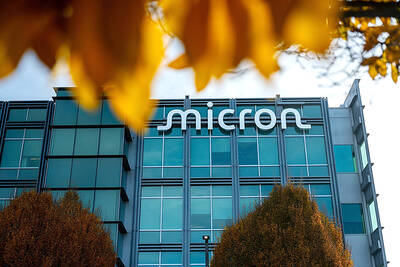
Micron Memory Taiwan Co (台灣美光), a subsidiary of US memorychip maker Micron Technology Inc, has been granted a NT$4.7 billion (US$149.5 million) subsidy under the Ministry of Economic Affairs A+ Corporate Innovation and R&D Enhancement program, the ministry said yesterday. The US memorychip maker’s program aims to back the development of high-performance and high-bandwidth memory chips with a total budget of NT$11.75 billion, the ministry said. Aside from the government funding, Micron is to inject the remaining investment of NT$7.06 billion as the company applied to participate the government’s Global Innovation Partnership Program to deepen technology cooperation, a ministry official told the

Taiwan Semiconductor Manufacturing Co (TSMC, 台積電), the world’s leading advanced chipmaker, officially began volume production of its 2-nanometer chips in the fourth quarter of this year, according to a recent update on the company’s Web site. The low-key announcement confirms that TSMC, the go-to chipmaker for artificial intelligence (AI) hardware providers Nvidia Corp and iPhone maker Apple Inc, met its original roadmap for the next-generation technology. Production is currently centered at Fab 22 in Kaohsiung, utilizing the company’s first-generation nanosheet transistor technology. The new architecture achieves “full-node strides in performance and power consumption,” TSMC said. The company described the 2nm process as
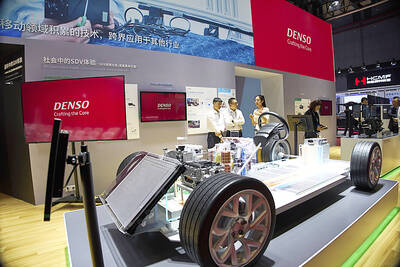
JOINT EFFORTS: MediaTek would partner with Denso to develop custom chips to support the car-part specialist company’s driver-assist systems in an expanding market MediaTek Inc (聯發科), the world’s largest mobile phone chip designer, yesterday said it is working closely with Japan’s Denso Corp to build a custom automotive system-on-chip (SoC) solution tailored for advanced driver-assistance systems and cockpit systems, adding another customer to its new application-specific IC (ASIC) business. This effort merges Denso’s automotive-grade safety expertise and deep vehicle integration with MediaTek’s technologies cultivated through the development of Media- Tek’s Dimensity AX, leveraging efficient, high-performance SoCs and artificial intelligence (AI) capabilities to offer a scalable, production-ready platform for next-generation driver assistance, the company said in a statement yesterday. “Through this collaboration, we are bringing two


 RSS
RSS