


Thousands of Uber Technologies Inc and Lyft Inc drivers on Wednesday turned off their apps in a US-wide strike over pay and working conditions, casting a shadow over this week’s keenly anticipated Wall Street debut of ride-hailing leader Uber.
Uber is expected to launch its initial public offering (IPO) today, giving it an estimated valuation of about US$80 billion, one of the biggest tech listings in recent years, but rather lower than its earlier hopes of about US$100 billion.
The company was expected to announce pricing last night.
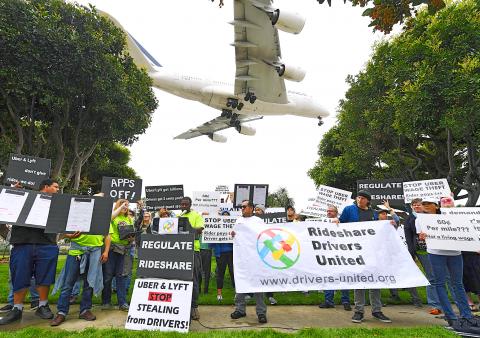
Photo: AFP
Uber is to trade on the New York Stock Exchange under the ticker “UBER” some time next month.
The launch will be a major milestone for the company, which has raised billions and disrupted the taxi industry in cities around the world.
Strikes that took place on Wednesday highlighted a dilemma for rideshare firms, which have faced challenges from regulators and traditional taxi operators for using a business model relying on independent contractors.
One group protested outside the New York Stock Exchange, where Uber is set to list its shares, with some signs reading “Invest in our lives — Not their stocks.”
Similar actions took place in Boston, Chicago, Los Angeles, San Diego, Washington and in Uber’s home town, San Francisco.
Protests were held in Britain as well with drivers in London, Birmingham, Nottingham and Glasgow called on to log off apps and demonstrate outside Uber offices, the Independent Workers’ Union of Great Britain said.
Rideshare companies maintain that drivers are able to thrive and maintain work flexibility, and that their business model would not work if drivers were treated as wage-based employees.
Uber and Lyft did not immediately comment on the protests.
“While we aim to provide an earnings opportunity comparable to that available in retail, wholesale, or restaurant services or other similar work, we continue to experience dissatisfaction with our platform from a significant number of drivers,” Uber said in a filing with securities regulators.
“In particular, as we aim to reduce driver incentives to improve our financial performance, we expect driver dissatisfaction will generally increase,” it said.
Uber’s inauguration as a public company would follow a rocky market debut for Lyft.
Lyft’s losses in the past quarter widened to US$1.1 billion, its first financial report as a public company showed.
Lyft’s revenue nearly doubled from a year earlier to US$776 million and the number of active riders grew to more than 20.5 million.
Lyft said its losses deepened as a result of US$894 million in costs that included stock-based compensation and related tax expenses in connection with its IPO.
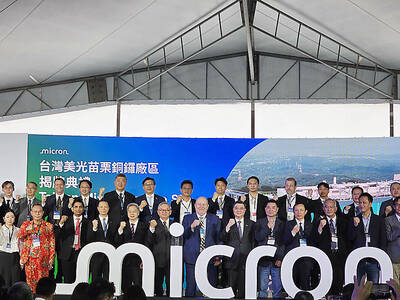
UNPRECEDENTED PACE: Micron Technology has announced plans to expand manufacturing capabilities with the acquisition of a new chip plant in Miaoli Micron Technology Inc unveiled a newly acquired chip plant in Miaoli County yesterday, as the company expands capacity to meet growing demand for advanced DRAM chips, including high-bandwidth memory chips amid the artificial intelligence boom. The plant in Miaoli County’s Tongluo Township (銅鑼), which Micron acquired from Powerchip Semiconductor Manufacturing Corp (力積電) for US$1.8 billion, is expected to make a sizeable capacity contribution to the company from fiscal 2028, the company said in a statement. It would be an extended production site of Micron’s large-scale manufacturing hub in Taichung, the company said. As the global semiconductor industry is racing to reach US$1 trillion

Singapore-based ride-hailing and delivery giant Grab Holdings Ltd has applied for regulatory approval to acquire the Taiwan operations of Germany-based Delivery Hero SE's Foodpanda in a deal valued at about US$600 million. Grab submitted the filing to the Fair Trade Commission on Friday last week, with the transaction subject to regulatory review and approval, the company said in a statement yesterday. Its independent governance structure would help foster a healthy and competitive market in Taiwan if the deal is approved, Grab said. Grab, which is listed on the NASDAQ, said in the filing that US-based Uber Technologies Inc holds about 13 percent of
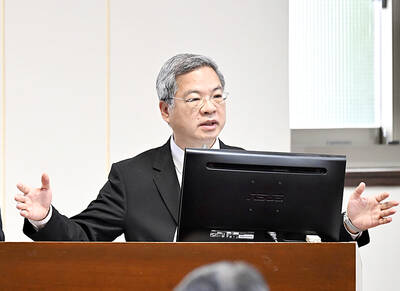
ABOVE LEGAL REQUIREMENT: The Ministry of Economic Affairs is prepared if LNG supply is disrupted, with more than the legal requirement of 11 days of inventory Taiwan has largely secured liquefied natural gas (LNG) supplies through May and arranged about half of June’s supply, Minister of Economic Affairs Kung Ming-hsin (龔明鑫) said yesterday. Since the Middle East conflict began on Feb. 28, Taiwan’s LNG inventories have remained more than 12 days, exceeding the legal requirement of 11 days, indicating no major supply concerns for domestic gas and electricity, Kung said at a meeting of the legislature’s Economics Committee in Taipei. The ministry aims to increase the figure to 14 days by the end of next year, he said. While one or two LNG or crude oil shipments for May

Taiwan’s food delivery market could undergo a major shift if Singapore-based Grab Holdings Ltd completes its planned acquisition of Delivery Hero SE’s Foodpanda business in Taiwan, industry experts said. Grab on Monday last week announced it would acquire Foodpanda’s Taiwan operations for US$600 million. The deal is expected to be finalized in the second half of this year, with Grab aiming to complete user migration to its platform by the first half of next year. A duopoly between Uber Eats and Foodpanda dominates Taiwan’s delivery market, a structure that has remained intact since the Fair Trade Commission (FTC) blocked Uber Technologies Inc’s


 RSS
RSS