


Advantech Co (研華), the world’s largest industrial computer maker, yesterday said that revenue would grow at least 10 percent annually this year, benefiting from rapid growth in overseas markets such as Turkey and Israel.
The company has sustained double-digit percentage growth in revenue over the past few years.
Advantech’s revenue last year climbed 10 percent to NT$48.73 billion (US$1.58 billion), from NT$44.38 billion in 2017.
Advantech plans to add more business offices in Turkey and Israel this quarter and next quarter as growth in the Middle East and Africa market outpaced other areas.
Revenue from the region last year soared 60 percent annually, followed by India with annual growth of 56.6 percent, company data showed.
The company has started this year well, reporting an 11.22 percent year-on-year growth in revenue for the first two months totaling NT$7.75 billion.
North America is expected to show the strongest growth this year, Advantech said, adding that Europe will show stable growth, while demand from China is to remain weak, overshadowed by the US-China trade dispute.
China was the biggest contributor to the firm’s revenue last year, accounting for more than one-third, followed by North America at 28 percent, company data showed.
By business group, the industrial Internet of Things business began showing signs of stagnation in the first two months of this year due to greater exposures to the Chinese market, Advantech chief executive officer Eric Chen (陳清熙) told an investors’ conference.
However, the embedded Internet of Things business is to grow further this year, benefiting from rising demand from North America, as well as India and other emerging markets, Chen said.
He expressed optimism about growth in the company’s service Internet of Things business, supported by new product launches.
Gross margin is to be between 37 and 41 percent in the first half of this year, compared with 38.6 percent in the final quarter of last year, dragged by newly acquired Omron Corp, Chen said.
Advantech early last month subscribed to an 80 percent stake of the Japanese company for approximately NT$520 million.
Omron, which was renamed Advantech Technologies in Japan, supplies industrial computing devises used in robots, medical devices and industrial equipment.
Advantech last year posted earnings per share of NT$9.02, the highest in nearly 20 years, thanks to rising revenue and an improved operating margin.
Net profit last year increased 62.3 percent year-on-year and operating profit grew 2.6 percent to NT$6.31 billion, with revenue rising 10 percent to NT$48.78 billion, Advantech said on Friday last week.
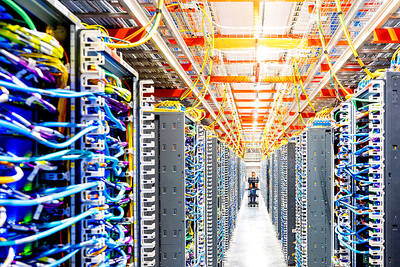
AI SPLURGE: The four major US tech companies have lost more than US$950 billion in value since releasing earnings and outlooks, while equipment makers were gaining Four of the biggest US technology companies together have forecast capital expenditures that would reach about US$650 billion this year — a flood of cash earmarked for new data centers and all the gear within them. The spending planned by Alphabet Inc, Amazon.com Inc, Meta Platforms Inc and Microsoft Corp, all in pursuit of dominance in the still-nascent market for artificial intelligence (AI) tools, is a boom without a parallel this century. Each of the companies’ estimates for this year is expected either near or surpass their budgets for the past three years combined. They would set a high-watermark for capital spending
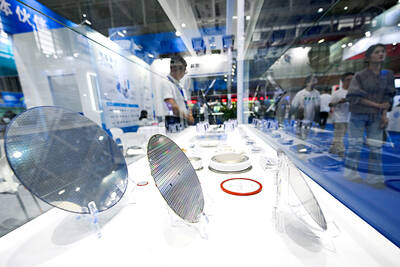
China’s top chipmaker has warned that breakaway spending on artificial intelligence (AI) chips is bringing forward years of future demand, raising the risk that some data centers could sit idle. “Companies would love to build 10 years’ worth of data center capacity within one or two years,” Semiconductor Manufacturing International Corp (SMIC, 中芯) cochief executive officer Zhao Haijun (趙海軍) said yesterday on a call with analysts. “As for what exactly these data centers will do, that hasn’t been fully thought through.” Moody’s Ratings projects that AI-related infrastructure investment would exceed US$3 trillion over the next five years, as developers pour eye-watering sums

Bank of America Corp nearly doubled its forecast for the nation’s economic growth this year, adding to a slew of upgrades even after a rip-roaring last year propelled by demand for artificial intelligence (AI). The firm lifted its projection to 8 percent from 4.5 percent on “relentless global demand” for the hardware that Taiwanese companies make, according to a note dated yesterday by analysts including Xiaoqing Pi (皮曉青). Taiwan’s GDP expanded 8.63 percent last year, the fastest pace since 2010. The increase “reflects our sustained optimism over Taiwan’s technology driven expansion and is reinforced by several recent developments,” including a more stable currency,

COLLABORATION: Taiwan and the US could jointly find solutions to weaknesses in supply chain resilience for critical materials, focusing on mining and initial refinement Taiwan is likely to purchase rare earths from the US in the future, and is also in talks with Australia and Canada to strengthen global rare earth supply chain security, Minister of Economic Affairs Kung Ming-hsin (龔明鑫) said yesterday. Taiwan and the US last month concluded the sixth Economic Prosperity Partnership Dialogue, during which both sides signed a joint statement endorsing the principles of the Pax Silica Declaration, pledging to deepen cooperation in areas including critical minerals. At the time, Kung said the two sides would establish working groups to advance cooperation in areas including artificial intelligence, digital infrastructure, critical materials and


 RSS
RSS