


Bank of America Corp nearly doubled its forecast for the nation’s economic growth this year, adding to a slew of upgrades even after a rip-roaring last year propelled by demand for artificial intelligence (AI).
The firm lifted its projection to 8 percent from 4.5 percent on “relentless global demand” for the hardware that Taiwanese companies make, according to a note dated yesterday by analysts including Xiaoqing Pi (皮曉青).
Taiwan’s GDP expanded 8.63 percent last year, the fastest pace since 2010.
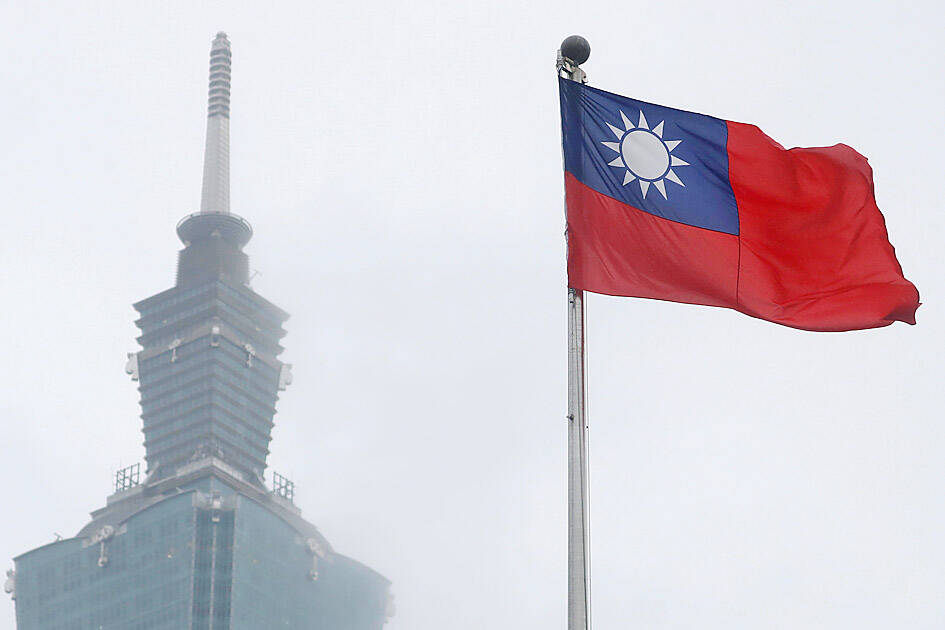
Photo:AP
The increase “reflects our sustained optimism over Taiwan’s technology driven expansion and is reinforced by several recent developments,” including a more stable currency, a trade and investment deal with the US and spending by technology companies, Bank of America said.
Societe Generale SA yesterday also raised its growth forecast for this year to 6.3 percent from 3 percent.
Economist Michelle Lam (林雪潔) wrote in a note that “another robust year for Taiwan’s tech led exports” is expected.
The financial institutions join Goldman Sachs Group Inc, Barclays PLC and others in turning more optimistic on Taiwan even after its economy clocked one of the fastest rates of expansion globally.
Officials in Taipei have said that annual growth in the fourth quarter of last year came in at more than 12 percent, the quickest pace since 1987.
Underscoring optimism that AI would continue to shine this year, Taiwan Semiconductor Manufacturing Co (TSMC, 台積電) — Nvidia Corp’s main chipmaker — said it is earmarking as much as US$56 billion for capital spending, a projection that was stronger than anticipated.
TSMC yesterday reported a 36.8 percent annual rise in January revenue to NT$401.255 billion (US$12.7 billion), above the 30 percent revenue growth the company expects for the full year.
The monthly sales last month set a record high in the company’s history, but the annual comparison would have been affected by the Lunar New Year holiday, which last year fell in January.
Bank of America said that it does not expect the central bank to raise its policy rate this year, “given still subdued inflation, stagnant services wages, weak non-tech sectors and continued cooling in the real-estate market.”
However, Bank of America and Societe Generale see a chance of tighter monetary policy next year after a pause in place since March 2024. Lam predicts two rate hikes of 12.5 basis points each next year, as part of what she called “a shallow tightening cycle.”
“There is scope for rates to drift higher over time, even if 2026 will likely remain steady,” she said. “Key risks to this outlook include potential Section 232 tariffs” — referring to a possible outcome of a national security investigation being conducted by the US — “and the bursting of the AI bubble.”
Bank of America also highlighted risks to its forecasts from issues such as “geopolitical dynamics.”
Shares of contract chipmaker Taiwan Semiconductor Manufacturing Co (TSMC, 台積電) came under pressure yesterday after a report that Apple Inc is looking to shift some orders from the Taiwanese company to Intel Corp. TSMC shares fell NT$55, or 2.4 percent, to close at NT$2,235 on the local main board, Taiwan Stock Exchange data showed. Despite the losses, TSMC is expected to continue to benefit from sound fundamentals, as it maintains a lead over its peers in high-end process development, analysts said. “The selling was a knee-jerk reaction to an Intel-Apple report over the weekend,” Mega International Investment Services Corp (兆豐國際投顧) analyst Alex Huang
Taiwan Semiconductor Manufacturing Co (TSMC, 台積電) is expected to remain Apple Inc’s primary chip manufacturing partner despite reports that Apple could shift some orders to Intel Corp, industry experts said yesterday. The comments came after The Wall Street Journal reported on Friday that Apple and Intel had reached a preliminary agreement following more than a year of negotiations for Intel to manufacture some chips for Apple devices. Taiwan Institute of Economic Research (台灣經濟研究院) economist Arisa Liu (劉佩真) said TSMC’s advanced packaging technologies, including integrated fan-out and chip-on-wafer-on-substrate, remain critical to the performance of Apple’s A-series and M-series chips. She said Intel and Samsung
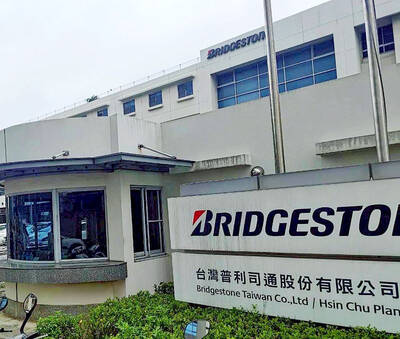
TRANSITION: With the closure, the company would reorganize its Taiwanese unit to a sales and service-focused model, Bridgestone said Bridgestone Corp yesterday announced it would cease manufacturing operations at its tire plant in Hsinchu County’s Hukou Township (湖口), affecting more than 500 workers. Bridgestone Taiwan Co (台灣普利司通) said in a statement that the decision was based on the Tokyo-based tire maker’s adjustments to its global operational strategy and long-term market development considerations. The Taiwanese unit would be reorganized as part of the closure, effective yesterday, and all related production activities would be concluded, the statement said. Under the plan, Bridgestone would continue to deepen its presence in the Taiwanese market, while transitioning to a sales and service-focused business model, it added. The Hsinchu
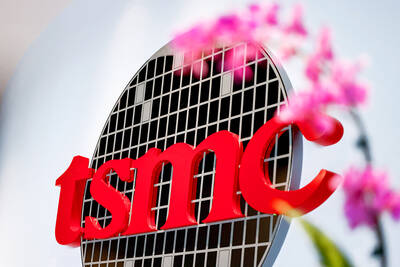
Taiwan Semiconductor Manufacturing Co (TSMC, 台積電) has approved a capital budget of US$31.28 billion for production expansion to meet long-term development needs during the artificial intelligence (AI) boom. The company’s board meeting yesterday approved the capital appropriation plan for purposes such as the installation of advanced technology capacity and fab construction, the world’s largest contract chipmaker said in a statement. At an earnings conference last month, TSMC forecast that its capital expenditure for this year would be at the higher end of the US$52 billion to US$56 billion range it forecast in January in response to robust demand for 5G, AI and


 RSS
RSS