


ARGENTINA
IMF approves more funds
The IMF Executive Board approved a US$56.3 billion credit line, clearing the way for the embattled economy to receive more funding at a faster pace than originally negotiated. The board’s sign-off on Friday ratified a revised agreement announced last month. Under the new deal, Argentina is to receive about US$35.8 billion throughout the remainder of this year and all of next year, representing a nearly US$19 billion increase from the original arrangement negotiated in June. It received US$15 billion that month.
UNITED KINGDOM
Business tax cut likely
Chancellor of the Exchequer Philip Hammond is tomorrow likely to give a £900 million (US$1.15 billion) tax cut to small high-street retailers in his annual budget to help them compete against online competition, the UK government said late on Friday. The UK Treasury said that starting from next year, almost half-a -million small retailers would enjoy a cut of one-third to their property taxes, known as business rates.
UNITED STATES
GDP grows 3.5% in Q3
The economy grew at a robust annual rate of 3.5 percent in the July-to-September quarter as the strongest burst of consumer spending in nearly four years helped offset a sharp drag from trade. The Department of Commerce on Friday said that the third-quarter GDP growth followed an even stronger 4.2 percent rate of growth in the second quarter. The two quarters marked the strongest consecutive quarters of growth since 2014.
STEELMAKERS
Arcelor, Nippon buy Essar
Global steel giant ArcelorMittal SA and Nippon Steel & Sumitomo Metal Corp on Friday said they have won a bidding war for India’s Essar Steel with a US$5.7 billion offer for their debt-laden rival. The deal is one of the biggest takeovers of a failing Indian company under India’s first bankruptcy law, passed two years ago to help clean up crippling corporate debts. While ArcelorMittal is to own a majority stake in Essar, Nippon would hold a nearly equal share, the companies said in separate statements.
PHARMACEUTICALS
Takeda talks EU settlement
Takeda Pharmaceutical Co is in talks with EU antitrust regulators about selling an experimental inflammatory bowel disease drug to help close its US$62 billion takeover of Shire PLC. In a statement released on Friday, Takeda said that it has been in discussions with the European Commission about divesting SHP647, which is in the final stages of experimental testing for the treatment of two gastrointestinal disorders: Crohn’s disease and ulcerative colitis. Takeda already markets the drug Entyvio for those conditions.
FINANCIAL CRIME
Ex-forex traders acquitted
Three former London currency traders were on Friday found not guilty of US charges that they schemed to rig benchmark exchange rates, the latest verdict in a US probe into the multitrillion-US dollar foreign exchange market. Chris Ashton, Rohan Ramchandani and Richard Usher, who worked at Barclays PLC, Citigroup Inc and JPMorgan Chase & Co respectively, were acquitted of all charges by a jury in a Manhattan federal court.
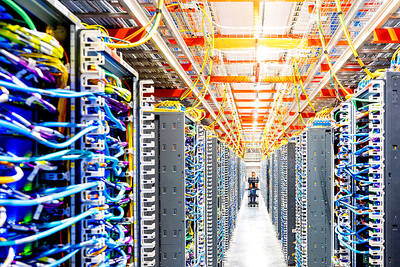
AI SPLURGE: The four major US tech companies have lost more than US$950 billion in value since releasing earnings and outlooks, while equipment makers were gaining Four of the biggest US technology companies together have forecast capital expenditures that would reach about US$650 billion this year — a flood of cash earmarked for new data centers and all the gear within them. The spending planned by Alphabet Inc, Amazon.com Inc, Meta Platforms Inc and Microsoft Corp, all in pursuit of dominance in the still-nascent market for artificial intelligence (AI) tools, is a boom without a parallel this century. Each of the companies’ estimates for this year is expected either near or surpass their budgets for the past three years combined. They would set a high-watermark for capital spending
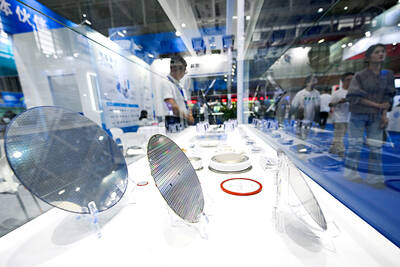
China’s top chipmaker has warned that breakaway spending on artificial intelligence (AI) chips is bringing forward years of future demand, raising the risk that some data centers could sit idle. “Companies would love to build 10 years’ worth of data center capacity within one or two years,” Semiconductor Manufacturing International Corp (SMIC, 中芯) cochief executive officer Zhao Haijun (趙海軍) said yesterday on a call with analysts. “As for what exactly these data centers will do, that hasn’t been fully thought through.” Moody’s Ratings projects that AI-related infrastructure investment would exceed US$3 trillion over the next five years, as developers pour eye-watering sums
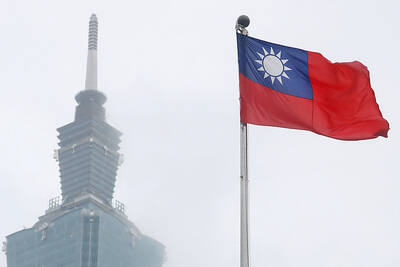
Bank of America Corp nearly doubled its forecast for the nation’s economic growth this year, adding to a slew of upgrades even after a rip-roaring last year propelled by demand for artificial intelligence (AI). The firm lifted its projection to 8 percent from 4.5 percent on “relentless global demand” for the hardware that Taiwanese companies make, according to a note dated yesterday by analysts including Xiaoqing Pi (皮曉青). Taiwan’s GDP expanded 8.63 percent last year, the fastest pace since 2010. The increase “reflects our sustained optimism over Taiwan’s technology driven expansion and is reinforced by several recent developments,” including a more stable currency,
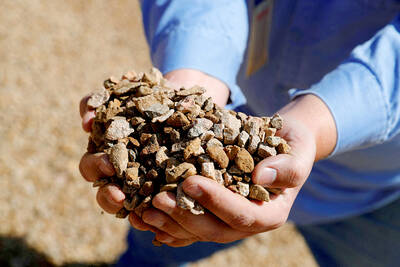
COLLABORATION: Taiwan and the US could jointly find solutions to weaknesses in supply chain resilience for critical materials, focusing on mining and initial refinement Taiwan is likely to purchase rare earths from the US in the future, and is also in talks with Australia and Canada to strengthen global rare earth supply chain security, Minister of Economic Affairs Kung Ming-hsin (龔明鑫) said yesterday. Taiwan and the US last month concluded the sixth Economic Prosperity Partnership Dialogue, during which both sides signed a joint statement endorsing the principles of the Pax Silica Declaration, pledging to deepen cooperation in areas including critical minerals. At the time, Kung said the two sides would establish working groups to advance cooperation in areas including artificial intelligence, digital infrastructure, critical materials and


 RSS
RSS