


US President Donald Trump plans to withdraw the US from a 192-nation treaty that gives Chinese companies discounted shipping rates for small packages sent to US consumers, another escalation of his economic confrontation of Beijing.
US officials said the administration sought to revise the treaty last month and was rebuffed by other nations, prompting the decision to withdraw.
The US Department of State was on Wednesday to deliver a notice to the Universal Postal Union (UPU) in Switzerland, White House press secretary Sarah Huckabee Sanders said in a statement.

Photo: Reuters
RENEGOTIATIONS?
Under the union’s framework it takes a year for a country to withdraw, during which rates can be renegotiated.
The officials, who briefed reporters on condition of anonymity, said postal rates would not change for at least six months, and that the US would prefer to stay inside the union’s system.
The president wants to adopt “self-declared rates” as soon as practical, and no later than Jan. 1, 2020, Sanders said.
“If negotiations are successful, the administration is prepared to rescind the notice of withdrawal and remain in the UPU,” she said.
US manufacturers applauded the move.
“President Trump deserves tremendous credit for the administration’s focus on eliminating the anti-US manufacturer subsidy China receives from the US Postal Service,” National Association of Manufacturers president Jay Timmons said in a statement. “This outdated arrangement contributes significantly to the flood of counterfeit goods and dangerous drugs that enter the country from China.”
The group said the discounts amount to a subsidy for Chinese shippers that cost the US Postal Service US$170 million last year.
The treaty sets fees that national postal services charge to deliver mail and small packages from other countries.
Poor and developing countries are assessed lower rates than wealthier countries, an arrangement that has benefited China.
‘RIGHT STEP’
United Parcel Service Inc (UPS) said the administration “took the right step” in withdrawing from the accord.
“Foreign postal operators should not be given government approved advantages in what is a competitive market,” UPS said in a statement. “All parties should pay the same parcel delivery rates for the same services from the US Postal Service, regardless of whether the country of origin is foreign or domestic.”
FedEx Corp declined to comment.

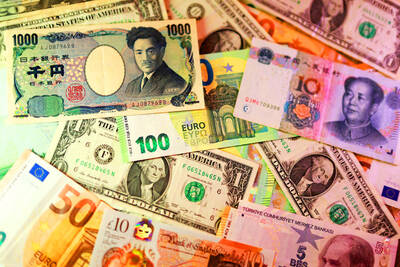
Taiwan’s foreign exchange reserves fell below the US$600 billion mark at the end of last month, with the central bank reporting a total of US$596.89 billion — a decline of US$8.6 billion from February — ending a three-month streak of increases. The central bank attributed the drop to a combination of factors such as outflows by foreign institutional investors, currency fluctuations and its own market interventions. “The large-scale outflows disrupted the balance of supply and demand in the foreign exchange market, prompting the central bank to intervene repeatedly by selling US dollars to stabilize the local currency,” Department of Foreign

Intel Corp is joining Elon Musk’s long-shot effort to develop semiconductors for Tesla Inc, Space Exploration Technologies Corp and xAI, marking a surprising twist in the chipmaker’s comeback bid. Intel would help the Terafab project “refactor” the technology in a chip factory, the company said on Tuesday in a post on X, Musk’s social media platform. That is a stage in the development process that typically helps make chips more powerful or reliable. The chipmaker’s shares jumped 4.2 percent to US$52.91 in New York trading on Tuesday. The Terafab project is a grand plan by Musk to eventually manufacture his own chips for
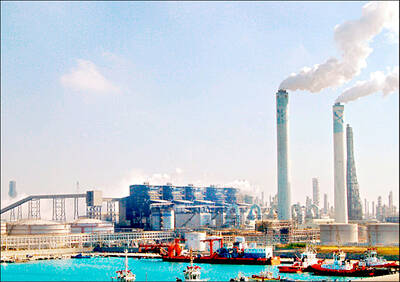
Taiwan Power Co (Taipower, 台電) yesterday said it plans to resume operations at two coal-fired power generators for three months to boost security of electricity supply as liquefied natural gas (LNG) supply risks are running high due to the Middle East conflict. The two coal-fired power generators are at Mailiao Power Plant in Yunlin County’s Mailiao Township (麥寮). The plant, operated by Formosa Plastics Group (台塑集團), supplied electricity to Taipower’s power grid until the end of last year. Taipower’s decision came about one month after Minister of Economic Affairs Kung Ming-hsin (龔明鑫) on March 10 said that the nation had no imminent

Some robotaxi passengers were left stranded in the middle of fast-moving traffic in a major Chinese city after their driverless vehicles stopped running, according to police and media reports on Wednesday. A preliminary investigation indicates more than 100 robotaxis came to a halt because of a “system malfunction,” police in the city of Wuhan said in a statement, without elaborating. No injuries were reported. One passenger told Chinese media that their robotaxi stopped after turning a corner. An instruction on a screen read: “Driving system malfunction. Staff are expected to arrive in 5 minutes.” After no one showed up, the passenger pushed


 RSS
RSS