


Nanya Technology Corp (南亞科技) yesterday said it plans to pare down capital spending by 12.5 percent for this year as an ongoing US-China trade dispute and supply constraints of PC processors from Intel Corp dampen demand.
The DRAM chipmaker said it plans to invest NT$21 billion (US$679.17 million) in new manufacturing equipment this year compared with its previous estimate of NT$24 billion to slow capacity expansion over demand concerns.
The budget reduction would not affect the firm’s output growth forecast of 48 percent for this year, it said.
“International circumstances are becoming crucial now, given US-China trade tensions, tariff increases and a scarcity of processor supply,” Nanya Technology president Lee Pei-ing (李培瑛) told a media briefing. “DRAM demand [outlook] is relatively conservative in the fourth quarter compared with the first half of the year.”
The trade war would not only weigh on DRAM demand, but also the world economy and consumer demand, he said.
Some PC assemblers are pondering relocating their Chinese production lines to other countries in a bid to avoid US President Donald Trump’s tariffs on Chinese goods, Lee said.
Stalling PC demand might bring down overall DRAM prices by 5 percent this quarter from last quarter, Lee said.
That would snap the industry’s longest rising streak since the third quarter of 2016.
To cope with those unfavorable factors, “some of the world’s major DRAM suppliers have slowed down their capacity expansion plans and reduced capital spending in the fourth quarter,” Lee said.
“It remains to be seen how long the trade row will last and how big the extent of its impact will be,” he added.
Next year, DRAM prices might face mild declines in tandem with flagging PC demand, but no “drastic corrections” would occur as it has during past downturns, Lee said.
“Buying sentiment is ebbing, but not memorychip demand,” he said, adding that memory content per box is still on the rise for smartphones, severs and consumer electronics.
Benefiting from robust demand last quarter, Nanya Technology posted a quarterly net profit of NT$12.87 billion, surging 50.52 percent from NT$8.55 billion in the third quarter of last year.
On a quarterly basis, net profit rose 13.8 percent from NT$11.31 billion in the second quarter.
That translated into earnings per share of NT$4.15, up from NT$3.09 a year earlier and NT$3.63 a quarter earlier.
Gross margin climbed to 58.9 percent, an all-time high compared with 44.2 percent a year earlier and 55 percent in the second quarter.
The chipmaker attributed the increases to improved manufacturing costs.
It said it saw greater contribution at 30 percent from cost-efficient 20-nanometer chips last quarter, but did not provide figures for comparison.
Average selling price was flat, compared with the previous quarter, it said.
Also on the plus side, Nanya Technology said it has made good progress in returning to the server DRAM market after a five-year hiatus.
The company is to ship a small volume of server DRAM — or 8GB DDR4 DRAM — to a first-tier US data center operator from this quarter, it said.

Taichung reported the steepest fall in completed home prices among the six special municipalities in the first quarter of this year, data compiled by Taiwan Realty Co (台灣房屋) showed yesterday. From January through last month, the average transaction price for completed homes in Taichung fell 8 percent from a year earlier to NT$299,000 (US$9,483) per ping (3.3m²), said Taiwan Realty, which compiled the data based on the government’s price registration platform. The decline could be attributed to many home buyers choosing relatively affordable used homes to live in themselves, instead of newly built homes in the city’s prime property market, Taiwan Realty
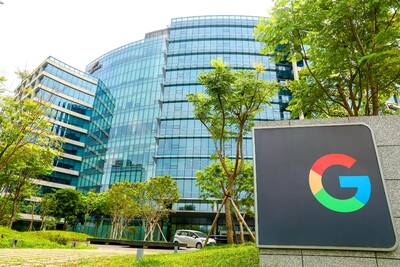
The government yesterday approved applications by Alphabet Inc’s Google to invest NT$27.08 billion (US$859.98 million) in Taiwan, the Ministry of Economic Affairs said in a statement. The Department of Investment Review approved two investments proposed by Google, with much of the funds to be used for data processing and electronic information supply services, as well as inventory procurement businesses in the semiconductor field, the ministry said. It marks the second consecutive year that Google has applied to increase its investment in Taiwan. Google plans to infuse NT$25.34 billion into Charter Investments Ltd (特許投資顧問) through its Singapore-based subsidiary Fructan Holdings Singapore Pte Ltd, and

Micron Technology Inc is a driving force pushing the US Congress to pass legislation that would put new export restrictions on equipment its Chinese competitors use to make their chips, according to people familiar with the matter. A US House of Representatives panel yesterday was to vote on the “MATCH Act,” a bill designed to close gaps in restrictions on chipmaking equipment. It would also pressure foreign companies that sell equipment to Chinese chipmaking facilities to align with export curbs on US companies like Lam Research Corp and Applied Materials Inc. The bill targets facilities operated by China’s ChangXin Memory Technologies Inc

Singapore-based ride-hailing and delivery giant Grab Holdings’ planned acquisition of Foodpanda’s Taiwan operations has yet to enter the formal review stage, as regulators await supplementary documents, the Fair Trade Commission (FTC) said yesterday. Acting FTC Chairman Chen Chih-min (陳志民) told the legislature’s Economics Committee that although Grab submitted its application on March 27, the case has not been officially accepted because required materials remain incomplete. Once the filing is finalized, the FTC would launch a formal probe into the deal, focusing on issues such as cross-shareholding and potential restrictions on market competition, Chen told lawmakers. Grab last month announced that it would acquire


 RSS
RSS