


Hon Hai Technology Group (鴻海科技集團) is to overtake TPV Technology Group (冠捷科技集團) as the world’s biggest TV assembler this year, thanks to rising demand from Sharp Corp, Sony Corp and Vizio Inc, TrendForce Corp (集邦科技) said yesterday.
Hon Hai Technology Group, which is known as Foxconn Technology Group (富士康科技集團) outside of Taiwan, is to “benefit from the prosperous TV business of Sharp, a subsidiary of Foxconn,” the Taipei-based researcher said in a report.
TCL Corp and BOE Vision-Electronic Technology Ltd (京東方視訊) are to rank third and fourth respectively, the researcher said.
“The four major TV original design manufacturers [ODMs] have in-house panel supply networks, enabling them to offer more flexible prices to clients and to secure orders amid tight supply,” TrendForce analyst Jeff Yang (楊晴翔) said in the report.
As growth in the global TV market decelerates, TV ODMs are allocating more capacity to their own-brand TVs to boost shipments, Yang said.
Hon Hai this year is to see TV shipments rise 3 percent year-on-year to 16.5 million units from last year’s 16 million, Yang said.
However, TPV is expected to have a setback due to declining demand from financially troubled Internet TV clients and Vizio, the report said, adding that shipments might fall 9 percent to 15.3 million units this year from last year’s 16.8 million.
TCL is expected to see 25 percent growth, the strongest among the top four TV ODMs this year, boosted by robust demand for Xiaomi Corp’s (小米) Mi TV in China and Southeast Asia, TrendForce said.
Overall global TV shipments are expected to grow 3.8 percent to 51.7 million units from 49.8 million last year, it said.
The researcher expects competition to heat up as panelmakers Innolux Corp (群創) and HKC Group (惠科) of China are making inroads into the TV ODM market to digest capacities.


Taiwan’s foreign exchange reserves fell below the US$600 billion mark at the end of last month, with the central bank reporting a total of US$596.89 billion — a decline of US$8.6 billion from February — ending a three-month streak of increases. The central bank attributed the drop to a combination of factors such as outflows by foreign institutional investors, currency fluctuations and its own market interventions. “The large-scale outflows disrupted the balance of supply and demand in the foreign exchange market, prompting the central bank to intervene repeatedly by selling US dollars to stabilize the local currency,” Department of Foreign

Intel Corp is joining Elon Musk’s long-shot effort to develop semiconductors for Tesla Inc, Space Exploration Technologies Corp and xAI, marking a surprising twist in the chipmaker’s comeback bid. Intel would help the Terafab project “refactor” the technology in a chip factory, the company said on Tuesday in a post on X, Musk’s social media platform. That is a stage in the development process that typically helps make chips more powerful or reliable. The chipmaker’s shares jumped 4.2 percent to US$52.91 in New York trading on Tuesday. The Terafab project is a grand plan by Musk to eventually manufacture his own chips for
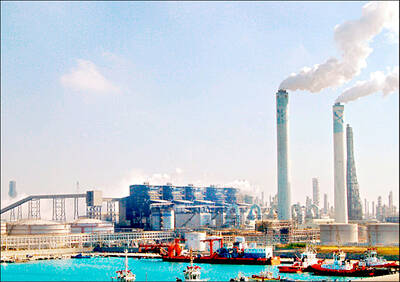
Taiwan Power Co (Taipower, 台電) yesterday said it plans to resume operations at two coal-fired power generators for three months to boost security of electricity supply as liquefied natural gas (LNG) supply risks are running high due to the Middle East conflict. The two coal-fired power generators are at Mailiao Power Plant in Yunlin County’s Mailiao Township (麥寮). The plant, operated by Formosa Plastics Group (台塑集團), supplied electricity to Taipower’s power grid until the end of last year. Taipower’s decision came about one month after Minister of Economic Affairs Kung Ming-hsin (龔明鑫) on March 10 said that the nation had no imminent
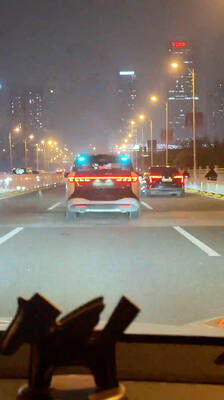
Some robotaxi passengers were left stranded in the middle of fast-moving traffic in a major Chinese city after their driverless vehicles stopped running, according to police and media reports on Wednesday. A preliminary investigation indicates more than 100 robotaxis came to a halt because of a “system malfunction,” police in the city of Wuhan said in a statement, without elaborating. No injuries were reported. One passenger told Chinese media that their robotaxi stopped after turning a corner. An instruction on a screen read: “Driving system malfunction. Staff are expected to arrive in 5 minutes.” After no one showed up, the passenger pushed


 RSS
RSS