


Shares of smartphone camera lens supplier Largan Precision Co (大立光) yesterday took a hit, as investor sentiment cooled ahead of Apple Inc’s iPhone launch on Wednesday next week.
The stock dipped 5.11 percent to close at NT$4,640 in Taipei trading, underperforming the broader market, which slid 0.64 percent to 10,924.30 points.
Other key companies in the Apple supply chain were also affected, including Taiwan Semiconductor Manufacturing Co (台積電), which dropped 1.1 percent to NT$261, and Hon Hai Precision Industry Co (鴻海精密), which declined 1 percent to NT$79.30.
Largan’s bigger pullback reflected its disappointing sales last month.
The company on Wednesday said that revenue last month rose 10 percent annually to NT$5.51 billion (US$178.88 million), bringing aggregate sales in the first eight months of the year to NT$32 billion, 1.26 percent higher compared with a year earlier.
The results fell short of some analysts’ estimates.
Largan gave a conservative outlook for this month, saying it expects sales to hold at current levels, due to production yield challenges and limited capacity.
As the iPhone launch approaches, Largan’s growth prospects could be rocked by a number of developments, local media reported, citing a recent report by Morgan Stanley.
Apple has secured a 10 percent discount on smartphone camera lenses from suppliers, while the US technology giant is expected to slash the retail price of its premium OLED screen models and delay shipments of lower-priced LCD screen models, postponing Largan’s anticipated sales growth spurt, Morgan Stanley said earlier this week.
Other analysts said that as Largan is already producing at capacity, it has little room to take on additional orders from Android phone vendors, such as Huawei Technologies Co (華為) and other Chinese brands, which have been championing the company’s advanced triple-lens design.
Expanding production capacity would be a tall order for the company, which has been working with the government to find land for new plants, Largan has said.
Still, some analysts remain optimistic about Largan’s prospects next year, as the company is well positioned to benefit from aggressive upgrades in smartphone camera specifications.
The rear-facing camera of next year’s iPhones could be upgraded from this year’s 7-megapixel sensor with a four-piece lens to a 12-megapixel sensor with a five-piece lens, Yuanta Securities Investment Consulting Co (元大投顧) said.
Largan’s leading position in smartphone camera technology is further solidified by its seven-piece, periscope lens designs, which are expected to feature in next year’s flagship Android smartphones.
In addition, Huawei has been developing a camera module that utilizes motor control to enable more than two apertures on a single module, Yuanta said, adding that such complex designs would boost Largan’s gross margins.

Elon Musk’s lieutenants have reached out to chip industry suppliers, including Applied Materials Inc, Tokyo Electron Ltd and Lam Research Corp, for his envisioned Terafab, early steps in an audacious and likely arduous attempt to break into the production of cutting-edge chips. Staff working for the joint venture between Tesla Inc and Space Exploration Technologies Corp (SpaceX) have sought price quotes and delivery times for an array of chipmaking gear, people familiar with the matter said. In past weeks, they’ve contacted makers of photomasks, substrates, etchers, depositors, cleaning devices, testers and other tools, according to the people, who asked not to
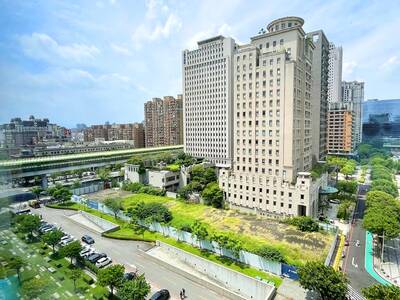
Taichung reported the steepest fall in completed home prices among the six special municipalities in the first quarter of this year, data compiled by Taiwan Realty Co (台灣房屋) showed yesterday. From January through last month, the average transaction price for completed homes in Taichung fell 8 percent from a year earlier to NT$299,000 (US$9,483) per ping (3.3m²), said Taiwan Realty, which compiled the data based on the government’s price registration platform. The decline could be attributed to many home buyers choosing relatively affordable used homes to live in themselves, instead of newly built homes in the city’s prime property market, Taiwan Realty
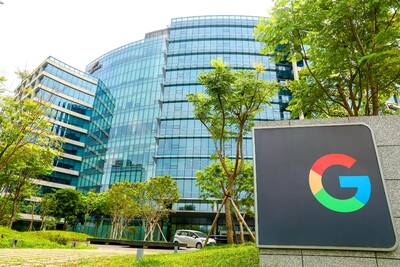
The government yesterday approved applications by Alphabet Inc’s Google to invest NT$27.08 billion (US$859.98 million) in Taiwan, the Ministry of Economic Affairs said in a statement. The Department of Investment Review approved two investments proposed by Google, with much of the funds to be used for data processing and electronic information supply services, as well as inventory procurement businesses in the semiconductor field, the ministry said. It marks the second consecutive year that Google has applied to increase its investment in Taiwan. Google plans to infuse NT$25.34 billion into Charter Investments Ltd (特許投資顧問) through its Singapore-based subsidiary Fructan Holdings Singapore Pte Ltd, and

JET JUICE: The war on Iran’s secondary effects have seen fuel prices skyrocket, knocking flight schedules down to earth in return as airlines struggle with costs Airline passengers should brace for more irritation in the next few months as carriers worldwide cancel flights and ground planes to cope with stratospheric increases in jet-fuel prices. Dutch flag carrier KLM is the latest company to cut its schedule, saying on Thursday that it would scrap 80 return flights at Amsterdam’s Schiphol Airport in the coming month. That puts it in the same league as United Airlines Holdings Inc, Deutsche Lufthansa AG and Cathay Pacific Airways Ltd, which have all pruned itineraries to mitigate costs. Global capacity for next month has been reduced by about 3 percentage points, with all


 RSS
RSS