


Australia has banned China’s Huawei Technologies Co (華為) and ZTE Corp (中興) from supplying next-generation wireless equipment to the nation’s telecom operators, the latest blow in an escalating global battle over network security.
The Australian government yesterday gave carriers new security guidance for 5G mobile technology and warned that using foreign government-linked suppliers would risk breaching their obligations.
The nature of 5G technology means security protocols governing earlier networks would not sufficiently protect against national security threats, Australian Treasurer Scott Morrison and Federal Communications Minister Mitch Fifield said in a statement.
The statement did not identify ZTE or Huawei, which Australian security agencies have recommended be barred from supplying telecoms with 5G technology.
Huawei’s Australia operation later put out a statement making clear it would not be able to compete as carriers prepare to spend billions on the new technology.
“We have been informed by the Govt that Huawei & ZTE have been banned from providing 5G technology to Australia,” the company said on Twitter. “This is a extremely disappointing result for consumers. Huawei is a world leader in 5G. Has safely & securely delivered wireless technology in Aust for close to 15 yrs.”
The Chinese equipment makers have also come under fire in the US, where regulators have proposed banning telecoms from using federal subsidies to buy from companies such as Huawei and ZTE that pose a national security risk.
Huawei and ZTE have said they do not represent any such risk.
Huawei has said it has rolled out technology in the UK, Canada, Germany and Spain without compromising national security.
The Chinese government took issue with Australia’s move.
“We are gravely concerned by the statement issued by the Australian government,” Chinese Ministry of Foreign Affairs spokesman Lu Kang (陸慷) said at a regular briefing.
“Instead of exploiting all kinds of excuses to create hurdles and taking discriminatory measures, we urge the Australian side to abandon political biases and create a sound environment for fair competition for Chinese enterprises in Australia,” Lu said.
Huawei, China’s largest maker of telecommunications equipment, already supplies Australian wireless carriers, including Vodafone Group PLC. It has been in talks with Canberra in an attempt to accommodate the domestic security requirements to win a share of Australia’s 5G equipment market.
However, that effort appears to have fallen short.
“Involvement of vendors who are likely to be subject to extrajudicial directions from a foreign government that conflict with Australian law, may risk failure by the carrier to adequately protect a 5G network from unauthorized access or interference,” Morrison and Fifield said.

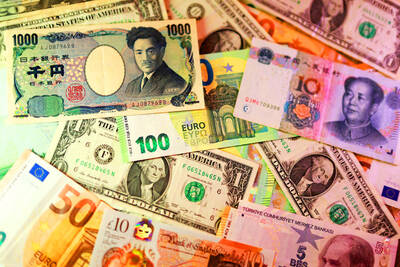
Taiwan’s foreign exchange reserves fell below the US$600 billion mark at the end of last month, with the central bank reporting a total of US$596.89 billion — a decline of US$8.6 billion from February — ending a three-month streak of increases. The central bank attributed the drop to a combination of factors such as outflows by foreign institutional investors, currency fluctuations and its own market interventions. “The large-scale outflows disrupted the balance of supply and demand in the foreign exchange market, prompting the central bank to intervene repeatedly by selling US dollars to stabilize the local currency,” Department of Foreign

Intel Corp is joining Elon Musk’s long-shot effort to develop semiconductors for Tesla Inc, Space Exploration Technologies Corp and xAI, marking a surprising twist in the chipmaker’s comeback bid. Intel would help the Terafab project “refactor” the technology in a chip factory, the company said on Tuesday in a post on X, Musk’s social media platform. That is a stage in the development process that typically helps make chips more powerful or reliable. The chipmaker’s shares jumped 4.2 percent to US$52.91 in New York trading on Tuesday. The Terafab project is a grand plan by Musk to eventually manufacture his own chips for
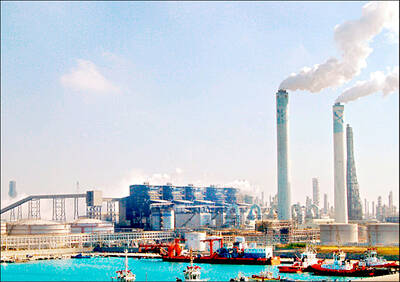
Taiwan Power Co (Taipower, 台電) yesterday said it plans to resume operations at two coal-fired power generators for three months to boost security of electricity supply as liquefied natural gas (LNG) supply risks are running high due to the Middle East conflict. The two coal-fired power generators are at Mailiao Power Plant in Yunlin County’s Mailiao Township (麥寮). The plant, operated by Formosa Plastics Group (台塑集團), supplied electricity to Taipower’s power grid until the end of last year. Taipower’s decision came about one month after Minister of Economic Affairs Kung Ming-hsin (龔明鑫) on March 10 said that the nation had no imminent
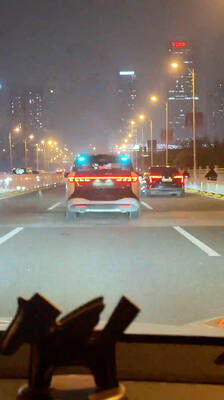
Some robotaxi passengers were left stranded in the middle of fast-moving traffic in a major Chinese city after their driverless vehicles stopped running, according to police and media reports on Wednesday. A preliminary investigation indicates more than 100 robotaxis came to a halt because of a “system malfunction,” police in the city of Wuhan said in a statement, without elaborating. No injuries were reported. One passenger told Chinese media that their robotaxi stopped after turning a corner. An instruction on a screen read: “Driving system malfunction. Staff are expected to arrive in 5 minutes.” After no one showed up, the passenger pushed


 RSS
RSS