

The average interest rate of new housing loans extended by the five major mortgage providers in the nation last month dropped to an eight-year low, as banks competed with each other to offer cheaper loans.
The average mortgage rate of the five — Bank of Taiwan (台灣銀行), Land Bank of Taiwan (土地銀行), Taiwan Cooperative Bank (合作金庫銀行), Hua Nan Commercial Bank (華南銀行) and First Commercial Bank (第一銀行) — dipped to 1.624 percent, 0.003 percentage points lower than the 1.627 percent in May, data released by the central bank on Friday last week showed.
It was the lowest since May 2010, when the figure reached 1.616 percent, the data showed.
The five banks’ data are used to gauge the overall health of the nation’s property market, as their combined loans account for about 40 percent of the total mortgages extended by local lenders.
Housing loans by the five last month dropped 7.86 percent month-on-month and 11.55 percent year-on-year to NT$41.34 billion (US$1.35 billion).
The central bank said the decline reflected the decrease of housing deals in the nation’s six special municipalities, which fell 8.1 percent month-on-month and 7.9 percent year-on-year to 18,744 units.
In the first six months of the year, the five banks’ mortgage loans totaled NT$241.23 billion, up 17.36 percent from a year ago, the central bank’s data showed, while housing deals in the six municipalities increased 5 percent year-on-year to 103,374 units, local governments’ tallies showed.
Mortgage rates are primarily tied to short-term rates, which have been kept unchanged by the central bank since September 2016.
At a news conference on June 21, after the bank’s quarterly board meeting, central bank Governor Yang Chin-long (楊金龍) did not say when the interest rates would rise, but he reminded homeowners to ensure that their funds are adequate if interest rates were to rise.
In other developments, local banks in May pushed their foreign currency lending to a record-high level, as such loans bore higher yields than local currency loan yields, central bank statistics showed.
Outstanding foreign currency loans of all banks in Taiwan totaled NT$1.038 trillion in May, up NT$70 billion from April.
That included NT$671.14 billion extended by Taiwanese banks and NT$367.17 billion by foreign lenders, the data showed.
As of the end of the first quarter, foreign currency interest spread stood at more than 2 percent amid the US Federal Reserve’s interest rate hike cycle.
The interest spread in New Taiwan dollar terms was lower than 1.4 percent, as the central bank continued to stay put and competition remained fierce in the banking sector.
Mega International Commercial Bank (兆豐銀行), the banking arm of state-run Mega Financial Holding Co (兆豐金控), would benefit the most among local banks from the Fed’s continued interest rate hikes because its foreign currency loans accounted for 35 percent of total loans in the first quarter.
That was higher than most of its local rivals, which reported up to 15 percent of their loan books as foreign currency loans, market watchers said.

Taiwan Semiconductor Manufacturing Co (TSMC, 台積電) is accelerating capacity expansion fivefold this year, but it is still unable to keep up with the booming demand for artificial intelligence (AI), TSMC deputy cochief operating officer Cliff Hou (侯永清) said yesterday. This year alone, the company is building 25 chip manufacturing fabs and advanced packaging facilities worldwide, including 13 plants in Taiwan, which is unprecedented, Hou said at a CEO Summit fireside chat at Semicon Taiwan in Taipei. In the past, the company was able to build five or six factories a year, said Hou, who is also chairman of the Taiwan Semiconductor Industry

EXPANSION: The 3-hectare site would include small clean rooms and laboratories as well as a world-class training base for advanced packaging talent, the company said Taiwan Semiconductor Manufacturing Co (TSMC, 台積電) is to establish a presence in the Baipu Industrial Park (白埔產業園區) in Kaohsiung to accelerate the testing and validation of semiconductor materials and equipment, a company executive said on Tuesday. The company is working with the Ministry of Economic Affairs and the Kaohsiung City Government on the plan, which is expected to improve validation efficiency by 25 to 50 percent, TSMC vice president of advanced packaging technology and service Jun He (何軍) said at a 3D IC global summit held ahead of the Semicon Taiwan trade show, which opened in Taipei yesterday. TSMC would also conduct
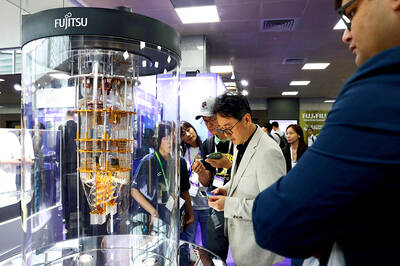
Visitors look at a 64-qubit superconducting quantum computer on display at the Fujitsu booth at the Semicon Taiwan trade show in Taipei yesterday.
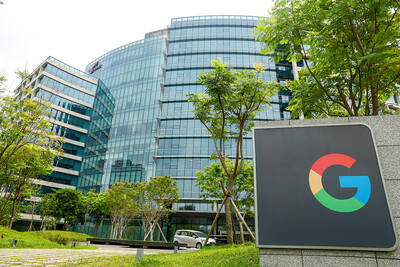
READJUSTMENT? Despite the rumors, a senior Google official said that the company plans to expand its AI research center in Taipei’s Shilin District Google Taiwan is reducing its workforce as the company continues to adjust operations to improve efficiency and focus resources on core goals, the Chinese-language Liberty Times (sister paper of the Taipei Times) reported yesterday. The Alphabet Inc unit said the organizational adjustments have begun and would continue, even though it did not put a figure on the number of potential job cuts or specify the affected departments in its Taiwan operations. The company’s response came after rumors circulated on social media about major job cuts at Google Taiwan. Some posts said the downsizing would target the company’s consumer electronics-related departments


 RSS
RSS