


International offshore wind power team the Hai Long Offshore Wind Farm Project Office (海龍離岸風電計畫辦公室) is to create a joint venture with Taiwanese shipbuilder CSBC Corp, Taiwan (台灣國際造船) and Belgian offshore solutions company GeoSea NV in a bid to make inroads into the global offshore wind power market.
Hai Long is a venture that was formed by Canada-based Northern Power Development Inc and Singapore-based Yushan Energy Pte Ltd in 2015.
The team running an offshore wind farm off Changhua County yesterday signed a letter of intent to cooperate with CSBC-DEME Wind Engineering Co Ltd (台船環海風電工程).
GeoSea is a unit of DEME Group, which specializes in offshore marine engineering projects.
It formed the CSBC-DEME joint venture with CSBC on Dec. 20 last year to pursue wind farm development contracts, and introduce marine technology and management expertise to Taiwan.
Hai Long project director Chen Tsung-hua (陳聰華) said the two sides have decided to cooperate in part to become better integrated with several local sectors, such as engineering design, insurance, finance, maritime substations, wind turbines, wind farm systems and electricity transmission cables.
While bringing international techniques and technologies to Taiwan, the joint venture would also push for the localization of the supply chain, Chen said.
The partnership is also to focus on developing a full range of wind power capabilities, from design and manufacturing to construction and commercial operations, so that they can make inroads in the global offshore wind power market.
Hai Long is seeking to install offshore wind turbines with a generating capacity of 1,208 megawatts at two sites off the shore of Changhua County.
The project is pending approval by the Ministry of Economic Affairs, which is expected next month.
Changhua County Commissioner Wei Ming-ku (魏明谷) said he expects offshore wind power to create up to NT$1.19 trillion (US$40.6 billion) in investment opportunities in the county.
“Once wind power operators establish themselves in Changhua, they will benefit the county with sizeable tax revenues and other contributions,” Wei said.

CHIP RACE: Three years of overbroad export controls drove foreign competitors to pursue their own AI chips, and ‘cost US taxpayers billions of dollars,’ Nvidia said China has figured out the US strategy for allowing it to buy Nvidia Corp’s H200s and is rejecting the artificial intelligence (AI) chip in favor of domestically developed semiconductors, White House AI adviser David Sacks said, citing news reports. US President Donald Trump on Monday said that he would allow shipments of Nvidia’s H200 chips to China, part of an administration effort backed by Sacks to challenge Chinese tech champions such as Huawei Technologies Co (華為) by bringing US competition to their home market. On Friday, Sacks signaled that he was uncertain about whether that approach would work. “They’re rejecting our chips,” Sacks

NATIONAL SECURITY: Intel’s testing of ACM tools despite US government control ‘highlights egregious gaps in US technology protection policies,’ a former official said Chipmaker Intel Corp has tested chipmaking tools this year from a toolmaker with deep roots in China and two overseas units that were targeted by US sanctions, according to two sources with direct knowledge of the matter. Intel, which fended off calls for its CEO’s resignation from US President Donald Trump in August over his alleged ties to China, got the tools from ACM Research Inc, a Fremont, California-based producer of chipmaking equipment. Two of ACM’s units, based in Shanghai and South Korea, were among a number of firms barred last year from receiving US technology over claims they have

It is challenging to build infrastructure in much of Europe. Constrained budgets and polarized politics tend to undermine long-term projects, forcing officials to react to emergencies rather than plan for the future. Not in Austria. Today, the country is to officially open its Koralmbahn tunnel, the 5.9 billion euro (US$6.9 billion) centerpiece of a groundbreaking new railway that will eventually run from Poland’s Baltic coast to the Adriatic Sea, transforming travel within Austria and positioning the Alpine nation at the forefront of logistics in Europe. “It is Austria’s biggest socio-economic experiment in over a century,” said Eric Kirschner, an economist at Graz-based Joanneum
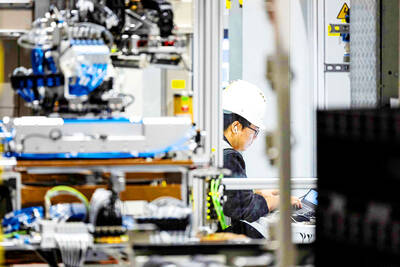
France is developing domestic production of electric vehicle (EV) batteries with an eye on industrial independence, but Asian experts are proving key in launching operations. In the Verkor factory outside the northern city of Dunkirk, which was inaugurated on Thursday, foreign specialists, notably from South Korea and Malaysia, are training the local staff. Verkor is the third battery gigafactory to open in northern France in a region that has become known as “Battery Valley.” At the Automotive Energy Supply Corp (AESC) factory near the city of Douai, where production has been under way for several months, Chinese engineers and technicians supervise French recruits. “They


 RSS
RSS