


Apple Inc is preparing to release a trio of new smartphones later this year: the largest iPhone ever, an upgraded handset the same size as the current iPhone X and a less expensive model with some of the flagship smartphone’s key features.
With the new lineup, Apple wants to appeal to the growing number of consumers who crave the multitasking attributes of so-called phablets while also catering to those looking for a more affordable version of the iPhone X, people familiar with the products said.
Apple, which is already running production tests with suppliers, is expected to announce the new smartphones this fall.
The plans could still change, the people said.
Despite months of breathless hype, the iPhone X has not sold as well as expected since its debut last year. Apple sold 77.3 million iPhones in the final quarter of last year, less than analysts’ projections of 80.2 million units.
“This is a big deal,” said Gene Munster, a cofounder of Loup Ventures and a long-time Apple watcher. “When you have a measurable upgrade in screen size, people go to update their phone in droves. We saw that with the iPhone 6, and we think this is setting up to be a similar step up in growth.”
Munster predicts a “supercycle” — which he defined as upgrades of 10 percent or more by Apple’s existing iPhone customers.
“The market that will see the biggest jump in sales is likely Asia,” he said. “That market has many single device consumers, and they love big phones.”
An Apple spokeswoman declined to comment.
With a screen close to 6.5 inches, Apple’s big new handset would be one of the largest mainstream smartphones on the market.
While the body of the phone would be about the same size as the iPhone 8 Plus, the screen would be about an inch larger thanks to the edge-to-edge design used in the iPhone X.
The big smartphone is codenamed D33, a person familiar with its development said, and at least some prototypes include a screen resolution of 1,242 x 2,688 pixels. That would make the screen about as sharp as the one on the 5.8-inch iPhone X.
Apple also plans to use organic LED display technology, the same, more expensive type of screen in the iPhone X.
Like the iPhone X, the larger model would include a Face ID scanner that unlocks the device and enables payments.
Apple is also preparing an update to the regular-sized iPhone X that has been internally dubbed D32, people familiar with the product said.
Both of these smartphones are expected to use next-generation A12 processors and would continue to include stainless steel edges, they said, and would be Apple’s high-end smartphone offerings.
The smartphones are to have an updated operating system, probably called iOS 12 and codenamed Peace, which would include upgraded augmented-reality capabilities, deeper integration of digital assistant Siri, digital health monitoring and the ability to use “Animojis” in FaceTime.
Apple’s decision to also build a cheaper smartphone is an acknowledgment that the current entry-level iPhone 8 models too closely resemble the iPhone 6 introduced in 2014.
With their thick bezels and lack of edge-to-edge screens, they seem dated next to the iPhone X and Samsung Electronics Co Ltd’s latest devices.
The new lower-cost model would feature the same edge-to-edge screen as the iPhone X, as well as Face ID instead of a fingerprint sensor.
To keep costs down, the cheaper smartphone is to use LCD screen technology similar to the type employed in the iPhone 8.
It would also have aluminum edges and a glass back like the iPhone 8, not the flashier stainless steel used in the iPhone X.
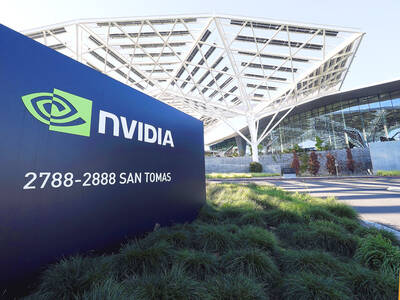
CHIP RACE: Three years of overbroad export controls drove foreign competitors to pursue their own AI chips, and ‘cost US taxpayers billions of dollars,’ Nvidia said China has figured out the US strategy for allowing it to buy Nvidia Corp’s H200s and is rejecting the artificial intelligence (AI) chip in favor of domestically developed semiconductors, White House AI adviser David Sacks said, citing news reports. US President Donald Trump on Monday said that he would allow shipments of Nvidia’s H200 chips to China, part of an administration effort backed by Sacks to challenge Chinese tech champions such as Huawei Technologies Co (華為) by bringing US competition to their home market. On Friday, Sacks signaled that he was uncertain about whether that approach would work. “They’re rejecting our chips,” Sacks
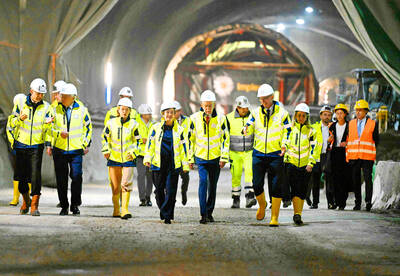
It is challenging to build infrastructure in much of Europe. Constrained budgets and polarized politics tend to undermine long-term projects, forcing officials to react to emergencies rather than plan for the future. Not in Austria. Today, the country is to officially open its Koralmbahn tunnel, the 5.9 billion euro (US$6.9 billion) centerpiece of a groundbreaking new railway that will eventually run from Poland’s Baltic coast to the Adriatic Sea, transforming travel within Austria and positioning the Alpine nation at the forefront of logistics in Europe. “It is Austria’s biggest socio-economic experiment in over a century,” said Eric Kirschner, an economist at Graz-based Joanneum

BUBBLE? Only a handful of companies are seeing rapid revenue growth and higher valuations, and it is not enough to call the AI trend a transformation, an analyst said Artificial intelligence (AI) is entering a more challenging phase next year as companies move beyond experimentation and begin demanding clear financial returns from a technology that has delivered big gains to only a small group of early adopters, PricewaterhouseCoopers (PwC) Taiwan said yesterday. Most organizations have been able to justify AI investments through cost recovery or modest efficiency gains, but few have achieved meaningful revenue growth or long-term competitive advantage, the consultancy said in its 2026 AI Business Predictions report. This growing performance gap is forcing executives to reconsider how AI is deployed across their organizations, it said. “Many companies
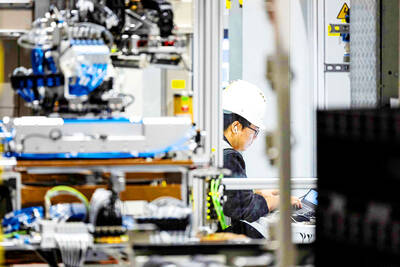
France is developing domestic production of electric vehicle (EV) batteries with an eye on industrial independence, but Asian experts are proving key in launching operations. In the Verkor factory outside the northern city of Dunkirk, which was inaugurated on Thursday, foreign specialists, notably from South Korea and Malaysia, are training the local staff. Verkor is the third battery gigafactory to open in northern France in a region that has become known as “Battery Valley.” At the Automotive Energy Supply Corp (AESC) factory near the city of Douai, where production has been under way for several months, Chinese engineers and technicians supervise French recruits. “They


 RSS
RSS