


The US mistakenly supported China’s membership of the WTO in 2001 on terms that have failed to force Beijing to open its economy, US President Donald Trump’s administration said on Friday as it prepares to clamp down on Chinese trade.
“It seems clear that the United States erred in supporting China’s entry into the WTO on terms that have proven to be ineffective in securing China’s embrace of an open, market-orientated trade regime,” the administration said in an annual report to the US Congress on China’s compliance with WTO commitments.
“It is now clear that the WTO rules are not sufficient to constrain China’s market-distorting behavior,” the report said.
While the annual report from the US Trade Representative’s office has long taken China to task for unfair trade practices, the first such review under Trump takes a harsher tone against Beijing.
It comes amid worsening trade tensions between the world’s two largest economies and as the administration prepares actions to curb China’s alleged theft of intellectual property. A decision in the so-called Section 301 investigation is expected in the coming weeks.
The report also points at Russia’s behavior, saying Moscow had no intention of complying with its WTO obligations, a trend the administration said was “very troubling.”
A White House official said despite consultations with China, it had failed to follow through on promises of moving more toward a market-orientated economy and playing by international trading rules.
“The president and his principal adviser are united in the belief that this is a problem that has gone on for too long and needs to be addressed,” the official said.
“In the past, conversations have focused more on discreet opening for discreet products, and what we’re saying is systematically we’re not going to tolerate broad-based policy that attempts to promote state-led enterprises,” the official said, speaking on condition of anonymity.
In an interview with Reuters this week, Trump said he was considering a big “fine” against China for forcing US companies to transfer their intellectual property to China as a cost of doing business there.
While the administration is also looking at whether foreign imports of steel, aluminum, washing machines and solar panels are harming US businesses, China’s alleged theft of intellectual property is of particular concern to Trump because it affects a large swath of US firms, the official said.
Trump did not specify what he meant by a “fine” against China, but the 1974 trade law that authorized an investigation into China’s alleged theft of US intellectual property allows him to impose retaliatory tariffs on Chinese goods or other trade sanctions until China changes its policies.
In Beijing, many experts believe Washington is unwilling to pay the heavy economic price needed to upset prevailing trade dynamics between the two nations.
“The global trading system is threatened by major economies who do not intend to open their markets to trade and participate fairly,” US Trade Representative Robert Lighthizer said in the report released on Friday.
“This practice is incompatible with the market-based approach expressly envisioned by WTO members and contrary to the fundamental principles of the WTO,” he added.
The Trump administration has already pledged to transform the 164-member trade body and has blocked WTO judicial appointments in a move to win WTO reforms.
“What we want to do is see countries behave responsibly within the international trading system,” the White House official said.
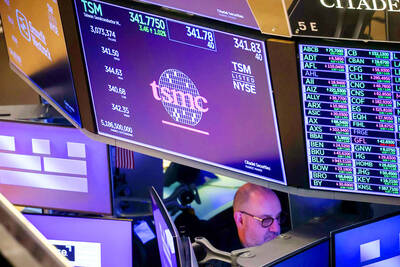
STRONG INTEREST: Analysts have pointed to optimism in TSMC’s growth prospects in the artificial intelligence era as the cause of the rising number of shareholders The number of people holding shares of chipmaker Taiwan Semiconductor Manufacturing Co (TSMC, 台積電) hit a new high last week despite a decline in its stock price, the Taiwan Depository and Clearing Corp (TDCC, 台灣集保) said. The number of TSMC shareholders rose to 2.46 million as of Friday, up 75,536 from a week earlier, TDCC data showed. The stock price fell 1.34 percent during the same week to close at NT$1,840 (US$57.55). The decline in TSMC’s share price resulted from volatility in global tech stocks, driven by rising international crude oil prices as the war against Iran continues. Dealers said
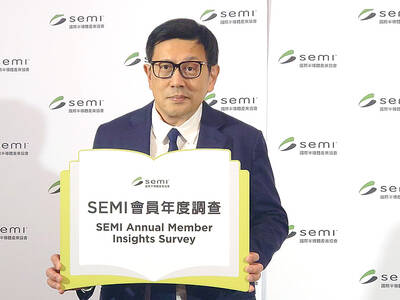
PRICE HIKES: The war in the Middle East would not significantly disrupt supply in the short term, but semiconductor companies are facing price surges for materials Taiwan’s semiconductor companies are not facing imminent supply disruptions of essential chemicals or raw materials due to the war in the Middle East, but surges in material costs loom large, industry association SEMI Taiwan said yesterday. The association’s comments came amid growing concerns that supplies of helium and other key raw materials used in semiconductor production could become a choke point after Qatar shut down its liquefied natural gas (LNG) production and helium output earlier this month due to the conflict. Qatar is the second-largest LNG supplier in the world and accounts for about 33 percent of global helium output. Helium is

China is clamping down on fertilizer exports to protect its domestic market, industry sources said, putting an additional strain on global markets that were already grappling with shortages caused by the US-Israeli war on Iran. China is among the largest fertilizer exporters — shipping more than US$13 billion of it last year — and it has a history of controlling exports to keep prices low for farmers. Shipments through the war-blocked Strait of Hormuz account for about one-third of the sea-borne supply. This month, Beijing banned exports of nitrogen-potassium fertilizer blends and certain phosphate varieties, sources said. The ban, which has not
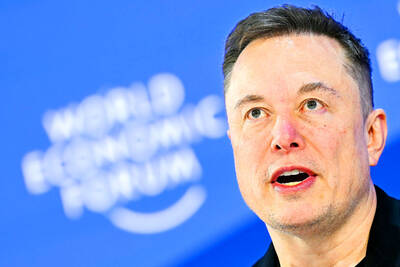
AMAZING ABUNDANCE: Elon Musk has announced plans for a new facility in Texas which would manufacture chips for Tesla and SpaceX to use in robotics and AI Elon Musk said his Terafab project — a grand plan to eventually manufacture his own chips for robotics, artificial intelligence (AI) and space data centers — would be built in Austin and jointly run by Tesla Inc and Space Exploration Technologies Corp (SpaceX). Musk, the chief executive officer of the two companies, said he would start off with an “advanced technology fab” in Austin that would have all of the equipment necessary to make chips of any kind. The project would call for one day supporting 1 terawatt (TW) of computing power per year, the amount Musk expects the companies to


 RSS
RSS