


The Taiwan Research Institute (TRI, 台灣綜合研究院) yesterday set its forecast for the nation’s GDP growth next year at 2.31 percent, milder than the estimated 2.53 percent pickup for this year, as exports might stabilize amid a continued global recovery.
The world economy is likely to expand at a similar pace next year, supplying continued momentum for exports, but the high base might prove a statistical challenge, TRI president Wu Tsai-yi (吳再益) said at a news conference in Taipei.
Nearly 75 percent of global economies put up a stronger GDP showing this year, allowing Taiwan’s exports to beat forecasts by all research institutes.
“Despite the marked improvement, Taiwan’s GDP growth has lagged behind the global economy for years, meriting attention from policymakers,” Wu said.
The Taipei-based institute said the key lies in lackluster investment interest over the years, and the government could exert its influence to stimulate investment and remove obstacles.
Over the years, annual amortization and depreciation costs have outpaced the increase in capital formation, raising concerns over capital erosion over the long term, Wu said.
Private investment, a critical component of GDP makeup, is forecast to grow 2.81 percent next year after teetering on the brink of contraction this year, as firms might show renewed interest in the purchase of capital equipment to maintain a technological advantage, the institute said.
Equipment imports by semiconductor firms shrank 7.4 percent in the first 11 months of the year, while China and South Korea are gaining market share, Wu said, and that semiconductor products account for a heavy share of Taiwan’s electronics exports.
The institute forecast imports to grow 3.28 percent next year, while exports are expected to advance at 2.72 percent, after the government becomes more active in addressing shortages of land, electricity, water, talented professionals and unskilled workers.
The Cabinet under Premier William Lai (賴清德) has eased residency requirements for foreign professionals, and is amending labor and investment rules to make Taiwan more business-friendly, Wu said.
Stagnant wages are unfavorable for private consumption, but it takes a vibrant and profitable private sector to spur wage hikes, he said.
The government can help GDP growth by increasing infrastructure expenditure, but it can play a more effective role by supporting investment projects mired in environmental disputes, Tamkang University finance professor William Lin (林蒼祥) said.
The institute forecast consumer prices to increase from 0.64 percent this year to a slightly higher 0.88 percent next year, while the unemployment rate is expected to hold nearly steady, declining to 3.72 percent from 3.78 percent.

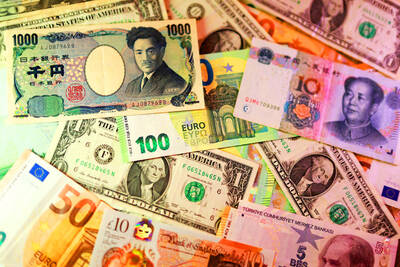
Taiwan’s foreign exchange reserves fell below the US$600 billion mark at the end of last month, with the central bank reporting a total of US$596.89 billion — a decline of US$8.6 billion from February — ending a three-month streak of increases. The central bank attributed the drop to a combination of factors such as outflows by foreign institutional investors, currency fluctuations and its own market interventions. “The large-scale outflows disrupted the balance of supply and demand in the foreign exchange market, prompting the central bank to intervene repeatedly by selling US dollars to stabilize the local currency,” Department of Foreign

Intel Corp is joining Elon Musk’s long-shot effort to develop semiconductors for Tesla Inc, Space Exploration Technologies Corp and xAI, marking a surprising twist in the chipmaker’s comeback bid. Intel would help the Terafab project “refactor” the technology in a chip factory, the company said on Tuesday in a post on X, Musk’s social media platform. That is a stage in the development process that typically helps make chips more powerful or reliable. The chipmaker’s shares jumped 4.2 percent to US$52.91 in New York trading on Tuesday. The Terafab project is a grand plan by Musk to eventually manufacture his own chips for
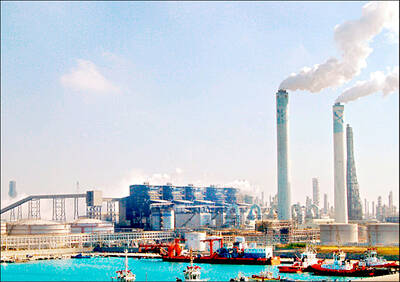
Taiwan Power Co (Taipower, 台電) yesterday said it plans to resume operations at two coal-fired power generators for three months to boost security of electricity supply as liquefied natural gas (LNG) supply risks are running high due to the Middle East conflict. The two coal-fired power generators are at Mailiao Power Plant in Yunlin County’s Mailiao Township (麥寮). The plant, operated by Formosa Plastics Group (台塑集團), supplied electricity to Taipower’s power grid until the end of last year. Taipower’s decision came about one month after Minister of Economic Affairs Kung Ming-hsin (龔明鑫) on March 10 said that the nation had no imminent

Some robotaxi passengers were left stranded in the middle of fast-moving traffic in a major Chinese city after their driverless vehicles stopped running, according to police and media reports on Wednesday. A preliminary investigation indicates more than 100 robotaxis came to a halt because of a “system malfunction,” police in the city of Wuhan said in a statement, without elaborating. No injuries were reported. One passenger told Chinese media that their robotaxi stopped after turning a corner. An instruction on a screen read: “Driving system malfunction. Staff are expected to arrive in 5 minutes.” After no one showed up, the passenger pushed


 RSS
RSS