


Touchpanel supplier TPK Holding Co Ltd (宸鴻) yesterday reported a 27 percent jump in net profit for last quarter from the same period last year, after it rejoined the supply chain for Apple Inc’s iPhone.
Last quarter marked the company’s fifth consecutive profitable quarter, as four years of restructuring efforts, including adjusting product portfolios and boosting manufacturing efficiency, appeared to bear fruit, TPK said.
“Since the beginning of this year, the company’s operations are back on the right track,” TPK chief strategist Freddie Liu (劉詩亮) said in a teleconference. “We believe our goal of posting annual revenue growth is within reach this year.”
TPK, the first touchpanel supplier for Apple’s first iPhone series, left the iPhone supply chain in 2012 after Apple switched to in-cell touchpanels for the iPhone 5, abandoning TPK’s out-cell technology.
“In the coming two to three years, the risk of seeing anything similar to what happened in 2012 is very small,” Liu said.
TPK reported that revenue last quarter grew more than 36 percent quarter-on-quarter to NT$30.51 billion (US$1.01 billion) on strong seasonal demand.
The company’s internal target this quarter is to keep revenue flat from last quarter, supported by new product launches by its clients, Liu said.
“There is [even] a chance that the first quarter of next year will not be a weak season as it has traditionally been, depending on whether clients’ new products gain traction fast enough,” Liu said.
In the July-to-September quarter, TPK’s net profit surged to NT$870 million, compared with NT$694 million a year earlier. On a quarterly basis, net profit soared 166 percent from NT$327 million.
“The third quarter results beat our expectations because of higher shipments due to seasonal demand, in addition to a better product mix and improved yield rate,” Liu said.
Operating margin climbed to 4.4 percent from 1.9 percent in the second quarter, surpassing the 3 percent estimated by most analysts, Liu said, adding that shipments of smartphone components soared 86 percent last quarter from the previous quarter.
Products used in smartphones and tablets accounted for 51 percent of TPK’s revenue in the quarter.
TPK is seeking new growth drivers outside mobile phone and computer components, of which large-size commercial displays and touchpanels used in cars, especially electric vehicles, have the greatest potential, Liu said.
The revenue contribution from the automotive segment is forecast to double next year from this year, Liu said, adding that touchpanels used in cars only made up 2 to 3 percent of the company’s overall revenue this year.


Taiwan’s foreign exchange reserves fell below the US$600 billion mark at the end of last month, with the central bank reporting a total of US$596.89 billion — a decline of US$8.6 billion from February — ending a three-month streak of increases. The central bank attributed the drop to a combination of factors such as outflows by foreign institutional investors, currency fluctuations and its own market interventions. “The large-scale outflows disrupted the balance of supply and demand in the foreign exchange market, prompting the central bank to intervene repeatedly by selling US dollars to stabilize the local currency,” Department of Foreign
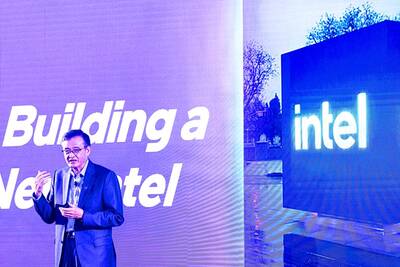
Intel Corp is joining Elon Musk’s long-shot effort to develop semiconductors for Tesla Inc, Space Exploration Technologies Corp and xAI, marking a surprising twist in the chipmaker’s comeback bid. Intel would help the Terafab project “refactor” the technology in a chip factory, the company said on Tuesday in a post on X, Musk’s social media platform. That is a stage in the development process that typically helps make chips more powerful or reliable. The chipmaker’s shares jumped 4.2 percent to US$52.91 in New York trading on Tuesday. The Terafab project is a grand plan by Musk to eventually manufacture his own chips for
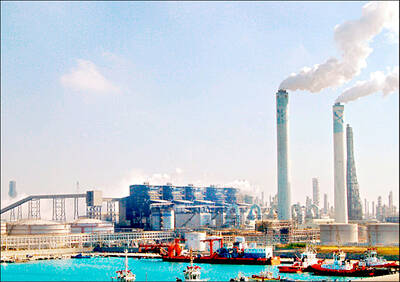
Taiwan Power Co (Taipower, 台電) yesterday said it plans to resume operations at two coal-fired power generators for three months to boost security of electricity supply as liquefied natural gas (LNG) supply risks are running high due to the Middle East conflict. The two coal-fired power generators are at Mailiao Power Plant in Yunlin County’s Mailiao Township (麥寮). The plant, operated by Formosa Plastics Group (台塑集團), supplied electricity to Taipower’s power grid until the end of last year. Taipower’s decision came about one month after Minister of Economic Affairs Kung Ming-hsin (龔明鑫) on March 10 said that the nation had no imminent

Some robotaxi passengers were left stranded in the middle of fast-moving traffic in a major Chinese city after their driverless vehicles stopped running, according to police and media reports on Wednesday. A preliminary investigation indicates more than 100 robotaxis came to a halt because of a “system malfunction,” police in the city of Wuhan said in a statement, without elaborating. No injuries were reported. One passenger told Chinese media that their robotaxi stopped after turning a corner. An instruction on a screen read: “Driving system malfunction. Staff are expected to arrive in 5 minutes.” After no one showed up, the passenger pushed


 RSS
RSS