


The nation’s exports last month spiked 28.1 percent from a year earlier to a record high of US$28.9 billion, as demand for electronic components gained traction ahead of high sales seasons in China and the West, the Ministry of Finance said yesterday.
The growth momentum might continue but slow to a single-digit percentage this month due to fewer working days and a high comparison base last year, it projected.
“Technology brands worldwide are building up inventory to take advantage of a stronger than expected global economy, bolstering business of firms in their supply chains,” Department of Statistics Director-General Beatrice Tsai (蔡美娜) told a media briefing.
Taiwanese firms supply chips, camera lenses, casings, touch panels and other critical components to Apple Inc and China’s Oppo Mobile Telecommunications Corp (歐珀移動), Huawei Technologies Co (華為) and other brands.
E-commerce giant Alibaba Group Holding Ltd (阿里巴巴) is about to kick off next month’s the Singles’ Day shopping festival, which may spur demand for consumer electronic devices, Tsai said, adding that the ensuing Christmas season would keep the shopping binge alive toward the end of the year.
Holiday promotions explained why electronic components picked up 20.8 percent to US$10.18 billion last month, the ministry’s report showed.
Other product categories also put up marked growth as machinery shipments surged 56.5 percent to US$2.28 billion, while transportation equipment rose 32.9 percent to US$1.01 billion, the report said.
A 14 percent increase in international oil prices buoyed shipments of mineral, chemical and plastic products by double percentage points, it said.
Meanwhile, imports gained 22.2 percent to US$22.21 billion, which has allowed Taiwan to have a trade surplus of US$6.69 billion, a record high for the same month, Tsai said.
She dismissed the concern over a continued decline in imports of semiconductor equipment, saying local chipmakers had bought sufficient equipment earlier and that the equipment remains useful.
For the third quarter, both exports and imports beat the forecast of Directorate-General of Budget, Accounting and Statistics by a comfortable margin, signs that the agency might raise its growth projection for this year, Tsai said.
The ministry expects outbound shipments to stay strong through this quarter when local firms might benefit from delayed launches of Apple’s gadgets.
“It is too early to pass judgment on new iPhone sales, as fans around the world need more time to digest new features,” Tsai said.
For the first nine months, exports rose 14.3 percent to US$231.48 billion while imports grew 14.7 percent to US$190.88 billion, the ministry report said.
POWERING UP: PSUs for AI servers made up about 50% of Delta’s total server PSU revenue during the first three quarters of last year, the company said Power supply and electronic components maker Delta Electronics Inc (台達電) reported record-high revenue of NT$161.61 billion (US$5.11 billion) for last quarter and said it remains positive about this quarter. Last quarter’s figure was up 7.6 percent from the previous quarter and 41.51 percent higher than a year earlier, and largely in line with Yuanta Securities Investment Consulting Co’s (元大投顧) forecast of NT$160 billion. Delta’s annual revenue last year rose 31.76 percent year-on-year to NT$554.89 billion, also a record high for the company. Its strong performance reflected continued demand for high-performance power solutions and advanced liquid-cooling products used in artificial intelligence (AI) data centers,
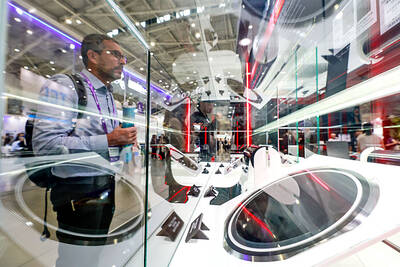
SIZE MATTERS: TSMC started phasing out 8-inch wafer production last year, while Samsung is more aggressively retiring 8-inch capacity, TrendForce said Chipmakers are expected to raise prices of 8-inch wafers by up to 20 percent this year on concern over supply constraints as major contract chipmakers Taiwan Semiconductor Manufacturing Co (TSMC, 台積電) and Samsung Electronics Co gradually retire less advanced wafer capacity, TrendForce Corp (集邦科技) said yesterday. It is the first significant across-the-board price hike since a global semiconductor correction in 2023, the Taipei-based market researcher said in a report. Global 8-inch wafer capacity slid 0.3 percent year-on-year last year, although 8-inch wafer prices still hovered at relatively stable levels throughout the year, TrendForce said. The downward trend is expected to continue this year,

‘BASICALLY A BAN’: Sources said the wording governing H200 imports from officials was severe, but added that the regulations might change if the situation evolves Chinese customs authorities told customs agents this week that Nvidia Corp’s H200 artificial intelligence (AI) chips are not permitted to enter China, three people briefed on the matter said. Chinese government officials also summoned domestic technology companies to meetings on Tuesday, at which they were explicitly instructed not to purchase the chips unless necessary, two of the people and a third source said. “The wording from the officials is so severe that it is basically a ban for now, though this might change in the future should things evolve,” one of the people said. The H200, Nvidia’s second-most powerful AI chip, is one

A proposed billionaires’ tax in California has ignited a political uproar in Silicon Valley, with tech titans threatening to leave the state while California Governor Gavin Newsom of the Democratic Party maneuvers to defeat a levy that he fears would lead to an exodus of wealth. A technology mecca, California has more billionaires than any other US state — a few hundred, by some estimates. About half its personal income tax revenue, a financial backbone in the nearly US$350 billion budget, comes from the top 1 percent of earners. A large healthcare union is attempting to place a proposal before


 RSS
RSS