


Honda Motor Co and some of the people suing the company over faulty Takata Corp air bag inflators have agreed to a US$605 million settlement.
The settlement, which must still be approved by a federal judge, covers owners of 16.5 million Honda and Acura vehicles that used the inflators dating back to 2001. They could receive up to US$500 per person.
Under the deal, Honda gets credit for spending US$121 million on rental cars for customers who had to wait for parts. That leaves US$484 million. Of that, Honda is to spend as much as US$199 million over four years finding owners with unrepaired cars and encouraging them to get the inflators replaced.
The rest goes to attorney fees and to reimburse owners for expenses such as rental cars and lost wages. Owners will have to apply to a court-appointed administrator to get money. They can also file claims that their cars dropped in value. If money is left after other expenses, owners could receive the US$500.
Takata inflators can explode with too much force, blowing apart a metal canister and spewing shrapnel. At least 19 people have been killed worldwide due to the problem, which touched off the largest auto recall in US history, involving up to 69 million inflators.
Honda expects customers will receive over US$80 million. The company said it agreed not to contest an application by plaintiffs’ attorneys for fees of up to 30 percent of the settlement, for a total of US$181.5 million.
US District Judge Federico Moreno in Miami is to make the final decision on where the money will go.
The plaintiffs’ lawyers have already settled with Toyota Motor Corp, BMW AG, Mazda Motor Corp, Subaru Corp and Nissan Motor Co and are pursuing claims against other automakers.
The settlement does not cover injury or death claims.
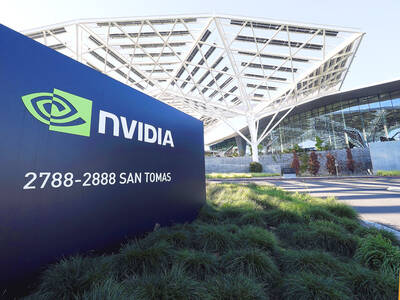
CHIP RACE: Three years of overbroad export controls drove foreign competitors to pursue their own AI chips, and ‘cost US taxpayers billions of dollars,’ Nvidia said China has figured out the US strategy for allowing it to buy Nvidia Corp’s H200s and is rejecting the artificial intelligence (AI) chip in favor of domestically developed semiconductors, White House AI adviser David Sacks said, citing news reports. US President Donald Trump on Monday said that he would allow shipments of Nvidia’s H200 chips to China, part of an administration effort backed by Sacks to challenge Chinese tech champions such as Huawei Technologies Co (華為) by bringing US competition to their home market. On Friday, Sacks signaled that he was uncertain about whether that approach would work. “They’re rejecting our chips,” Sacks
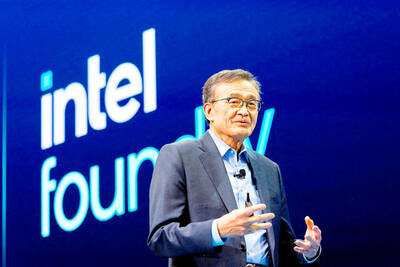
NATIONAL SECURITY: Intel’s testing of ACM tools despite US government control ‘highlights egregious gaps in US technology protection policies,’ a former official said Chipmaker Intel Corp has tested chipmaking tools this year from a toolmaker with deep roots in China and two overseas units that were targeted by US sanctions, according to two sources with direct knowledge of the matter. Intel, which fended off calls for its CEO’s resignation from US President Donald Trump in August over his alleged ties to China, got the tools from ACM Research Inc, a Fremont, California-based producer of chipmaking equipment. Two of ACM’s units, based in Shanghai and South Korea, were among a number of firms barred last year from receiving US technology over claims they have
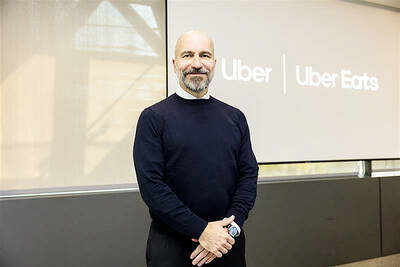
OPTION: Uber said it could provide higher pay for batch trips, if incentives for batching is not removed entirely, as the latter would force it to pass on the costs to consumers Uber Technologies Inc yesterday warned that proposed restrictions on batching orders and minimum wages could prompt a NT$20 delivery fee increase in Taiwan, as lower efficiency would drive up costs. Uber CEO Dara Khosrowshahi made the remarks yesterday during his visit to Taiwan. He is on a multileg trip to the region, which includes stops in South Korea and Japan. His visit coincided the release last month of the Ministry of Labor’s draft bill on the delivery sector, which aims to safeguard delivery workers’ rights and improve their welfare. The ministry set the minimum pay for local food delivery drivers at
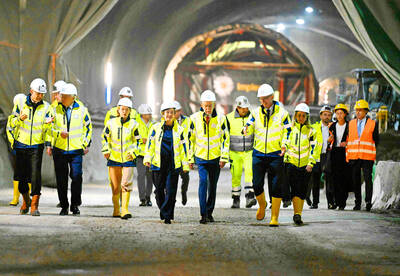
It is challenging to build infrastructure in much of Europe. Constrained budgets and polarized politics tend to undermine long-term projects, forcing officials to react to emergencies rather than plan for the future. Not in Austria. Today, the country is to officially open its Koralmbahn tunnel, the 5.9 billion euro (US$6.9 billion) centerpiece of a groundbreaking new railway that will eventually run from Poland’s Baltic coast to the Adriatic Sea, transforming travel within Austria and positioning the Alpine nation at the forefront of logistics in Europe. “It is Austria’s biggest socio-economic experiment in over a century,” said Eric Kirschner, an economist at Graz-based Joanneum


 RSS
RSS