


State-owned oil refiner CPC Corp, Taiwan (CPC, 台灣中油) yesterday rejected allegations by its contractor Lumax International Corp (巨路) that CPC was solely responsible for Tuesday’s nationwide blackout, saying that a 10-member investigation team would soon address the public’s doubts.
“We are not dodging responsibility [for the outage],” CPC chairman Derek Chen (陳金德) said in a broadcast interview.
Lumax was responsible for the procurement and maintenance of the power supply system of the Datan power plant, he said, while sharing documents with reporters after an interview with Hit FM radio host Clara Chou (周玉蔻).

Photo: Liao Chen-huei, Taipei Times
CPC and Lumax engineers were to replace two components in a control room, but failed to switch the power system from automatic to manual mode, Chen said.
Lumax on Wednesday night said that the contract between the two firms limits its responsibilities to the procurement of components and its staff were only assisting CPC workers with the installation on Tuesday.
The massive blackout on Tuesday affected more than half of Taiwan’s 13 million users.
“The heads of the two companies on Tuesday admitted that they had breached standard operating procedures,” Chen told reporters, adding that the refiner needed to change its corporate culture and management style.
He said CPC would not ask for compensation or take legal action against Lumax before a thorough investigation is completed.
A first probe into the blackout by a 10-member team is expected to be finished today, CPC said.
Lumax — which has collaborated with CPC for more than 10 years — also provides process control services for other leading companies, such as Taiwan Semiconductor Manufacturing Co (台積電) and Formosa Plastics Group (台塑集團), the nation’s largest industrial conglomerate, the company's Web site showed.
Lumax shares have fluctuated dramatically after the incident, falling 3.6 percent to NT$50.2 in Taipei trading on Wednesday but rising 5.2 percent yesterday at NT$52.8.
Meanwhile, acting Minister of Economic Affairs Shen Jong-chin (沈榮津) yesterday said the State-owned Enterprise Commission is to clarify who should be held accountable for Tuesday’s blackout.
“I have requested that the commission step in and inspect whether CPC or Lumax should bear the responsibility,” Shen told reporters at the ministry.
It was Shen’s first public appearance after being appointed acting minister on Wednesday morning.
Shen said the ministry would also pay extra attention when reviewing the nation’s power supply to ensuring that all personnel abides by standard operating procedures to prevent human errors disrupting the system.
Additional reporting by Lauly Li

GROWING OWINGS: While Luxembourg and China swapped the top three spots, the US continued to be the largest exposure for Taiwan for the 41st consecutive quarter The US remained the largest debtor nation to Taiwan’s banking sector for the 41st consecutive quarter at the end of September, after local banks’ exposure to the US market rose more than 2 percent from three months earlier, the central bank said. Exposure to the US increased to US$198.896 billion, up US$4.026 billion, or 2.07 percent, from US$194.87 billion in the previous quarter, data released by the central bank showed on Friday. Of the increase, about US$1.4 billion came from banks’ investments in securitized products and interbank loans in the US, while another US$2.6 billion stemmed from trust assets, including mutual funds,
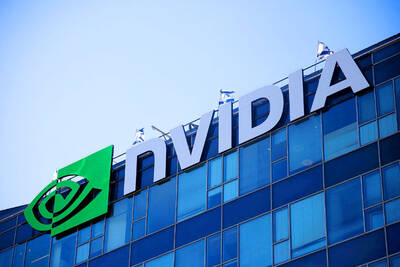
AI TALENT: No financial details were released about the deal, in which top Groq executives, including its CEO, would join Nvidia to help advance the technology Nvidia Corp has agreed to a licensing deal with artificial intelligence (AI) start-up Groq, furthering its investments in companies connected to the AI boom and gaining the right to add a new type of technology to its products. The world’s largest publicly traded company has paid for the right to use Groq’s technology and is to integrate its chip design into future products. Some of the start-up’s executives are leaving to join Nvidia to help with that effort, the companies said. Groq would continue as an independent company with a new chief executive, it said on Wednesday in a post on its Web

RESPONSE: The Japanese Ministry of Finance might have to intervene in the currency markets should the yen keep weakening toward the 160 level against the US dollar Japan’s chief currency official yesterday sent a warning on recent foreign exchange moves, after the yen weakened against the US dollar following Friday last week’s Bank of Japan (BOJ) decision. “We’re seeing one-directional, sudden moves especially after last week’s monetary policy meeting, so I’m deeply concerned,” Japanese Vice Finance Minister for International Affairs Atsushi Mimura told reporters. “We’d like to take appropriate responses against excessive moves.” The central bank on Friday raised its benchmark interest rate to the highest in 30 years, but Bank of Japan Governor Kazuo Ueda chose to keep his options open rather than bolster the yen,

Even as the US is embarked on a bitter rivalry with China over the deployment of artificial intelligence (AI), Chinese technology is quietly making inroads into the US market. Despite considerable geopolitical tensions, Chinese open-source AI models are winning over a growing number of programmers and companies in the US. These are different from the closed generative AI models that have become household names — ChatGPT-maker OpenAI or Google’s Gemini — whose inner workings are fiercely protected. In contrast, “open” models offered by many Chinese rivals, from Alibaba (阿里巴巴) to DeepSeek (深度求索), allow programmers to customize parts of the software to suit their


 RSS
RSS