


China plans to punish billionaire Wang Jianlin’s (王健林) Dalian Wanda Group Co (萬達集團) for breaching the nation’s restrictions on overseas investments by cutting off funding and denying the conglomerate necessary regulatory approvals, to people familiar with the matter said.
The government has found violations of Chinese restrictions in six investments, four of which have been completed and two are still pending, said the people, who asked not to be identified because the matter is private.
The deals being scrutinized include a Wanda unit’s purchase of Nordic Cinema Group Holding AB and Carmike Cinemas Inc, the people said, without identifying the remaining transactions.
A Wanda representative declined to comment.
China’s banking regulator did not immediately respond to requests for comment.
The move represents an unprecedented setback for China’s second-richest man, who was among the nation’s most prominent dealmakers up until last year by gobbling up Hollywood assets, such as Kong: Skull Island producer Legendary Entertainment. For the government, targeting one of the nation’s top businessmen represents an escalation of its broader efforts to crack down on capital outflows.
According to the people, the four completed deals will be subject to punitive measures, including:
‧ No financing from domestic banks
‧ Assets will be barred from being injected into any listed entity in China
‧ Wanda will be barred from injecting capital into those assets from within China or involve them in any restructuring with any of Wanda’s domestic units
‧ No government approval will be given if Wanda attempts to sell those assets to any Chinese companies
On the two pending deals, related authorities will not provide support with financing or foreign-exchange-related approvals needed to move money out of China, according to the people.
Wanda is among conglomerates including Fosun International Ltd (復星國際), HNA Group Co (海航集團) and Anbang Insurance Group Co (安邦保險集團) whose loans are under government scrutiny after the nation’s banking regulator asked some lenders to provide information on overseas loans to the companies, people familiar with the matter said last month.
Though cutting off funding may pressure Wanda, the group is poised to get some relief after it agreed to sell hotels, land and projects to Chinese developer Sunac China Holdings Ltd (融創中國控股) in a 63.2 billion yuan (US$9.3 billion) deal announced last week.
For Wang, the sale of the bulk of his “Wanda City” projects — massive multibillion-dollar complexes with theme parks and lodgings — represented a departure from the billionaire’s past predictions that he would build a tourism empire bigger than that of Walt Disney Co.
The Wall Street Journal earlier reported that China is restricting the completion of six overseas deals by Wanda Group following the government’s broader crackdown on offshore investments, citing documents.
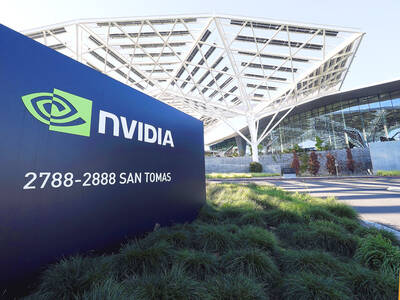
CHIP RACE: Three years of overbroad export controls drove foreign competitors to pursue their own AI chips, and ‘cost US taxpayers billions of dollars,’ Nvidia said China has figured out the US strategy for allowing it to buy Nvidia Corp’s H200s and is rejecting the artificial intelligence (AI) chip in favor of domestically developed semiconductors, White House AI adviser David Sacks said, citing news reports. US President Donald Trump on Monday said that he would allow shipments of Nvidia’s H200 chips to China, part of an administration effort backed by Sacks to challenge Chinese tech champions such as Huawei Technologies Co (華為) by bringing US competition to their home market. On Friday, Sacks signaled that he was uncertain about whether that approach would work. “They’re rejecting our chips,” Sacks

NATIONAL SECURITY: Intel’s testing of ACM tools despite US government control ‘highlights egregious gaps in US technology protection policies,’ a former official said Chipmaker Intel Corp has tested chipmaking tools this year from a toolmaker with deep roots in China and two overseas units that were targeted by US sanctions, according to two sources with direct knowledge of the matter. Intel, which fended off calls for its CEO’s resignation from US President Donald Trump in August over his alleged ties to China, got the tools from ACM Research Inc, a Fremont, California-based producer of chipmaking equipment. Two of ACM’s units, based in Shanghai and South Korea, were among a number of firms barred last year from receiving US technology over claims they have
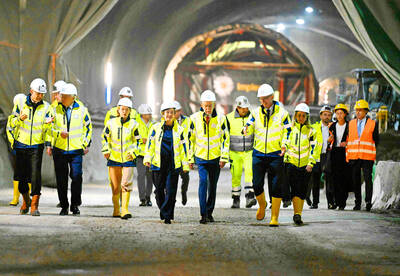
It is challenging to build infrastructure in much of Europe. Constrained budgets and polarized politics tend to undermine long-term projects, forcing officials to react to emergencies rather than plan for the future. Not in Austria. Today, the country is to officially open its Koralmbahn tunnel, the 5.9 billion euro (US$6.9 billion) centerpiece of a groundbreaking new railway that will eventually run from Poland’s Baltic coast to the Adriatic Sea, transforming travel within Austria and positioning the Alpine nation at the forefront of logistics in Europe. “It is Austria’s biggest socio-economic experiment in over a century,” said Eric Kirschner, an economist at Graz-based Joanneum

OPTION: Uber said it could provide higher pay for batch trips, if incentives for batching is not removed entirely, as the latter would force it to pass on the costs to consumers Uber Technologies Inc yesterday warned that proposed restrictions on batching orders and minimum wages could prompt a NT$20 delivery fee increase in Taiwan, as lower efficiency would drive up costs. Uber CEO Dara Khosrowshahi made the remarks yesterday during his visit to Taiwan. He is on a multileg trip to the region, which includes stops in South Korea and Japan. His visit coincided the release last month of the Ministry of Labor’s draft bill on the delivery sector, which aims to safeguard delivery workers’ rights and improve their welfare. The ministry set the minimum pay for local food delivery drivers at


 RSS
RSS