


In 28 years in India’s pharmaceuticals sector, Rajiv Desai has never been busier.
Most of the last six months on his desk calendar is marked green, indicating visits to the 12 plants of Lupin Pharmaceuticals Inc, India’s No. 2 drugmaker, where Desai is a senior quality control executive. Only one day is red — a day off.
That is what is needed these days to satisfy the US Food and Drug Administration (FDA) that standards are being met.
“In this sector, you’re only as good as your last inspection,” Desai said in his office in suburban Mumbai.
Often dubbed “the pharmacy of the world,” India is home to the most FDA-approved plants outside of the US and supplies about 40 percent of the US$70 billion worth of generic drugs sold in the country.
However, sanctions and bans have badly damaged India’s reputation and slowed growth in the US$16 billion sector. Drug exports fell in the fiscal year ending in March.
More than 40 plants have been banned by the FDA for issues ranging from data fraud to hygiene since India’s then-largest drugmaker Ranbaxy Laboratories Ltd was pulled up for serious violations in 2008.
Drug companies have spent millions of dollars on training, new equipment and foreign consultants.
Yet the Indian Pharmaceutical Alliance of the top 20 firms says its members still need at least five more years to get manufacturing standards and data reliability up to scratch.
The case of Lupin shows why.
The FDA is in the next few months expected to clear Lupin’s Goa plant, which supplies around a third of its US sales, of problems found in 2015, Desai said.
However, the agency also published a new notice just last week citing issues with data storage at its plant in Pithampur, central India.
If companies want to continue to sell into the world’s biggest health care market, they must keep constant vigilance.
“A lot of companies will struggle to meet the requirements that are the need of the day, and I would expect to see additional consolidation on the supply side,” Lupin chief executive officer Vinita Gupta told analysts last month.
India has its own standards body, the Central Drug Standard Control Organization (CDSCO), which maintains that its quality controls are stringent enough to ensure drugs are safe.
“India’s standards are different,” Indian Drug Controller General and head of CDSCO G.N. Singh said in an interview in his New Delhi office. “Indian companies are compliant with our manufacturing standards. We cannot regulate them according to the US standards.”
The FDA has taken matters into its own hands and gradually expanded in India to more than a dozen full-time staff.
Inspections are frequent and increasingly unannounced. If the agency finds problems, it issues a Form 483 — a notice outlining the violations — which, if not resolved, can lead to a “warning letter” and in worst case, a ban.
Violations range from hygiene problems, such as rat traps and dirty laboratories, to inadequate controls on systems that store data, leaving it open to tampering.
None of the violations the FDA has cited in India have explicitly said the drugs are unsafe and when companies are banned by the FDA, they can sell into other markets, including in the developing world, until the bans are lifted.
Industry watchers say Lupin, which specializes in oral contraceptives and drugs for diabetes and hypertension, is doing better than most, as so far, none of its infractions have extended to a ban.
On a recent visit by reporters to its Goa plant, blue-uniformed employees could be seen working on giant machines, then making notes in hardbound registers. These are being phased out as Lupin transitions to more secure e-files.
Employees are often videotaped to ensure they follow standard operating procedure. Manufacturers have cut back to focus on quality over quantity: Five years ago, Lupin was making 1 billion pills a month at one of its Goa plants — now it makes just 450 million.
Both the company and employees needed to be willing to acknowledge errors, as the first impulse in the past was often “don’t tell anyone,” Desai said.
As recently as three years ago, training was a “formality,” Desai said. Now, when an error is traced to an employee, the entire team undergoes fresh training.
The companies also have to be willing to spend big. Lachman Consultants, PwC and Boston Consulting Group conduct mock audits at the Goa plant every three to six months, at a cost of up to US$400 an hour.
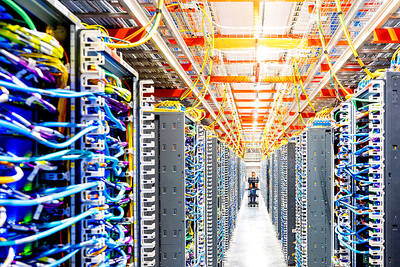
AI SPLURGE: The four major US tech companies have lost more than US$950 billion in value since releasing earnings and outlooks, while equipment makers were gaining Four of the biggest US technology companies together have forecast capital expenditures that would reach about US$650 billion this year — a flood of cash earmarked for new data centers and all the gear within them. The spending planned by Alphabet Inc, Amazon.com Inc, Meta Platforms Inc and Microsoft Corp, all in pursuit of dominance in the still-nascent market for artificial intelligence (AI) tools, is a boom without a parallel this century. Each of the companies’ estimates for this year is expected either near or surpass their budgets for the past three years combined. They would set a high-watermark for capital spending
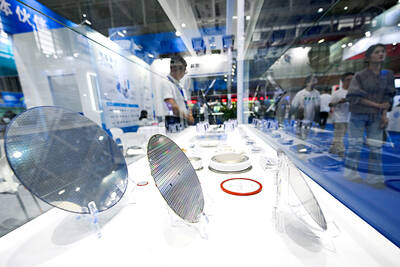
China’s top chipmaker has warned that breakaway spending on artificial intelligence (AI) chips is bringing forward years of future demand, raising the risk that some data centers could sit idle. “Companies would love to build 10 years’ worth of data center capacity within one or two years,” Semiconductor Manufacturing International Corp (SMIC, 中芯) cochief executive officer Zhao Haijun (趙海軍) said yesterday on a call with analysts. “As for what exactly these data centers will do, that hasn’t been fully thought through.” Moody’s Ratings projects that AI-related infrastructure investment would exceed US$3 trillion over the next five years, as developers pour eye-watering sums
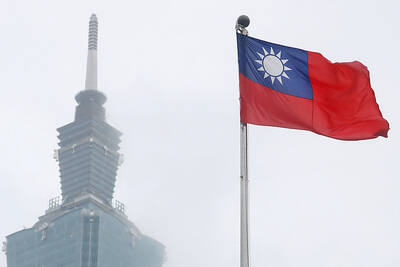
Bank of America Corp nearly doubled its forecast for the nation’s economic growth this year, adding to a slew of upgrades even after a rip-roaring last year propelled by demand for artificial intelligence (AI). The firm lifted its projection to 8 percent from 4.5 percent on “relentless global demand” for the hardware that Taiwanese companies make, according to a note dated yesterday by analysts including Xiaoqing Pi (皮曉青). Taiwan’s GDP expanded 8.63 percent last year, the fastest pace since 2010. The increase “reflects our sustained optimism over Taiwan’s technology driven expansion and is reinforced by several recent developments,” including a more stable currency,
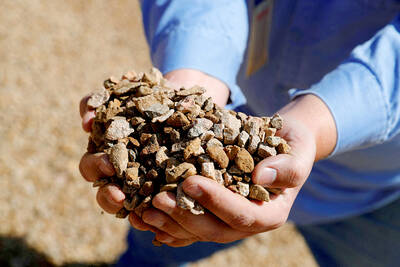
COLLABORATION: Taiwan and the US could jointly find solutions to weaknesses in supply chain resilience for critical materials, focusing on mining and initial refinement Taiwan is likely to purchase rare earths from the US in the future, and is also in talks with Australia and Canada to strengthen global rare earth supply chain security, Minister of Economic Affairs Kung Ming-hsin (龔明鑫) said yesterday. Taiwan and the US last month concluded the sixth Economic Prosperity Partnership Dialogue, during which both sides signed a joint statement endorsing the principles of the Pax Silica Declaration, pledging to deepen cooperation in areas including critical minerals. At the time, Kung said the two sides would establish working groups to advance cooperation in areas including artificial intelligence, digital infrastructure, critical materials and


 RSS
RSS