


Daniel Tsai (蔡明忠) and his brother Richard Tsai (蔡明興) of Fubon Group (富邦集團) were ranked the richest people in the nation on Forbes magazine’s Taiwan’s 50 Richest list for this year.
The brothers took first place for the third consecutive year with their fortune totaling US$10 billion after shares of Fubon Financial Holding Co (富邦金控) and Taiwan Mobile Co (台灣大哥大) soared.
In addition to financial and telecom services, Fubon Group also runs television and online retailer Momo.com Inc (富邦媒體), Forbes said.
Meanwhile, Morris Chang (張忠謀), chairman of contract chipmaker Taiwan Semiconductor Manufacturing Co (TSMC, 台積電), entered the list for the first time to take 50th place as TSMC shares hit a record high last month, Forbes said.
Chang, who is worth US$930 million, owns about a 0.5 percent stake in TSMC, the world’s largest pure wafer foundry operator.
Although Chang was placed on the list for the first time, it was not his first recognition by Forbes, due to his achievements in the semiconductor industry.
Chang, who has been called the “Silicon Godfather” by the New York Times, was in 2001 put on the cover of the international edition of the magazine as “The Catalyst,” Forbes said.
In 2012, he appeared on the cover of Forbes Asia as Businessman of the Year.
Terry Gou (郭台銘), chairman of iPhone and iPad assembler Hon Hai Precision Industry Co (鴻海精密), came in second on the list with a net worth of US$9.5 billion.
Tsai Hung-tu (蔡宏圖) and his brother Tsai Cheng-da (蔡政達) of Cathay Financial Holding Co (國泰金控) took third place with a net worth of US$7.2 billion, ahead of Tsai Eng-meng (蔡衍明), who chairs food conglomerate Want Want Group (旺旺集團), with US$6 billion and Lin Yu-lin (林堉璘), head of property developer Hong Tai Group (宏泰集團), with US$5.6 billion.
The Wang (王) family, which owns Formosa Plastics Group (台塑集團), the nation’s largest industrial conglomerate, came in sixth with US$5.4 billion, followed by the Wei (魏) family of food conglomerate Ting Hsin International Group (頂新國際集團) with US$5.3 billion and Quanta Computer Inc (廣達) chairman Barry Lam (林百里) with US$4.2 billion.
Jason Chang (張虔生) and his brother Richard Chang (張洪本) of IC packaging and testing firm Advanced Semiconductor Engineering Inc (日月光半導體) followed with US$4 billion, while Luo Jye (羅結), founder of Cheng Shin Rubber Industry Co (正新橡膠), was 10th with US$3.8 billion.
The magazine said that the nation’s tycoons have largely benefited from a strong showing in the domestic equity market.
AI TALENT: No financial details were released about the deal, in which top Groq executives, including its CEO, would join Nvidia to help advance the technology Nvidia Corp has agreed to a licensing deal with artificial intelligence (AI) start-up Groq, furthering its investments in companies connected to the AI boom and gaining the right to add a new type of technology to its products. The world’s largest publicly traded company has paid for the right to use Groq’s technology and is to integrate its chip design into future products. Some of the start-up’s executives are leaving to join Nvidia to help with that effort, the companies said. Groq would continue as an independent company with a new chief executive, it said on Wednesday in a post on its Web
RESPONSE: The Japanese Ministry of Finance might have to intervene in the currency markets should the yen keep weakening toward the 160 level against the US dollar Japan’s chief currency official yesterday sent a warning on recent foreign exchange moves, after the yen weakened against the US dollar following Friday last week’s Bank of Japan (BOJ) decision. “We’re seeing one-directional, sudden moves especially after last week’s monetary policy meeting, so I’m deeply concerned,” Japanese Vice Finance Minister for International Affairs Atsushi Mimura told reporters. “We’d like to take appropriate responses against excessive moves.” The central bank on Friday raised its benchmark interest rate to the highest in 30 years, but Bank of Japan Governor Kazuo Ueda chose to keep his options open rather than bolster the yen,

Even as the US is embarked on a bitter rivalry with China over the deployment of artificial intelligence (AI), Chinese technology is quietly making inroads into the US market. Despite considerable geopolitical tensions, Chinese open-source AI models are winning over a growing number of programmers and companies in the US. These are different from the closed generative AI models that have become household names — ChatGPT-maker OpenAI or Google’s Gemini — whose inner workings are fiercely protected. In contrast, “open” models offered by many Chinese rivals, from Alibaba (阿里巴巴) to DeepSeek (深度求索), allow programmers to customize parts of the software to suit their
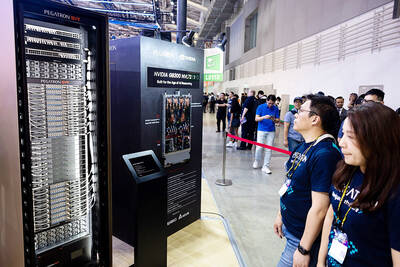
Global server shipments are expected to surge to 15 million units next year, from 4 million units this year, with artificial intelligence (AI) servers accounting for about 30 percent, driven by massive capital spending by major cloud service providers, the Market Intelligence and Consulting Institute (MIC) said on Thursday last week. Major cloud service providers — including Google’s parent company Alphabet Inc, Microsoft Corp, Amazon.com Inc and Meta Platforms Inc — are projected to budget US$450 million for capital expenditure next year, up from US$400 million this year, MIC ICT [information and communications technology] Industry Research Center director Edward Lin


 RSS
RSS