


Britain’s Spirax-Sarco Engineering PLC said it had agreed to buy Pittsburgh-based thermal technology company Chromalox Inc from private equity firm Irving Place Capital for US$415 million on a cash-free, debt-free basis.
Spirax-Sarco, which makes steam traps and pumps for industries such as the food and beverage, healthcare, chemical and power generation sectors, said the purchase consideration would be financed from new debt facilities supplied by its existing banks.
Spirax shares were up 5.6 percent at £56.05 at 7:09am local time, making the stock the second-largest gainer on London’s Midcap Index
The acquisition of Chromalox, which has five manufacturing facilities across North America, France and China, is to add to Spirax’s earnings this year, it said.
Liberum Capital Ltd analysts, rating Spirax at “hold,” wrote in a note that at first look, this deal would add 13 percent to this year’s earnings per share, assuming no growth in the underlying business.
Chromalox earns about 18 percent of its sales from the oil and gas market where firms are cautious on spending as the industry recovers from a multiyear commodity price slump.
However, order intake levels and market activity have shown improving prospects for Chromalox, Spirax said, adding that its estimates sales of US$190 million in the current year ending in September.
Analysts at Jefferies Group LLC, who have a “hold” rating on Spirax, said Chromalox looks to be a “highly complementary business” and a “very sensible and interesting deal.”
The price tag of US$415 million makes this Spirax’s largest buy since the downturn of 2008.
Spirax last month said it would buy German firm Gestra AG, which makes valves and control systems for heat and fluid control, for 186 million euros (US$208.8 million).
Chromalox is to bring thermal energy management solutions to Spirax’s customers, the British firm said, adding that it would expand Spirax’s total addressable market by £2.1 billion to £7.9 billion (US$2.7 billion to US$10.2 billion).
“We will invest in Chromalox to strengthen its direct sales channels globally; leverage our worldwide footprint to grow Chromalox’s presence outside of its core markets in the USA,” Spirax-Sarco said in a statement yesterday.
Completion of the deal is subject to a nod from the US merger control authority, Spirax said, adding that the conditions are expected to be satisfied during this quarter.
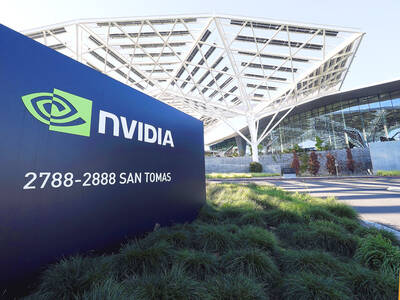
CHIP RACE: Three years of overbroad export controls drove foreign competitors to pursue their own AI chips, and ‘cost US taxpayers billions of dollars,’ Nvidia said China has figured out the US strategy for allowing it to buy Nvidia Corp’s H200s and is rejecting the artificial intelligence (AI) chip in favor of domestically developed semiconductors, White House AI adviser David Sacks said, citing news reports. US President Donald Trump on Monday said that he would allow shipments of Nvidia’s H200 chips to China, part of an administration effort backed by Sacks to challenge Chinese tech champions such as Huawei Technologies Co (華為) by bringing US competition to their home market. On Friday, Sacks signaled that he was uncertain about whether that approach would work. “They’re rejecting our chips,” Sacks

It is challenging to build infrastructure in much of Europe. Constrained budgets and polarized politics tend to undermine long-term projects, forcing officials to react to emergencies rather than plan for the future. Not in Austria. Today, the country is to officially open its Koralmbahn tunnel, the 5.9 billion euro (US$6.9 billion) centerpiece of a groundbreaking new railway that will eventually run from Poland’s Baltic coast to the Adriatic Sea, transforming travel within Austria and positioning the Alpine nation at the forefront of logistics in Europe. “It is Austria’s biggest socio-economic experiment in over a century,” said Eric Kirschner, an economist at Graz-based Joanneum

BUBBLE? Only a handful of companies are seeing rapid revenue growth and higher valuations, and it is not enough to call the AI trend a transformation, an analyst said Artificial intelligence (AI) is entering a more challenging phase next year as companies move beyond experimentation and begin demanding clear financial returns from a technology that has delivered big gains to only a small group of early adopters, PricewaterhouseCoopers (PwC) Taiwan said yesterday. Most organizations have been able to justify AI investments through cost recovery or modest efficiency gains, but few have achieved meaningful revenue growth or long-term competitive advantage, the consultancy said in its 2026 AI Business Predictions report. This growing performance gap is forcing executives to reconsider how AI is deployed across their organizations, it said. “Many companies
Taiwan’s long-term economic competitiveness will hinge not only on national champions like Taiwan Semiconductor Manufacturing Co. (TSMC, 台積電) but also on the widespread adoption of artificial intelligence (AI) and other emerging technologies, a US-based scholar has said. At a lecture in Taipei on Tuesday, Jeffrey Ding, assistant professor of political science at the George Washington University and author of "Technology and the Rise of Great Powers," argued that historical experience shows that general-purpose technologies (GPTs) — such as electricity, computers and now AI — shape long-term economic advantages through their diffusion across the broader economy. "What really matters is not who pioneers


 RSS
RSS